A team at the Fraunhofer Institute for Mechanics of Materials IWM has developed a new way to test how materials behave when exposed to hydrogen under extreme conditions.
Hydrogen is widely seen as a cleaner alternative to fossil fuels. When added to traditional fuels, it can reduce carbon dioxide emissions. This makes it an attractive option for industries that rely on large engines and gas turbines.
However, hydrogen brings its own challenges. Materials inside engines are already exposed to high temperatures, pressure, and mechanical stress. Adding hydrogen can further weaken these materials. Over time, this reduces their fatigue strength, increasing the likelihood of cracking or failure.
This creates a serious safety concern. “Hydrogen changes how materials behave under stress,” the researchers explain. “We need to understand this clearly to design safer components.”
READ ALSO: China’s 80% Water Network Is Changing Farming, Cities, and Climate
To address this, scientists focused on thermomechanical fatigue(TMF). This type of fatigue occurs when materials face repeated heating, cooling, and mechanical loading. It is one of the key factors that determines how long engine components last.
Until now, testing materials under realistic hydrogen conditions has been difficult. Traditional methods use pressure chambers filled with hydrogen gas. But these setups cannot easily handle the extreme and rapidly changing temperatures found in real engines. This limits their usefulness.
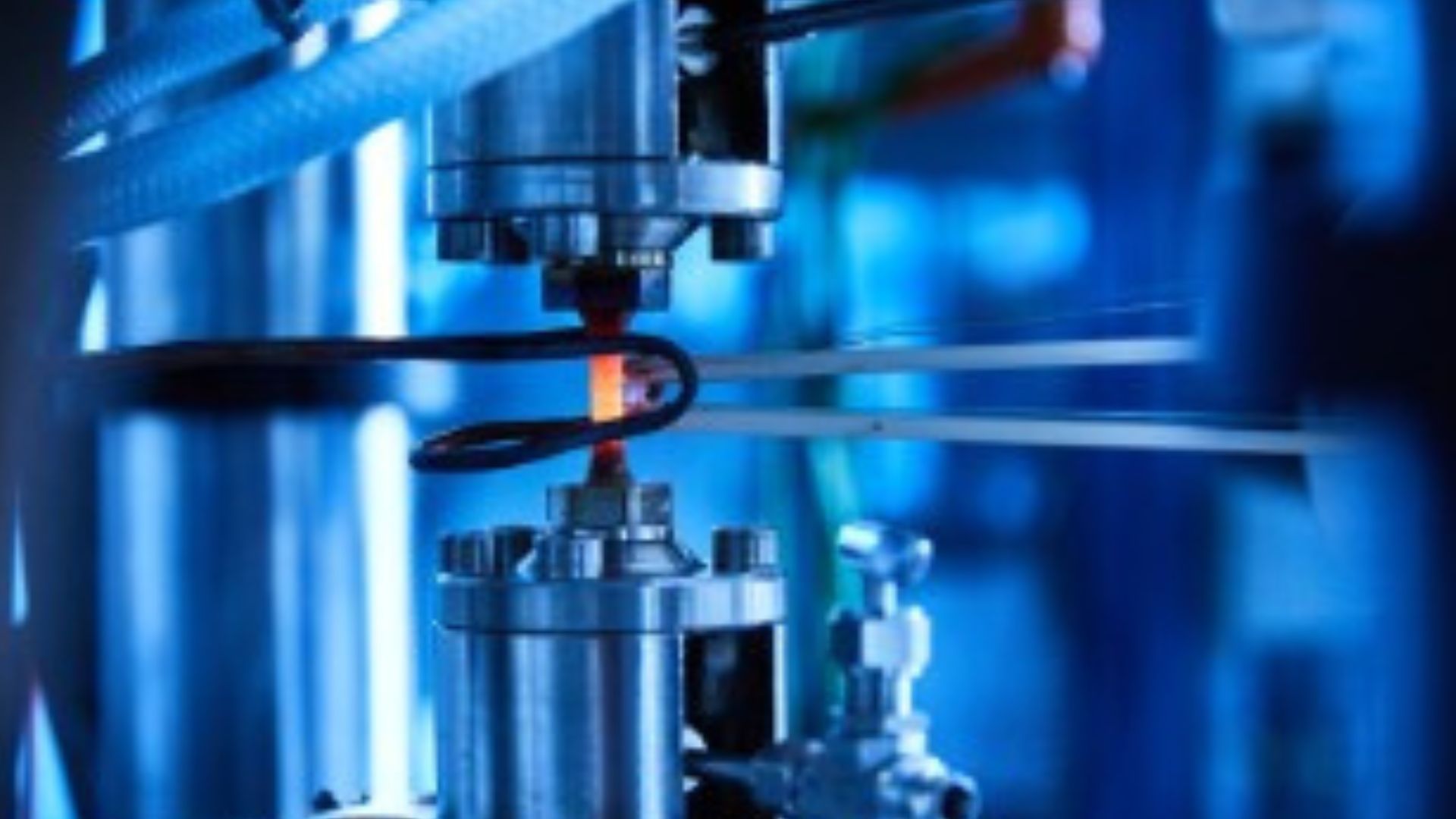
The Fraunhofer team found a new solution. They designed hollow test samples with a small internal channel. Hydrogen gas flows through this channel, exposing the material from the inside. At the same time, the sample’s outer surface is subjected to controlled temperature changes and mechanical stress.
This setup allows scientists to study three critical factors separately and together: hydrogen exposure, temperature variation, and mechanical loading.
WATCH ALSO: BYD SEAL Delivers Lightning-Fast Acceleration for Effortlessly Smooth Drives
“This method lets us control each condition independently,” the researchers say. “That gives us a much clearer picture of how materials behave.”
The approach works under both constant temperatures and changing temperatures. This makes it closer to real-world conditions inside engines and turbines.
Scientists can now measure how hydrogen affects stress, strain, and fatigue life more accurately. These insights help engineers choose better materials and design components more efficiently.
In the past, uncertainty forced engineers to play it safe. They often used stronger, more expensive materials or added large safety margins. This increased costs and slowed innovation.
The new testing method changes that. With better data, engineers can predict how long a component will last under specific conditions. This allows for smarter designs that balance safety, performance, and cost.
The research also supports the broader shift toward cleaner energy. Gas turbines are becoming more important as renewable energy grows. They help stabilize power grids when solar or wind output fluctuates. Using hydrogen in these systems can reduce emissions without replacing existing infrastructure.
READ ALSO: A Robot That Never Needs Charging? Meet Cranfield’s 3D-Printed WANDER-bot
But for this transition to succeed, safety must come first.
“Reliable material data is essential for hydrogen technologies,” the team notes. “It helps ensure both performance and long-term durability.”
The findings are already being used to build material models. These models simulate real operating conditions and guide the design of future engine components.
By making hydrogen-related risks easier to measure and predict, scientists are helping industries move toward cleaner energy with confidence. The path to fully hydrogen-powered engines is still developing. But with tools like this, the journey is becoming faster, safer, and more practical.