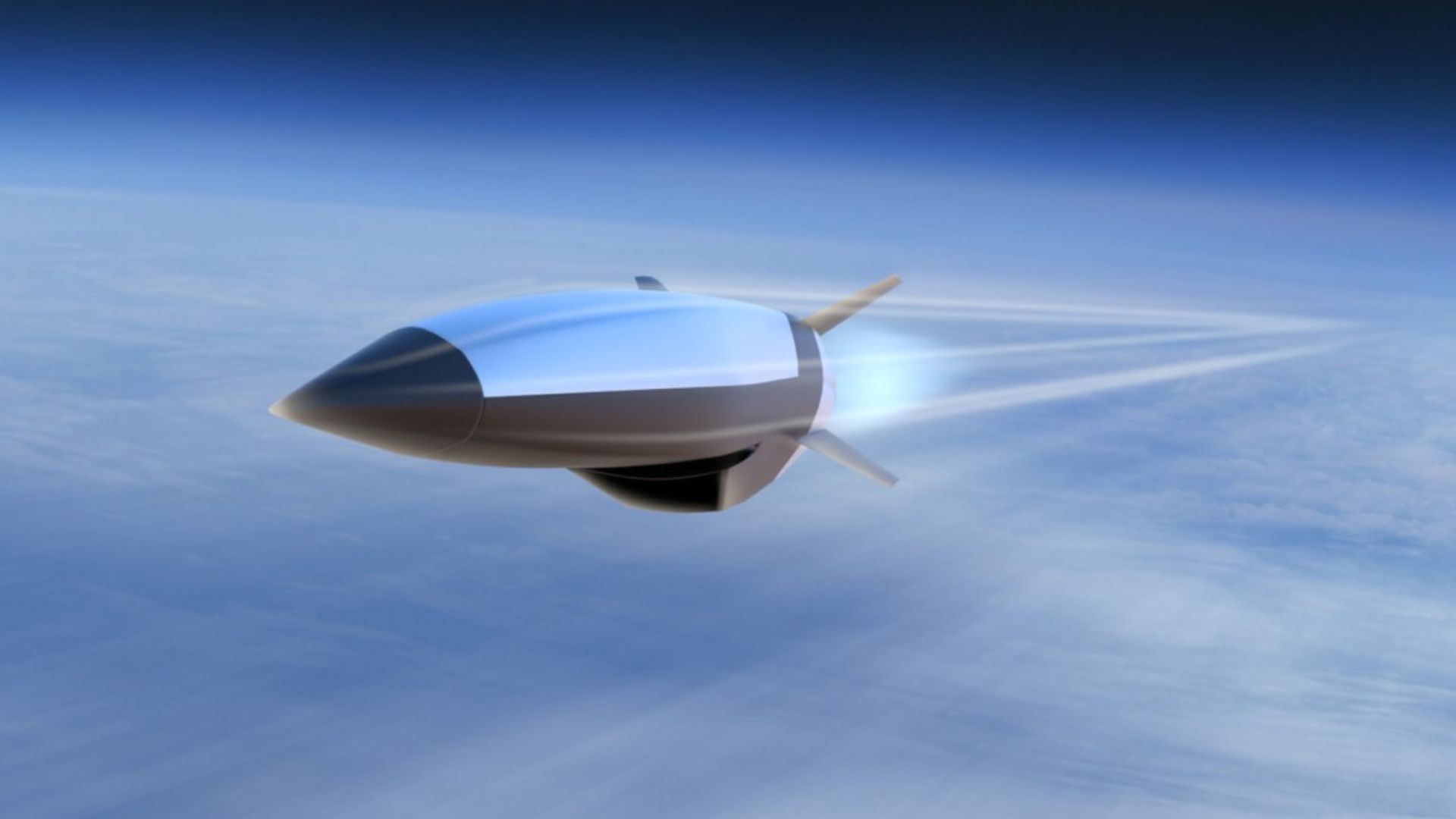
China has unveiled a powerful new software tool that could reshape the future of hypersonic weapon design.
The program can simulate the complex physics of supersonic combustion in just one week. Earlier, similar simulations could take years, even on advanced supercomputers.
The breakthrough comes from a research team led by Yao Wei at the Institute of Mechanics under the Chinese Academy of Sciences.
The team designed the software to model scramjet engines, which are key to hypersonic cruise missiles. These engines burn fuel in air moving at supersonic speeds, making them extremely difficult to study.
READ ALSO: From Butterflies to Eagles: China’s New Drones Are Changing Aerial Tech Fast
The new software delivers ultra-high precision. It divides the engine into hundreds of millions of tiny computational cells.
Each cell calculates pressure, temperature, airflow, and chemical reactions in detail. In one test, the team used 221 million cells. This is more than 20 times the resolution used in most global studies.
Despite this complexity, the full simulation was completed in just seven days. This marks a major leap in computational efficiency. It allows engineers to test and refine designs much faster than before.
WATCH ALSO: NASA rover discovered ancient microbial life signature on Mars
The research was published in the March issue of the journal Combustion and Flame. According to the institute, the software has already supported the design of a classified national project.
Scramjet engines are critical for hypersonic flight. These systems operate at speeds above Mach 5. They compress incoming air using shock waves and burn fuel without slowing the airflow. This makes them more efficient than traditional rocket or jet engines for high-speed travel.
However, simulating these engines is extremely challenging. At such high speeds, air behaves in unusual ways. Molecules can vibrate, break apart, or even become ionised. These effects, known as thermal and chemical non-equilibrium, can disrupt combustion and reduce engine performance.
For decades, many models assumed that airflow remained in equilibrium. This simplified the calculations but reduced accuracy. It also led to gaps between simulation results and real-world tests.
READ ALSO: Artemis II Nears Launch, But Its Story Began 100 Years Ago with Goddard’s Rocket
To solve this, Yao’s team developed new models. These include the Dynamic Zone Flamelet Model and the Zonal Non-equilibrium Model. Together, they capture the complex chemical and thermal changes inside the engine.
The team tested the system using the HyShot II scramjet experiment. The results showed that traditional models often overestimate performance.
Under real conditions, combustion efficiency dropped by nearly 9 percent. Thrust fell by over 21 percent in some cases.
These findings are important for future design. Engineers can now identify weaknesses in current models. They can adjust fuel injection, engine shape, and cooling systems more accurately. This could lead to faster and more reliable hypersonic engines.
China has rapidly advanced its hypersonic capabilities in recent years. Since the debut of the DF-17 hypersonic glide vehicle in 2019, it has developed a range of systems. These include air-breathing missiles like the YJ-19 and the long-range CJ-1000.
WATCH ALSO: Apple launches iPhone 17 lineup with contoured edges, and thinner borders
Air-breathing hypersonic missiles are smaller and harder to detect than boost-glide systems. They also maintain powered flight throughout their journey, increasing their range and flexibility.
The new software could further accelerate this progress. Reducing simulation time from years to days allows faster testing and innovation. This gives engineers a clearer picture of real-world performance.
As global competition in hypersonic technology intensifies, tools like this may play a decisive role. Faster and more accurate simulations can shorten development cycles and improve system reliability.
With this achievement, China has taken a significant step in mastering the complex science behind hypersonic flight.