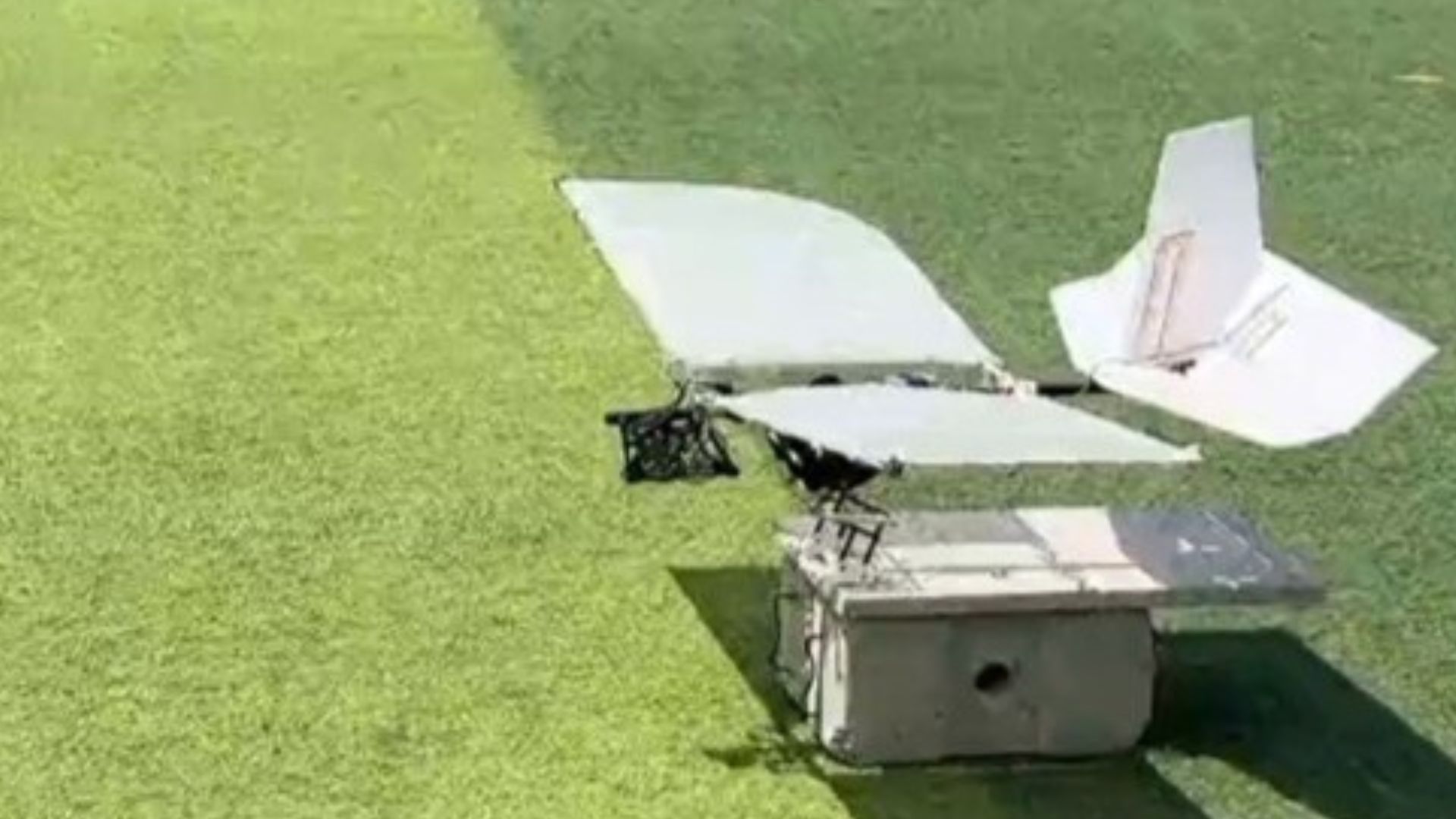
Chinese researchers have developed a new generation of flapping-wing drones that closely imitate birds and insects.
These drones, inspired by eagles, pigeons, butterflies, and beetles, are drawing global attention for their design and performance.
The research team from the University of Science and Technology Beijing (USTB) has made a major breakthrough, especially with its eagle-inspired drone, which achieved a continuous flight time of 256 minutes.
Flapping-wing drones are different from traditional drones. They do not rely on propellers or engines. Instead, they generate lift by flapping and vibrating their wings, as real birds and insects do.
READ ALSO: Targets Weeds, Not Crops: China’s ‘Zero-Pollution’ Breakthrough Can Replace Chemical Herbicide
This makes them one of the closest technological imitations of natural flight. Their design enables smoother movement, greater efficiency, and greater flexibility in the air.
The eagle-inspired drone stands out for its advanced visual system. Researchers designed it by studying the unique eye structure of eagles. This system combines telephoto and short-focus lenses to improve target detection.
Wu Xiaoyang, a lecturer at USTB, explained the innovation in active voice. He said the system can identify vehicles, license plates, people, and buildings from different distances.
He added that once the drone detects a target, it can quickly locate and track both moving and stationary objects with high accuracy.
WATCH ALSO: Called Ascentia, the platform is developed by American company Collins Aerospace
The drone’s flight record is also significant. It surpassed an earlier milestone set in 2023 by a flapping-wing drone developed at Northwestern Polytechnical University, which had achieved a flight time of 185 minutes and 30 seconds. The new 256-minute record marks a major step forward in endurance and efficiency for this type of aircraft.
Researchers believe that flexibility in wing structure plays a key role in this success. In nature, bird wings change shape during flight to adapt to air pressure and movement. Scientists are trying to replicate this feature in drones.
They say that flexible wings help generate higher lift and improve overall performance. However, achieving this level of adaptability in artificial materials remains a challenge.
Experts have pointed out several technical hurdles that still need to be addressed. Wang Zhijie from the Beijing Institute of Technology highlighted these issues. He said engineers must develop high-energy-density batteries to support longer flights.
He also stressed the need for miniaturized and precise flapping mechanisms. In addition, he explained that creating materials that can deform like real bird wings is one of the biggest challenges.
READ ALSO: E-2D Hawkeye: Pentagon Sends ‘Eyes in the Sky’ as Gulf Threats Escalate
Despite these difficulties, the future of flapping-wing drones looks promising.
Researchers are now focusing on making these drones smarter and more autonomous. They aim to improve navigation, decision-making, and adaptability in complex environments.
These advancements could have wide applications. Flapping-wing drones may be used in environmental monitoring, disaster rescue operations, and specialized surveillance missions. Their ability to mimic natural flight could also make them less detectable in sensitive operations.
The development reflects strong progress in drone technology and highlights China’s growing capabilities in advanced research.