Researchers have developed tiny synthetic swimmers(microrobots) that use their own body shape to sense and adapt to complex water flows without the need for traditional sensors.
Scientists at Leipzig University have built microscopic robots that can navigate through moving fluids by feeling their surroundings with their own bodies.
The team trained these microrobots using machine learning to reach specific targets, even when water flows push against them four times as hard as they can swim. This breakthrough could one day help deliver medicine directly to precise locations inside the human bloodstream.
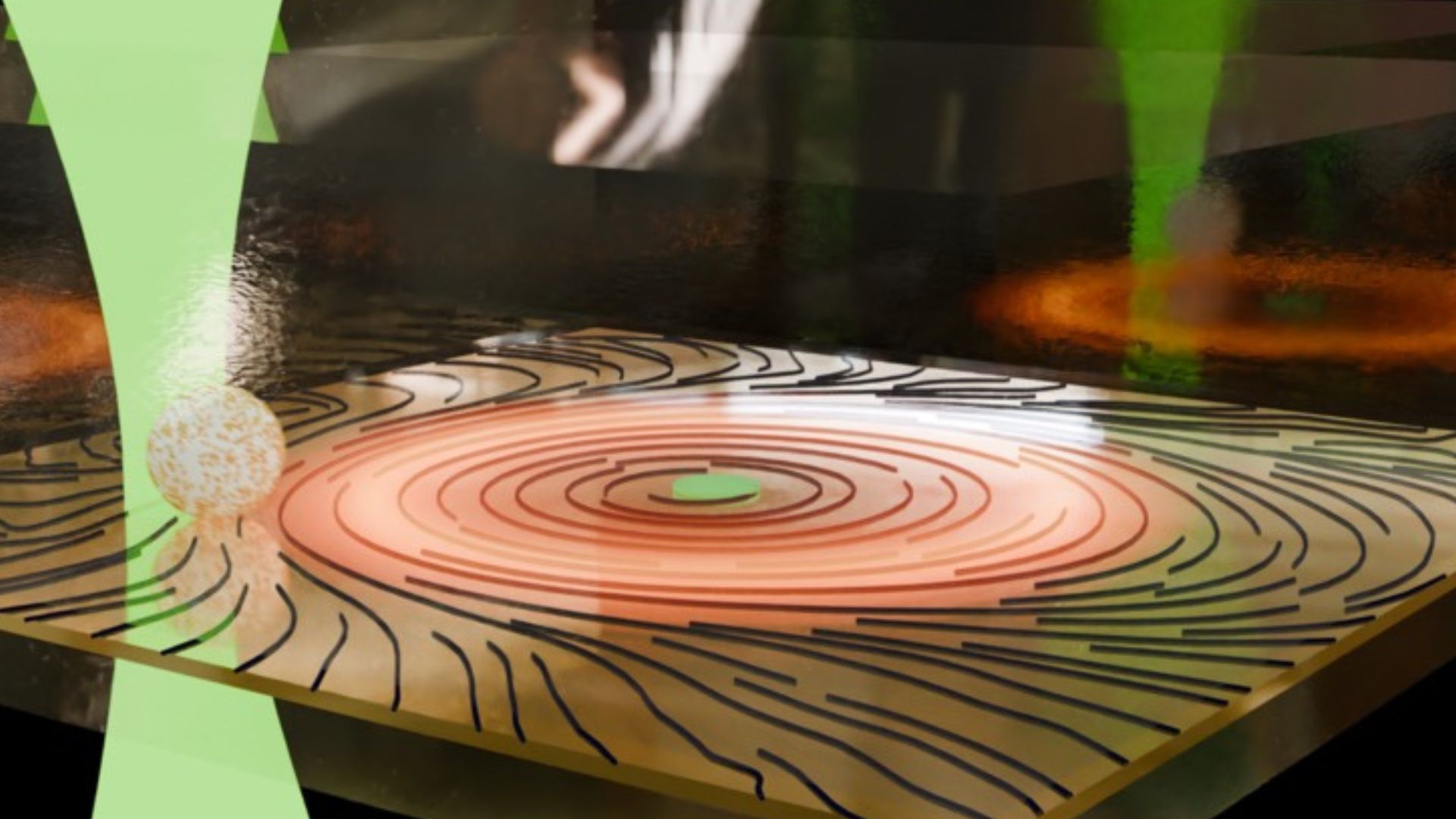
The research team, led by Professor Frank Cichos from Leipzig University’s Peter Debye Institute for Soft Matter Physics, created synthetic microswimmers coated with gold nanoparticles. These tiny particles measure just one micrometer in radius and move when hit by laser light from different directions. The team used reinforcement learning—a type of machine learning—to help the particles figure out successful movement patterns.
READ ALSO: BYD Unveils 1,000 km+ Electric Car to Rival Porsche, Is it World’s Longest-Range EV?
The main problem the team solved was helping tiny robots move through unpredictable fluids. Traditional robots need sensors to detect their environment, but putting sensors on something microscopic is extremely difficult. Blood flow inside the human body changes constantly, making it nearly impossible to pre-program a microrobot’s path. The Leipzig approach bypasses this entirely by letting the robot’s physical body handle the sensing.
How Microrobot Works
As the microswimmer moves, the surrounding fluid exerts forces on its body in specific ways. Each movement carries information about the flow patterns around it. The learning algorithm reads these movement patterns and helps the particle adjust its direction. The robots learned to navigate successfully within about 50 training attempts, according to Dr. Diabrata Paul, a research associate at the institute.
WATCH ALSO: Cartoon-like humanoid robot learns everyday kitchen chores from humans
The real-world applications could transform medicine. Doctors might one day inject microrobots into patients that automatically find their way to tumors or blood clots. The robots would navigate naturally through the bloodstream without requiring external controls or internal sensors. The technology could also help with environmental monitoring or industrial processes that require tiny machines to move through liquids.
The current limitation is that this works only in controlled laboratory conditions. The team demonstrated the principle works, but moving from simple experiments to complex environments like actual human blood vessels requires much more research. The particles also need better training to handle more complicated flow patterns.
READ ALSO: GE Aerospace and Palantir Expand AI Deal for Military Readiness
Why this matters extends beyond medicine. The research introduces the concept of “embodied intelligence,” in which physical objects use their own structures to process information. This changes how engineers think about building small machines. Instead of copying conventional robot designs and shrinking them down, future microrobots might look completely different because they work in completely different ways.