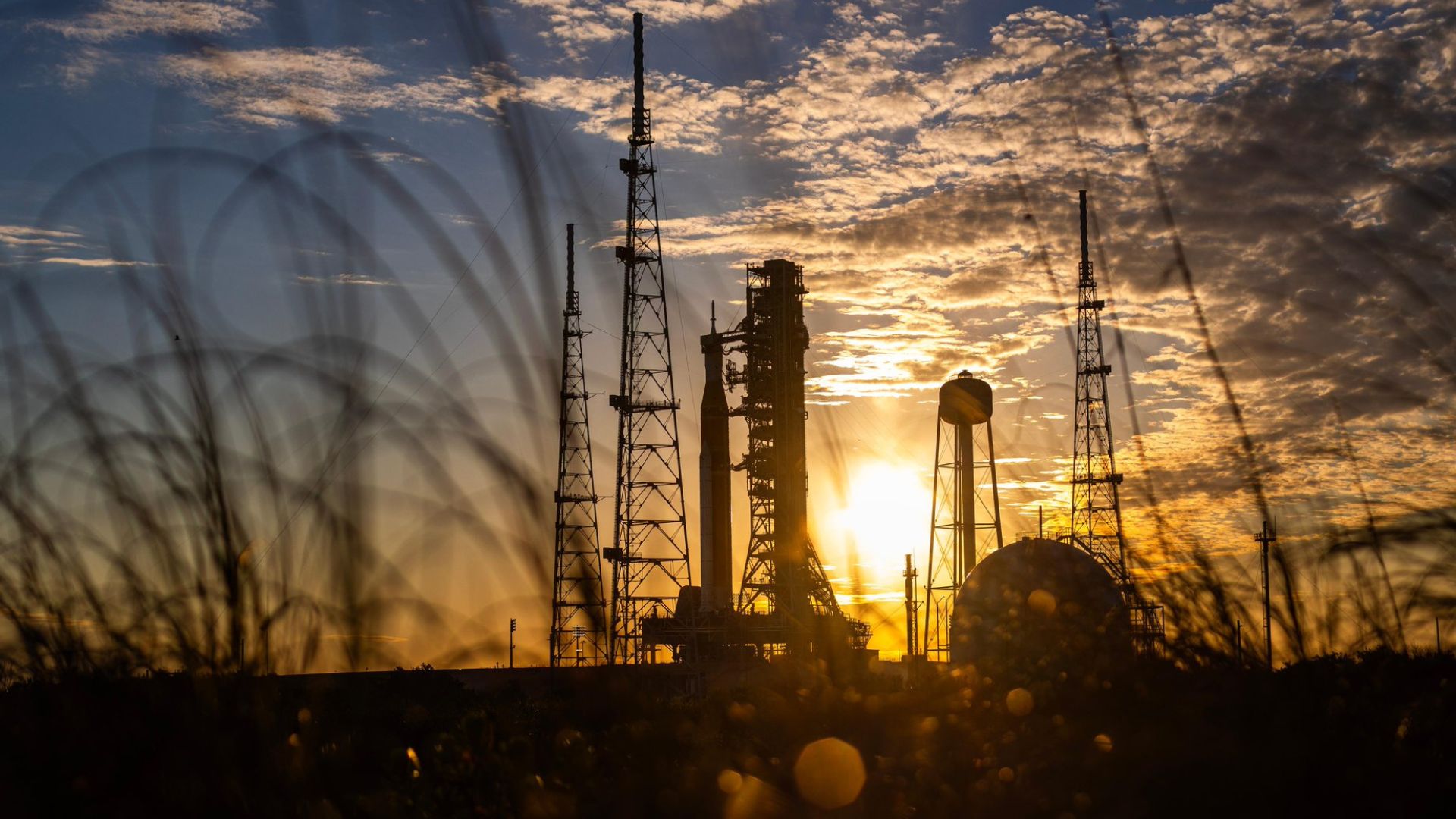
NASA says its Artemis II moon mission is back on track after engineers successfully repaired a key issue with the Space Launch System (SLS) rocket.
The agency is now targeting April 1 as the next possible launch date for the historic crewed mission.
Mission managers recently completed the Artemis II Flight Readiness Review (FRR). The review evaluated the rocket, spacecraft, and ground systems to ensure they are ready for flight. After the discussions, NASA confirmed that preparations will proceed to roll the rocket and Orion spacecraft to the launch pad at the Kennedy Space Center in Florida.
Repairs to the SLS rocket were carried out inside the Vehicle Assembly Building at NASA’s Kennedy Space Center. Ground teams are now preparing the vehicle for transport to Launch Complex-39B, where final launch preparations will take place.
READ ALSO: Hacker Flies to China to Modify $3K Samsung Foldable Phone; You Won’t Believe How
Lori Glaze, NASA’s acting associate administrator for Exploration Systems Development, said the readiness review involved detailed discussions about the mission.
“We had extremely thorough discussions that were very open and transparent,” Glaze said during a press briefing. “It’s a short timeline, but we are keeping safety as our top priority.”
Glaze added that teams carefully examined potential risks and how NASA plans to manage them.
“We discussed our risk posture and how we are mitigating those risks,” she said. “We reviewed the challenges we faced, how we solved them, and the work that still remains.”
NASA’s Artemis II Mission
Artemis II will be NASA’s first crewed mission to the moon in more than 50 years. The mission will send four astronauts on a 10-day journey around the moon before returning to Earth.
The crew includes NASA astronauts Reid Wiseman, Victor Glover, and Christina Koch, along with Canadian astronaut Jeremy Hansen.
WATCH ALSO: China Sets World Record with 700 km/h Maglev
Earlier tests of the SLS rocket revealed technical challenges. During the mission’s first wet dress rehearsal, which simulates a full launch countdown and fueling process, the rocket experienced fueling problems. The issue was later resolved during a second test attempt in February.
However, engineers discovered another problem after the rehearsal. A disruption in the flow of helium within the rocket’s upper stage led NASA to roll the vehicle back to the Vehicle Assembly Building on February 25 for inspection and repairs.
Engineers traced the issue to a quick-disconnect seal on the rocket’s upper stage. The quick-disconnect system connects fuel lines from the launch tower to the rocket and allows propellants to flow into the vehicle before liftoff.
NASA engineers developed a design fix and tested it before installing the upgraded component on the rocket.
“Our engineering teams from ground systems and SLS developed a design solution,” said Shawn Quinn, program manager for Exploration Ground Systems. “We implemented that fix on a test article, successfully tested it, and qualified it for use on Artemis II. The modified quick-disconnect is already installed on the upper stage.”
READ ALSO: Meet HON6000: Honeywell’s New Engine Designed for Future Autonomous Warplanes
With the repairs complete and testing finished, NASA officials say the rocket is now ready to move toward launch preparations.
If everything proceeds as planned, Artemis II could lift off as early as April 1, sending astronauts on a historic journey around the moon and marking a major step toward NASA’s long-term goal of returning humans to the lunar surface.