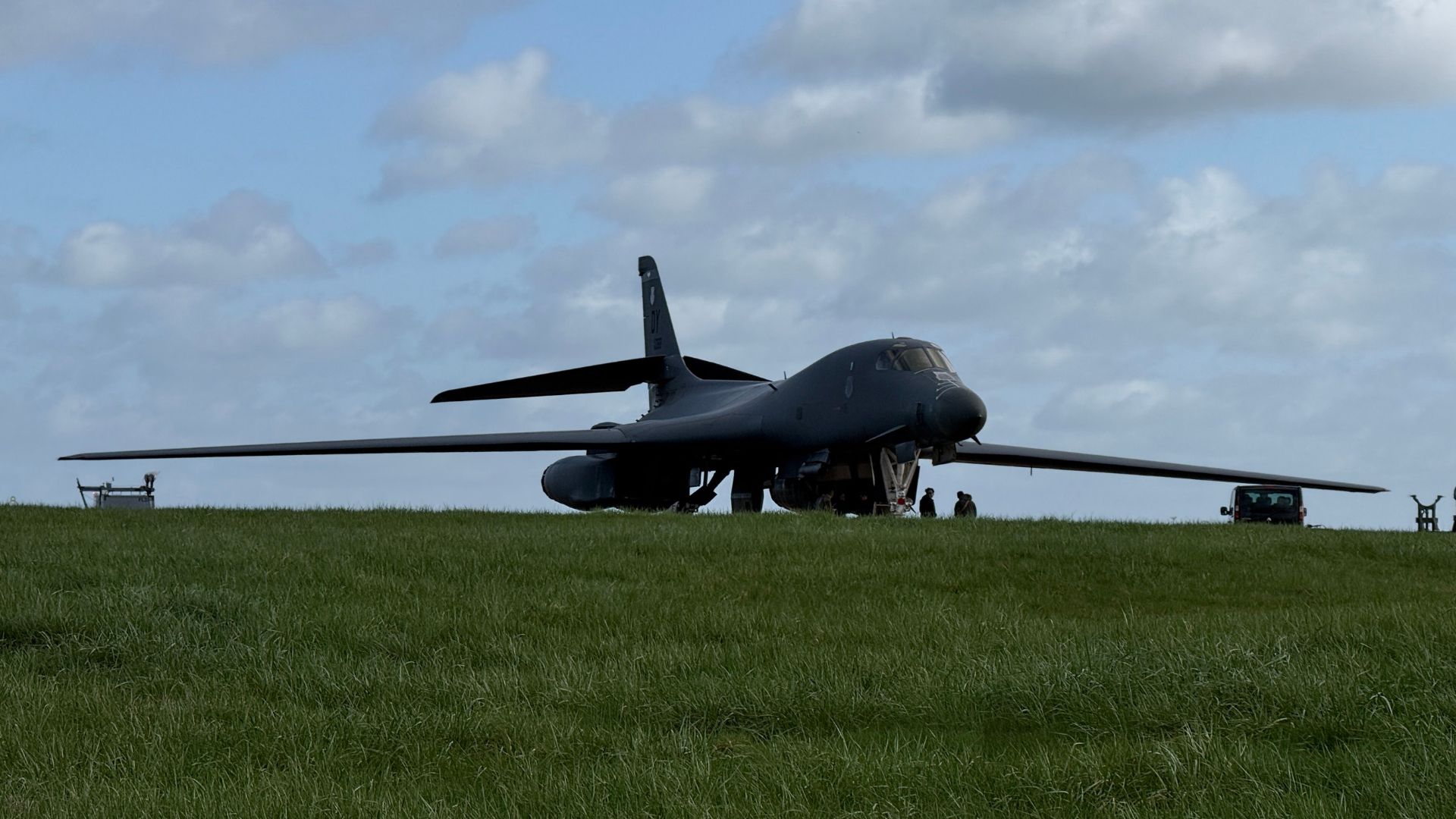
New footage from RAF Fairford in England shows US Air Force B-1B bombers being armed with powerful bunker-busting bombs ahead of potential strikes on Iranian targets.
The US is increasing its long-range strike capability against Iran as more American bombers prepare for combat missions from the UK.
The video shows ground crews loading GBU-31 Joint Direct Attack Munitions (JDAMs) fitted with BLU-109 2,000-pound bunker-buster warheads onto the aircraft. These bombs are designed to penetrate hardened underground structures before detonating.
The preparation indicates that the US may be preparing for deeper and more direct attacks on fortified sites inside Iran.
Alongside the JDAMs, the bombers are also being equipped with AGM-158 Joint Air-to-Surface Standoff Missiles (JASSMs). These cruise missiles allow aircraft to strike targets from long distances while remaining outside enemy air defense range.
The B-1B bomber, often called the ‘Bone,’ can carry a very large payload of weapons. A video from the base also shows the aircraft’s revolving weapons rack being removed from the bomb bay as crews prepare the bomber for loading. This system allows the aircraft to carry and release multiple weapons during a single mission.
READ ALSO: Emergency Shutdown: Drone Strike Sparks Massive Fire at UAE’s Ruwais Oil Refinery
The deployment at RAF Fairford has expanded significantly in recent days. At the beginning of the week, nine US bombers were stationed at the base. These included three B-52 strategic bombers and six B-1B aircraft.
According to recent reports, the total number of bombers has now increased to 15: 3 B-52s and 12 B-1Bs.
The use of JDAM bunker-buster bombs suggests that the US and its allies are gaining stronger control of the airspace in parts of Iran. When bombers can directly attack targets with gravity bombs rather than relying solely on long-range cruise missiles, it often means the risk from enemy air defenses has decreased.
Stealth B-2 bombers have carried out the most sensitive deep-strike missions inside Iran. These aircraft have reportedly used massive bunker-buster weapons against hardened facilities while relying on stealth technology to avoid detection. Fighter jets have also conducted limited strikes with smaller bunker-buster bombs.
WATCH ALSO: Hyundai’s Atlas humanoid robot wins top honor for its advanced design and capabilities
However, the arrival of additional B-1B and B-52 bombers could significantly increase the scale of the air campaign. These aircraft can carry large numbers of bombs and strike wide target areas during a single mission.
Potential targets include military production facilities, underground command centers, and sites linked to Iran’s missile and nuclear programs.
It is also believed the strikes may focus on Iran’s underground ‘missile cities,’which store ballistic missiles in heavily protected tunnels. Bombing the entrances to these complexes could trap the weapons inside and prevent their launch.
Despite the buildup, the bombers are expected to operate mainly over western Iran, where air defense systems have already been targeted during nearly two weeks of strikes. Entering eastern Iran remains more dangerous because many defenses there are still active.
READ ALSO: North Korea Fires 10 Ballistic Missiles Toward East Sea Amid Freedom Shield Drills
Meanwhile, attention is also focused on the strategic island base of Diego Garcia in the Indian Ocean. The UK recently approved its use for US military operations. Satellite images have shown increased transport aircraft activity there, along with KC-135 refueling tankers and F-16 fighter jets.
Since bombers are deployed to Diego Garcia, it could provide another major launch point for operations against Iran. The growing bomber presence at RAF Fairford signals that the US is preparing for more powerful and sustained air strikes in the region.