Texas-based space company Firefly Aerospace has successfully returned its Alpha rocket to orbit after a series of major setbacks last year.
The launch marks a significant recovery for the company’s small satellite launch program.
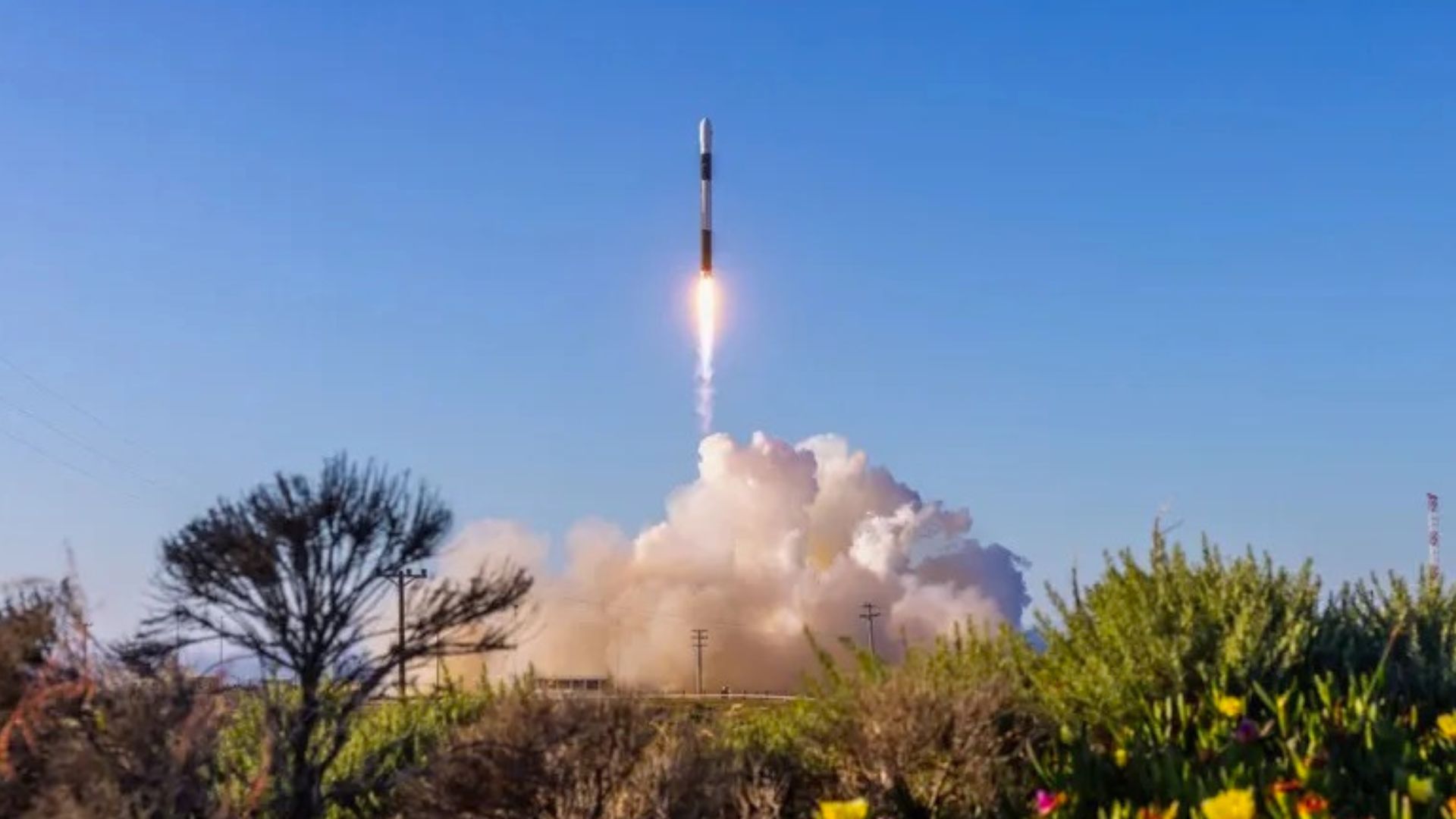
The mission, called “Stairway to Seven,” lifted off on March 11 from Vandenberg Space Force Base in California. The rocket launched from Space Launch Complex-2 at 8:50 p.m. ET (0050 GMT on March 12).
This flight was the seventh mission of the Alpha rocket, and it came nearly a year after two serious incidents in 2025 disrupted the launch vehicle’s development schedule.
During the mission, Alpha performed as expected. About 2 minutes and 40 seconds after liftoff, the rocket successfully completed its first-stage separation. The main booster detached as the upper stage continued climbing toward orbit.
Roughly 30 seconds later, the rocket’s payload fairing separated. The upper-stage engine then continued firing until about eight minutes after liftoff, when it shut down as planned.
READ ALSO: Scientists Use X-rays and Lasers to Track Elusive Electrons in Materials
The rocket ultimately reached orbit at an altitude of 151 miles (243 kilometers) above Earth.
After the launch, Firefly confirmed the mission’s success in a statement posted on social media.
“Alpha Flight 7 achieved nominal performance and validated key systems ahead of our Block II configuration upgrade. This test flight also delivered a demonstrator payload for Lockheed Martin. Congratulations to the entire Stairway to Seven team!” the company said.
The mission also carried a technology demonstration payload for Lockheed Martin, continuing Firefly’s partnership with the defense and aerospace giant.
Alpha Rocket’s Return After Two Major Accidents
The successful launch is especially important because Alpha experienced two major mishaps in 2025.
The first occurred during the “Message in a Booster” mission in April. The rocket carried a Lockheed Martin satellite, but an anomaly during stage separation prevented the payload from reaching orbit.
WATCH ALSO: Wing expanding drone delivery to additional Walmart stores in US city
A second, more dramatic accident occurred in September 2025. During pre-launch testing for the “Stairway to Seven” mission, the rocket’s first stage exploded on the test stand.
The explosion forced Firefly to delay the mission for several months while engineers investigated the cause.
Later, the company announced that the problem was not related to a design flaw in the rocket. Instead, investigators traced the issue to a process error during stage-one integration that caused a minute hydrocarbon contamination.
Once the cause was identified, Firefly cleared Alpha for another launch attempt.
Following previous failures, Firefly adjusted the goals of the “Stairway to Seven” mission. Instead of focusing only on delivering payloads, the company treated the flight as a test mission to verify rocket performance.
The flight also served as a final demonstration for Alpha’s Block I configuration.
Following this mission, Firefly plans to retire the current rocket and move forward with Alpha Block II, an upgraded design expected to debut on Flight 8.
READ ALSO: Emergency Shutdown: Drone Strike Sparks Massive Fire at UAE’s Ruwais Oil Refinery
The new rocket will stand about 7 feet (2.13 meters) taller than the current 96.7-foot-tall (29.6-meter) Alpha. It will also include improved avionics, upgraded power systems, and stronger thermal protection.
Despite earlier setbacks, Firefly has achieved notable milestones in other areas of its space business. In 2025, the company’s Blue Ghost lunar lander successfully completed a mission on the Moon, becoming the first privately built spacecraft to achieve such a feat.
With the success of “Stairway to Seven,” Firefly hopes to restore confidence in its launch program and continue expanding its role in the growing commercial space industry.
Alpha has completed three fully successful orbital missions out of seven attempts, and the company is now preparing for its next generation of launches.