Tensions in the Middle East are rising sharply as Iran intensifies attacks near the Strait of Hormuz, one of the world’s most vital energy shipping routes.
The escalation comes during the twelfth day of the ongoing US–Israeli military campaign against Iran, known as Operation Epic Fury.
On Wednesday, at least three commercial vessels were struck in separate incidents in waters around the Persian Gulf. Maritime authorities say the attacks highlight the growing threat to global oil shipments passing through the region.
The United Kingdom Maritime Trade Operations (UKMTO), a monitoring body linked to the British Royal Navy, reported that each ship was hit by an unknown projectile. The attacks occurred in different areas across the Gulf.
One cargo vessel was struck north of Oman. Another bulk carrier was targeted north of Dubai. A third container ship was hit near Ras al-Khaimah in the United Arab Emirates.
Although the details of the damage remain limited, the incidents have raised alarm among shipping companies and global energy markets.
Since the launch of Operation Epic Fury on February 28, maritime authorities have recorded a sharp rise in security incidents across the region.
READ ALSO: US Joby Aviation Flies First FAA-Conforming Electric Air Taxi
UKMTO reported that it has received 17 separate incident reports involving vessels operating in the Arabian Gulf, the Strait of Hormuz, and the Gulf of Oman. These include 13 confirmed attacks and four suspicious encounters.
The attacks are seen as part of Iran’s strategy to use energy routes as leverage against the US, Israel, and their allies.
Ebrahim Zolfaqari, spokesperson for Iran’s Khatam al-Anbiya military command headquarters, warned that energy shipments connected to US allies could face further attacks.
He said, “The US will not be able to control oil prices.”
Zolfaqari added that Iran would target energy shipments linked to its adversaries. “We will not allow even one liter of oil to reach the United States, Zionists, and their partners,” he said. “Any vessel or tanker bound to them will be a legitimate target.”
He also warned that global oil prices could surge because of regional instability. “Get ready for the oil barrel to reach $200 because oil prices depend on regional security, and you have destabilized the region,” he said.
Strait of Hormuz: The World’s Energy Lifeline
The Strait of Hormuz is a narrow waterway connecting the Persian Gulf with the Gulf of Oman and the Arabian Sea. Despite its small size, it handles a significant portion of the world’s oil and liquefied natural gas shipments.
WATCH ALSO: China’s military showcases modern battlefield capabilities in new exercise
Every day, millions of barrels of crude oil from Saudi Arabia, Iraq, Kuwait, the United Arab Emirates, and other producers pass through the strait. Any disruption in this corridor immediately affects global energy markets.
The latest attacks have triggered sharp fluctuations in oil prices.
Brent crude was trading at just over $90 per barrel on Wednesday morning. However, prices have swung dramatically in recent days. Oil surged above $116 per barrel on March 8 before dropping to about $84 per barrel earlier this week. Uncertainty about shipping safety in the Strait of Hormuz is the primary reason behind these sudden price movements.
LNG Shipments Halted in Qatar
The crisis is also disrupting the global natural gas market. According to shipping data analysis, Qatar’s Ras Laffan LNG facility, the world’s largest liquefied natural gas export terminal, has not shipped any cargo for five consecutive days.
This marks the longest pause in LNG exports from the facility since tracking records began in 2008.
Shipping data shows that no LNG tanker has passed through the Strait of Hormuz since February 28, the day the US and Israel began military strikes on Iranian targets.
An Iranian drone attack near energy infrastructure earlier this month forced temporary disruptions at the facility. The halt in shipments has already pushed natural gas prices higher in both Europe and Asia.
Ras Laffan supplies nearly 20 percent of the world’s LNG, making it a crucial hub for global energy security.
READ ALSO: Russia-Linked Hackers Appear in Iran Cyber Conflict, But Impact Unclear
The current crisis is highlighting the importance of alternative oil routes that bypass the Strait of Hormuz. Saudi Arabia and the United Arab Emirates previously built pipelines that allow oil exports to reach global markets without passing through the Strait.
These pipelines now represent the only large-scale alternatives for transporting oil out of the Persian Gulf if maritime traffic remains restricted.
Energy experts say the pipelines can help reduce supply shocks, but cannot fully replace the massive shipping traffic that normally flows through the strait.
Governments around the world are taking emergency steps to stabilize energy markets. Japan, Germany, and Austria announced plans to release oil from their strategic petroleum reserves to offset supply disruptions.
The announcement came ahead of a meeting of the Group of Seven (G7) leaders, where officials discussed a coordinated response to the growing energy crisis.
The International Energy Agency (IEA) has also agreed to release 400 million barrels of oil from emergency reserves, marking the largest coordinated energy release in the organization’s history. However, the agency has not yet announced when those supplies will enter the market.
WATCH ALSO: Skid AI to boost development of its robotic intelligence platform, raises USD 1.4 billion
The US still holds significant reserves in its Strategic Petroleum Reserve. It is a network of underground salt caverns located in Texas and Louisiana capable of storing up to 714 million barrels of crude oil.
So far, Washington has not announced plans to tap those reserves.
Despite the escalating attacks, Iran has not completely shut down maritime traffic through the Strait of Hormuz. Some vessels are still passing through, particularly those linked to countries that maintain diplomatic ties with Tehran.
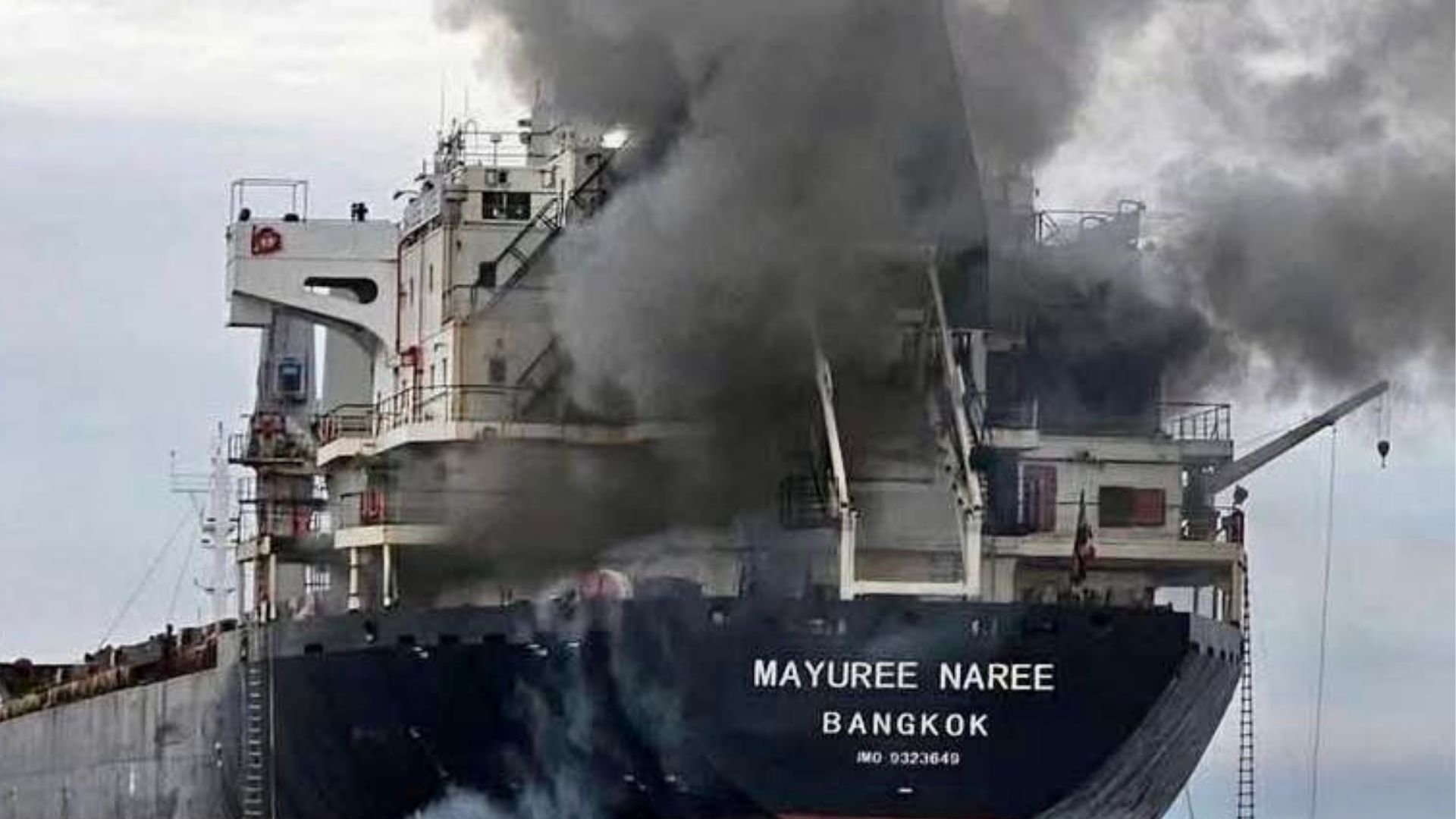
A Thai-flagged cargo ship was attacked near the Strait of Hormuz on Wednesday, soon after departing from a port in the United Arab Emirates, according to the Royal Thai Navy. Twenty crew members have been rescued, while three sailors are still missing.
The vessel, Mayuree Naree, a bulk carrier operated by the Thai shipping company Precious Shipping Pcl, had sailed from Khalifa Port in the UAE and was en route to Kandla Port in India when it was targeted while passing through the Strait of Hormuz. Iran has since taken responsibility for the strike.
Iran has reportedly allowed Bangladeshi oil and LNG vessels to transit safely through the strait after receiving assurances from Dhaka.
Shipping experts have also noted unusual behavior among some vessels. Several ships are reportedly using their Automatic Identification System (AIS) to identify themselves as Chinese-owned. This may be an attempt to avoid potential targeting, as Iran has not threatened Chinese shipping.
While Iran pressures global shipping routes, the US continues to intensify its military operations against Iranian naval forces.
According to US Central Command, American forces have struck thousands of targets inside Iran since the conflict began.
READ ALSO: 183m Atlassian Central Set to Become World’s Tallest Timber Skyscraper in Sydney
Admiral Brad Cooper said in a video statement that US forces have carried out extensive attacks against Iranian naval capabilities. “We have struck more than 5,500 targets inside Iran, including over 60 ships using precision weapons,” Cooper said.
He added that recent strikes destroyed the final vessel in Iran’s Soleimani-class catamaran warships, eliminating the entire class from active operations. The destroyed vessels were part of Iran’s strategy to defend coastal waters and disrupt enemy shipping.
Despite these military actions, the greatest global impact may come from disruptions to the Strait of Hormuz itself. Even small attacks or threats in the narrow shipping corridor can cause shipping companies to reroute vessels, delay cargo deliveries, or raise insurance costs.
Some shipping insurers have already increased premiums for vessels operating in the Gulf region. The US has proposed escorting commercial ships with naval warships, but the plan has not yet been implemented.
If naval escorts begin, the risk of direct military confrontation at sea could increase. The conflict continues to send shockwaves through global energy markets.
As long as tensions remain high in the Strait of Hormuz, the world’s oil and gas supply chains will remain vulnerable to sudden disruptions.