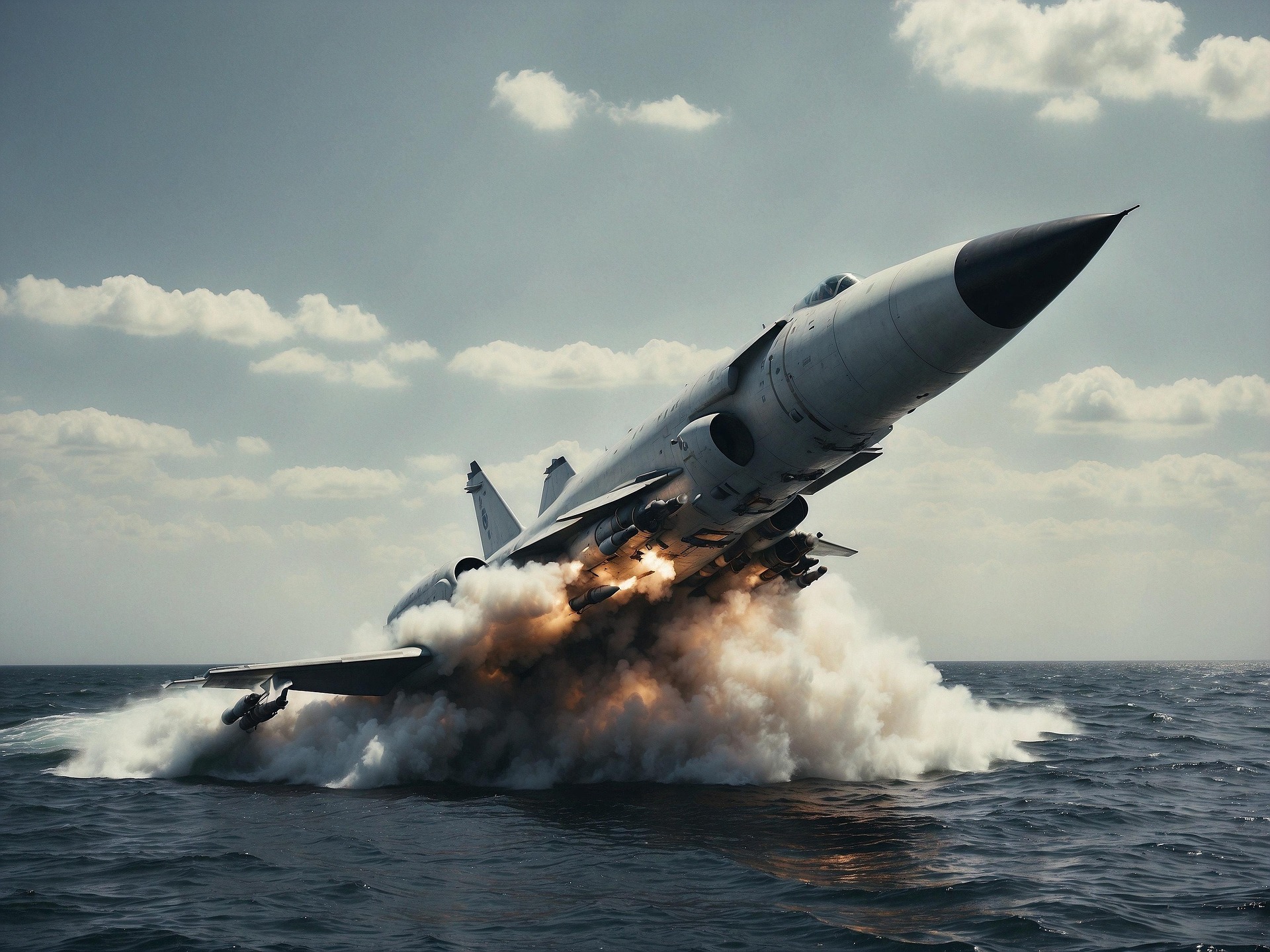
Iran has launched its most advanced ballistic missile, the Khorramshahr-4, against American military installations in Qatar and Bahrain. The attack came as part of a massive wave of about 600 missiles and 2,000 drones directed at Israel, marking a major escalation in the region.
The coordinated strikes targeted key U.S. military infrastructure across the Gulf. Qatar hosts Al Udeid Air Base, the largest American military installation in the Middle East, while Bahrain houses the headquarters of the U.S. Navy’s Fifth Fleet. By hitting these locations, Iran demonstrated its ability to threaten the regional basing network that supports U.S. operations.
According to information published on March 6, 2026, by the French television channel LCI through its correspondent Siavosh Ghazi in Iran, Iranian forces used the Khorramshahr-4 medium-range ballistic missile for the attacks. The missile represents the most advanced system in Iran’s Khorramshahr family of weapons.
READ ALSO: https://modernmechanics24.com/post/nsls-ii-to-launch-x-ray-cdi-beamline/
The Khorramshahr-4, also called the Kheibar missile, can travel about 2,000 kilometers. This range puts most targets across the Middle East within reach, including Israel and U.S. military facilities throughout the Gulf region. The missile carries a heavy warhead estimated between 1,500 and 1,800 kilograms, one of the largest payloads in Iran’s arsenal.
The weapon includes improved guidance systems that make it harder to stop. Analysts say the Khorramshahr-4 carries a maneuverable re-entry vehicle that can change its path during the final stage of flight. This feature makes interception difficult for modern defense systems like Patriot, THAAD, and Arrow deployed across the region.
Iran’s Islamic Revolutionary Guard Corps operates the missile from hidden underground facilities scattered across the country. These so-called “missile cities” consist of tunnel networks carved into mountains, with storage areas, launch equipment, and command centers protected from air strikes. The dispersed system ensures that many missiles would survive any pre-emptive attack.
The massive scale of the operation reflects Iran’s strategy of saturation attacks. By launching hundreds of missiles and thousands of drones together, Iranian forces can overwhelm air defense networks that must track and intercept multiple types of threats simultaneously. The approach forces defenders to use many interceptors quickly.
WATCH ALSO: https://modernmechanics24.com/post/hyundai-atlas-humanoid-robot-wins-honor/
Independent confirmation of damage to Gulf military facilities remains limited at this stage. Defense analysts note that verification of actual missile types used and interception rates will be important indicators of whether Iran intends to expand its campaign against regional military infrastructure.
The reported use of the Khorramshahr-4 against Gulf bases demonstrates the growing reach of Iran’s missile program. With more than 3,000 ballistic missiles in service, Iran fields the largest such force in the Middle East. These weapons give Tehran a powerful way to project force across the region despite its limited air force and navy.