Scientists have identified a rare crystal hidden inside debris from the 1945 Trinity nuclear test in New Mexico.
The material formed during the first atomic bomb explosion under extreme heat and pressure that scientists cannot reproduce in normal laboratories.
Researchers say the discovery offers new clues about how matter behaves during powerful natural and human-made events.
Rare Crystal Found Inside Trinity Test Glass
Researchers discovered the crystal inside trinitite, a glassy material created when the Trinity bomb blast melted desert sand.
The crystal was trapped in a copper-rich droplet within the green radioactive glass. Scientists confirmed it as a calcium-copper-silicon clathrate, a structure never before identified in nuclear explosion debris.
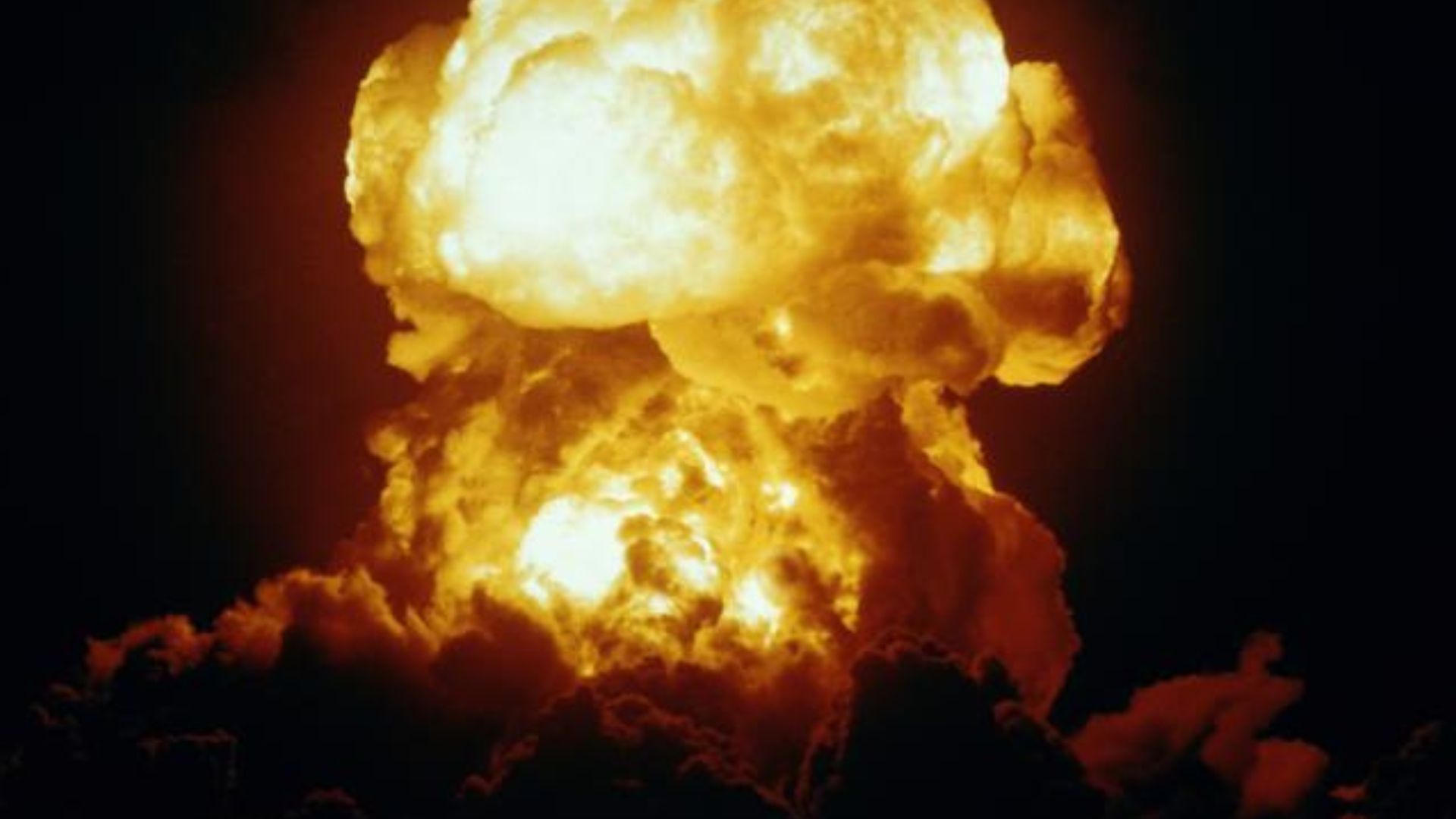
The Trinity test took place on July 16, 1945, in New Mexico. It was the first detonation of a nuclear weapon in history. The explosion released energy equal to around 21,000 tons of TNT and transformed the surrounding landscape in seconds.
Researchers said the crystal formed during a short period of extreme temperature and pressure. The blast also produced rapid melting, vaporization, and cooling at extraordinary speeds. These unusual conditions allowed atoms to arrange into structures that do not normally appear on Earth.
Why Scientists Cannot Recreate It
Scientists explained that the crystal is metastable. It means it only survives under very specific conditions. Standard laboratory environments cannot reproduce the same combination of heat, pressure, and ultrafast cooling as those created during a nuclear blast. This makes the material extremely rare and difficult to study.
Lead researcher Luca Bindi from the University of Florence said the finding is important for understanding matter under extreme conditions.
He explained that the crystal formed alongside an unusual silicon-rich quasicrystal previously discovered in Trinity debris. Both materials were developed in a chaotic, short-lived environment created by the explosion.
Clathrates are compounds where atoms form cage-like structures around other elements. These shapes can resemble geometric forms such as dodecahedra or other complex solids. In this case, the newly identified crystal formed a cubic structure unlike common minerals found in nature.
Extreme Physics and Future Research
Researchers believe similar processes can happen during lightning strikes, meteorite impacts, and planetary collisions. These violent events also generate massive heat and pressure for very short periods.
WATCH ALSO: US firm’s new giant robot can help tackle wildfires
Scientists say studying Trinity materials helps them understand how new minerals and structures appear in such environments.
The discovery also has implications for condensed matter physics and materials science. It shows that extreme events can create substances far beyond the limits of modern industrial synthesis.
Researchers say these findings improve scientific understanding of crystal stability and atomic behavior under intense stress. The study was published in the journal Proceedings of the National Academy of Sciences.
Scientists plan to continue examining microscopic materials formed during nuclear tests and other extreme events. Future discoveries from these materials may help researchers better understand both Earth processes and conditions found across the universe.