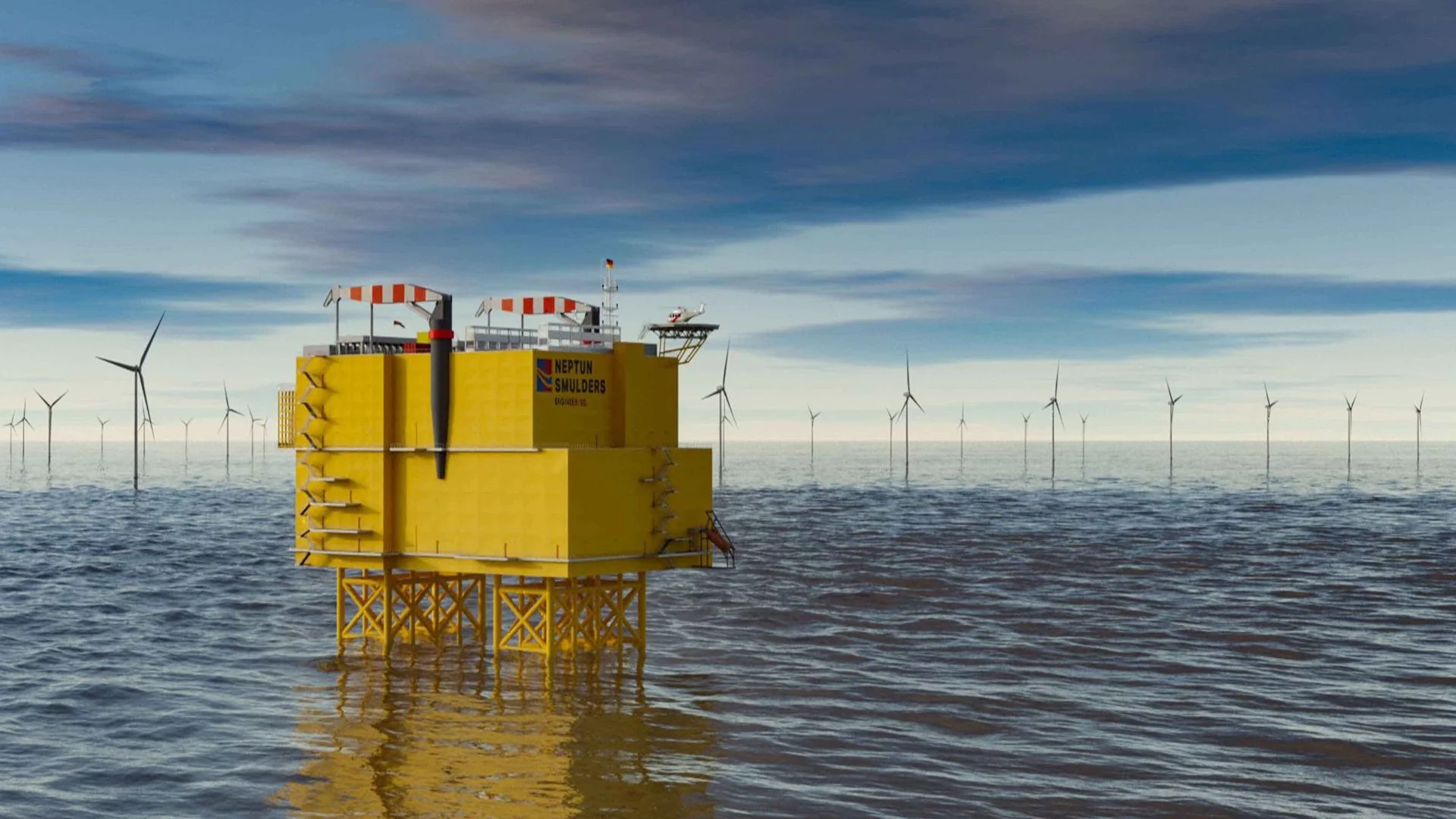
Siemens Energy and Neptun Smulders Offshore Renewables (NSORe) have been selected to deliver a major sea grid connection project for German transmission system operator 50Hertz.
The project, known as North Sea Connector 2, will support the transfer of up to 2 gigawatts of electricity generated by offshore wind farms in the North Sea. Once completed, the system will help move renewable energy from offshore locations to consumers and industries on land.
The contract highlights Germany’s continued investment in expanding renewable energy infrastructure. Offshore wind capacity in the North Sea is growing rapidly as the country works to reduce carbon emissions and strengthen energy security.
Efficient grid connections are essential because electricity generated far from shore must be transported reliably to population centers.
Under the agreement, NSORe will build the offshore converter platform that forms the heart of the transmission system. The structure will be manufactured mainly at the Neptun Werft shipyard in Rostock-Warnemünde.
NSORe is a joint venture that combines the expertise of Germany’s Neptun Werft and Belgium-based construction company Smulders.
READ ALSO: China Launches First Marine Welding Robot System, Transforming Offshore Platform Construction
North Sea Connector Strengthens
The North Sea Connector 2 project is designed to handle up to 2 gigawatts of power. That amount of electricity is enough to supply millions of households, depending on consumption levels and grid demand. The connection will play a key role in integrating future offshore wind farms into Germany’s electricity network.
Siemens Energy will provide the electrical systems required to transmit power from the offshore platform to the mainland. These systems include transformers, converters, and advanced switchgear technologies. The company will also provide long-term maintenance, IT support, and operational services after the platform enters service.
High-Voltage Direct Current (HVDC) technology will be used in the project. HVDC is commonly used for long-distance electricity transmission because it reduces energy losses compared to conventional AC systems. This makes it particularly suitable for offshore wind projects located far from the coast.
Tim Holt, a member of Siemens Energy’s Executive Board, said offshore grid expansion is one of the most demanding parts of the energy transition.
He noted that the company has expanded production capacity in Germany to support rising demand. Holt also emphasized the importance of strong partnerships with the maritime industry to deliver large-scale offshore projects.
German Manufacturing Takes Center Stage
Around 95 percent of Siemens Energy’s contribution to the project will be produced in Germany. Transformers and converter systems will be manufactured in Nuremberg, while gas-insulated switchgear will be supplied from Berlin.
The switchgear technology is designed without sulfur hexafluoride (SF₆), a greenhouse gas widely used in electrical equipment.
READ ALSO: NASA’s Pegasus Rover Set to Drive Artemis Astronauts Across the Moon’s South Pole
The company has invested several hundred million euros to expand production at these facilities. These investments are aimed at meeting growing demand for technologies needed in the energy transition. Increased manufacturing capacity is becoming increasingly important as Europe accelerates renewable energy deployment.
For 50Hertz, the project also demonstrates the competitiveness of domestic industrial capabilities. Chief Executive Officer Stefan Kapferer said the winning consortium succeeded through a transparent bidding process based on both price and technology.
He added that the project shows German shipyards can now compete successfully in the construction of offshore energy platforms.
Sea Grid Powers Germany
The North Sea is becoming one of Europe’s most important regions for offshore wind development. As wind farms move farther offshore and increase in size, more advanced transmission infrastructure is required. HVDC converter platforms have become major components because they enable efficient transport of large amounts of electricity over long distances.
NSORe was created specifically to serve the growing offshore wind sector in Europe and the US. The joint venture combines shipbuilding, engineering, and offshore construction expertise. Backed by the MEYER Group and Eiffage, the partnership offers complete project delivery from design and construction to final installation.
WATCH ALSO: Two Humanoid Bots Tackle 32-Box Job With Zero Human Help
The project reflects a wider trend across Europe, where governments and utilities are investing heavily in offshore transmission networks. Building wind farms alone is not enough to meet renewable energy goals. Reliable grid infrastructure is equally important to ensure clean electricity reaches homes, businesses, and industries.
As offshore wind capacity continues to expand, projects such as North Sea Connector 2 will become important. They help connect renewable energy resources to national grids while supporting domestic manufacturing and industrial growth. The successful delivery of this project will strengthen Germany’s renewable energy ambitions and help prepare the electricity network for future demand.