Sanctuary AI has taken a major step in expanding the use of Physical AI in industrial robots after successfully completing a complex manufacturing task for a global Tier 1 automotive supplier.
The company demonstrated that its AI-powered system can operate on industrial robotic platforms while meeting real-world factory production standards.
The system achieved a task success rate above 99.5%. It completed each cycle in 2.54 seconds while meeting the customer’s live production benchmarks. These results were validated against real factory performance requirements.
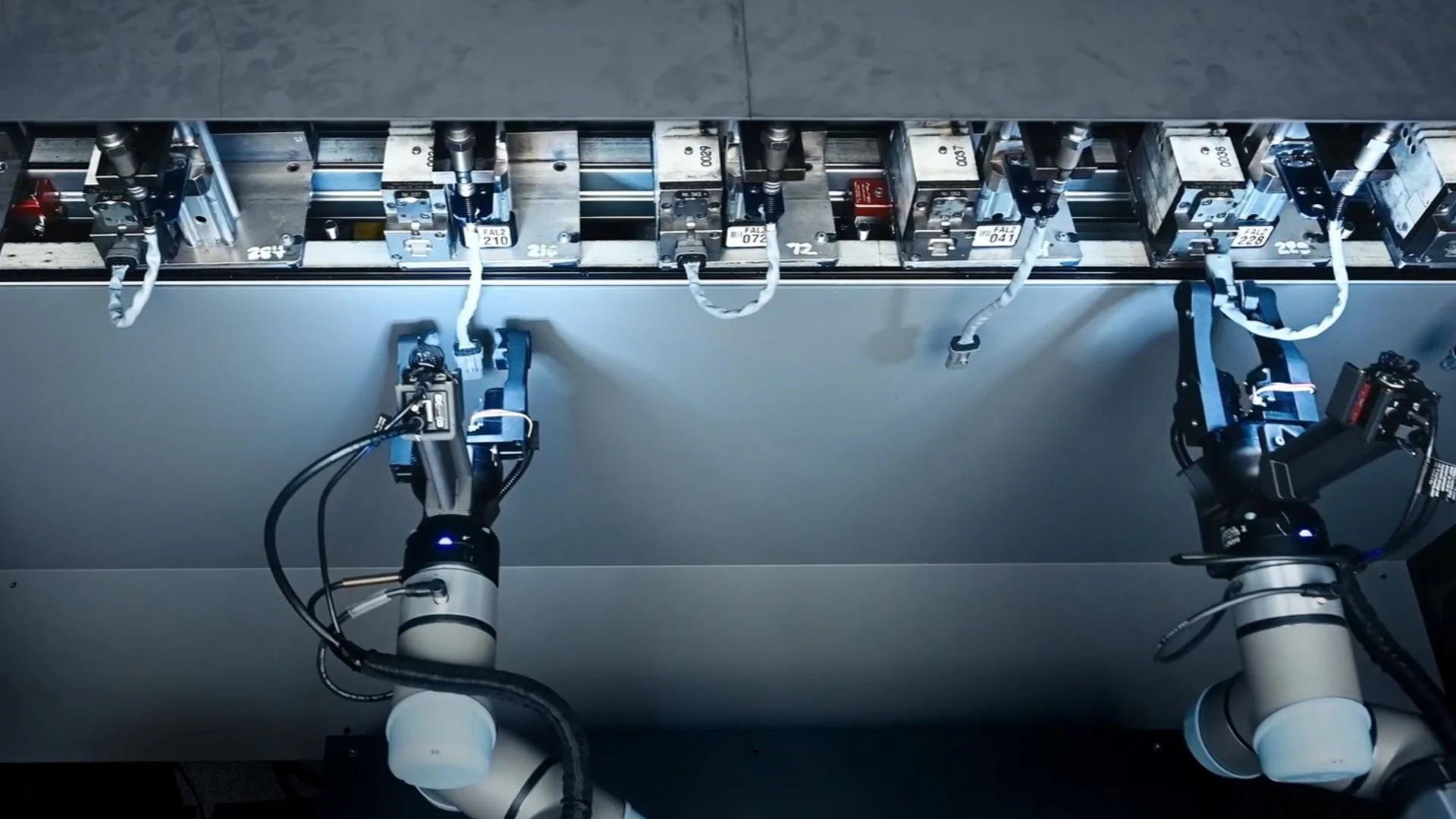
The demonstration focused on a wire plugging task used in automotive manufacturing. The process required a robot to insert flexible wires into specific targets. The task took place while parts moved continuously on a conveyor belt.
This type of work is often difficult for traditional industrial automation systems. Flexible materials can bend, twist, and shift position during movement. That creates challenges for robots that rely on fixed and predictable conditions.
Sanctuary AI said its Physical AI platform successfully handled these changing conditions. The system matched the customer’s existing production line’s throughput. According to the company, this represents a first-of-its-kind achievement for this specific industrial task.
READ ALSO: China Study Reveals Detailed PLA Strategy to Target US Carriers at 3,000km Range
Existing Industrial Robots, New Strategy
The announcement also marks a significant change in Sanctuary AI’s business strategy. The company is now deploying its Physical AI software on commercially available robotic systems. This approach allows customers to adopt the technology without waiting for the large-scale deployment of humanoid robots.
Traditionally, Sanctuary AI has been known for developing advanced humanoid robotics technologies. However, the company now sees immediate opportunities in existing industrial environments. By using current robotic hardware, businesses can begin using Physical AI sooner.
Physical AI refers to artificial intelligence that allows machines to understand and interact with the physical world. Unlike conventional automation, these systems can adapt to changing environments and unexpected situations. This makes them better suited for tasks that require dexterity and real-time decision-making.
The company’s hardware-agnostic approach means its AI is not tied to a specific robot design. Instead, the software can operate across different robotic platforms. This flexibility can reduce deployment costs and simplify adoption for manufacturers.
Sanctuary AI believes this strategy will accelerate the use of intelligent robotics in industry. It also lays the groundwork for future industrial humanoid robots. The same AI models can eventually support more advanced robotic systems as hardware continues to improve.
READ ALSO: Swarm Aero Picks Honeywell’s TPE331 Engine For New Autonomous Defense Aircraft
Why This Matters for Manufacturing
Manufacturers worldwide continue to face labor shortages and rising production demands. Many companies are looking for automation solutions that can handle complex tasks without extensive reconfiguration. Physical AI offers a potential answer to these challenges.
Traditional industrial robots perform well in highly structured environments. However, they often struggle when objects vary in position or shape. Tasks involving flexible materials, moving targets, or frequent changes are usually performed by human workers.
Sanctuary AI’s demonstration suggests that AI-powered robotic systems are becoming capable of handling more of these difficult jobs. Maintaining high accuracy while matching production speeds is especially important. Factories cannot sacrifice throughput when introducing new technology.
Olivia Norton, co-founder and chief technology officer of Sanctuary AI, said industrial customers need AI systems that meet both performance and cycle-time requirements. She said the company designed its models from the start to prioritize reliability, safety, and production performance. Norton added that solving contact-rich dexterity challenges is essential for meaningful enterprise adoption.
The company is headquartered in Vancouver, Canada. It brings together specialists in robotics, machine learning, and Physical AI development. The team has spent years working on problems that have traditionally limited industrial automation.
WATCH ALSO: Elon Musk’s Starlink connects 22,000 students across Ghana with high-speed internet from space
For manufacturers, logistics providers, and other labor-intensive industries, the technology offers an immediate deployment option. Companies can integrate Physical AI into existing robotic systems rather than replacing entire production lines. This approach can speed up implementation and reduce operational disruption.
The successful automotive manufacturing trial highlights a growing shift in industrial automation. As Physical AI continues to mature, more factories may adopt intelligent robotic systems capable of handling increasingly complex real-world tasks. That trend has the potential to reshape production environments and expand the role of AI across the global industry.