Researchers have identified the quantum Zeno effect as a key challenge for scaling quantum computers.
The study explains how tiny environmental disturbances can slow or even halt calculations in large qubit systems, highlighting the need for stronger protection methods as quantum technology advances.
As quantum computers continue to grow in size, researchers have identified a hidden challenge that may slow their performance.
A new study shows that the quantum Zeno effect can significantly slow certain quantum calculations as more qubits are added. The findings suggest that protecting quantum systems from environmental disturbances will become even more important as the technology advances.
The research was carried out by scientists at the Helmholtz-Zentrum Dresden-Rossendorf (HZDR) and published in the New Journal of Physics.
It focuses on adiabatic quantum computers, a type of quantum machine that solves problems by slowly changing the energy conditions of its qubits. According to the researchers, this approach may become vulnerable as quantum systems become larger.
Understanding The Process
Quantum computers use qubits instead of the binary bits found in conventional computers. Unlike ordinary bits, which can only be zero or one, qubits can exist in multiple states at the same time through a property known as superposition. They can also share information through quantum entanglement, allowing them to process certain complex problems much faster than today’s most powerful supercomputers.
READ ALSO: Cleaner Rare Earth Purification Method Uses Water and Electricity Instead of Toxic Chemicals
Adiabatic quantum computers follow a different computing method from many other quantum systems. Instead of repeatedly applying complex logic operations, they keep qubits in their lowest energy state, known as the ground state. The system slowly changes its energy landscape until the final ground state naturally represents the answer to the problem being solved.
Dr. Gernot Schaller, who leads Quantum Technologies at HZDR’s Institute of Theoretical Physics, said the quantum Zeno effect has largely been overlooked as a limitation for this class of quantum computers.
Institute Director Ralf Schützhold explained that adiabatic algorithms are attractive because they work across different quantum hardware platforms. Researchers are already testing these algorithms using superconducting circuits and trapped ions.
Quantum Zeno Effect Explained
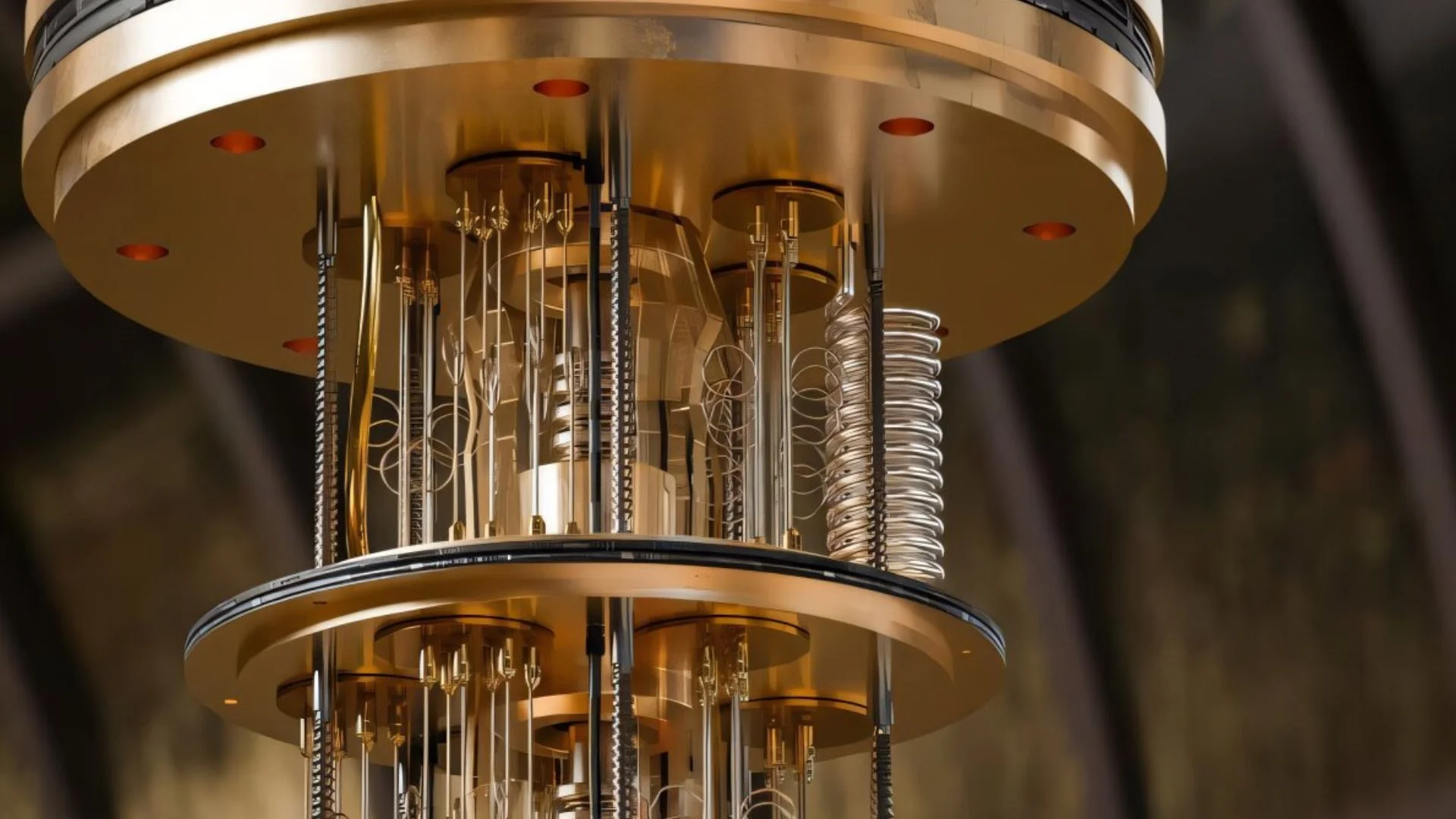
Quantum systems are extremely sensitive to their surroundings. Even small amounts of electromagnetic radiation or heat can disturb qubits and interfere with their ability to maintain superposition and entanglement. To reduce these effects, quantum computers operate inside carefully shielded environments at temperatures close to absolute zero, around -273.15°C.
Despite these precautions, complete isolation from the environment is impossible. The HZDR team’s theoretical model shows that larger adiabatic quantum computers become more sensitive to these unavoidable disturbances. As additional qubits are connected, the energy changes that guide the computation become increasingly small, making the system easier to disrupt.
The researchers found that each environmental disturbance acts like an unintended measurement of the quantum system. In quantum physics, repeated measurements can prevent a system from naturally evolving, a phenomenon known as the quantum Zeno effect. If disturbances occur often enough, the calculation slows dramatically and, in extreme situations, can almost stop completely.
Simple Everyday Example
The researchers compared the effect to baking a cake in an oven. A cake rises properly only when it remains undisturbed during baking. Constantly opening the oven door interrupts the process, preventing the cake from rising as expected.
Quantum systems behave similarly. Every unwanted interaction with the surrounding environment interrupts the smooth evolution of the qubits. Frequent interruptions make it increasingly difficult for the system to reach the final quantum state that contains the correct solution.
The comparison helps explain why even tiny disturbances become a major concern as quantum computers scale up. Larger systems require greater precision, leaving much less room for environmental interference. This makes stability just as important as increasing the number of qubits.
READ ALSO: US Warns Iran-Linked Hackers Target Water and Energy Systems With Industrial Cyberattacks
Improving System Stability
The researchers also outlined ways to reduce the impact of the quantum Zeno effect. Better shielding against electromagnetic radiation and improved cooling systems can reduce unwanted interactions between qubits and their surroundings. These engineering improvements remain essential for building reliable quantum hardware.
The team also highlighted active protection techniques such as the spin-echo method. This approach sends carefully controlled pulses through the quantum system to reduce the interaction between qubits and their environment. The researchers compared it to briefly increasing the oven’s heat to offset the effects of repeatedly opening the door.
The findings underline that scaling quantum computers involves more than simply adding additional qubits. Developers must also address the growing sensitivity of larger quantum systems to environmental noise from the earliest stages of design.
With governments and tech firms investing heavily in quantum computing, overcoming these stability hurdles will be key to building practical, large-scale quantum systems capable of solving real-world scientific, industrial and commercial challenges.