Rare earth elements are essential for many modern technologies, from electric vehicles and wind turbines to smartphones, LED lighting and medical imaging systems.
Scientists have now developed a cleaner way to separate these valuable materials using water and electricity instead of large amounts of hazardous chemicals. The research offers a new direction for rare earth processing by combining electrochemistry with specially designed mineral structures.
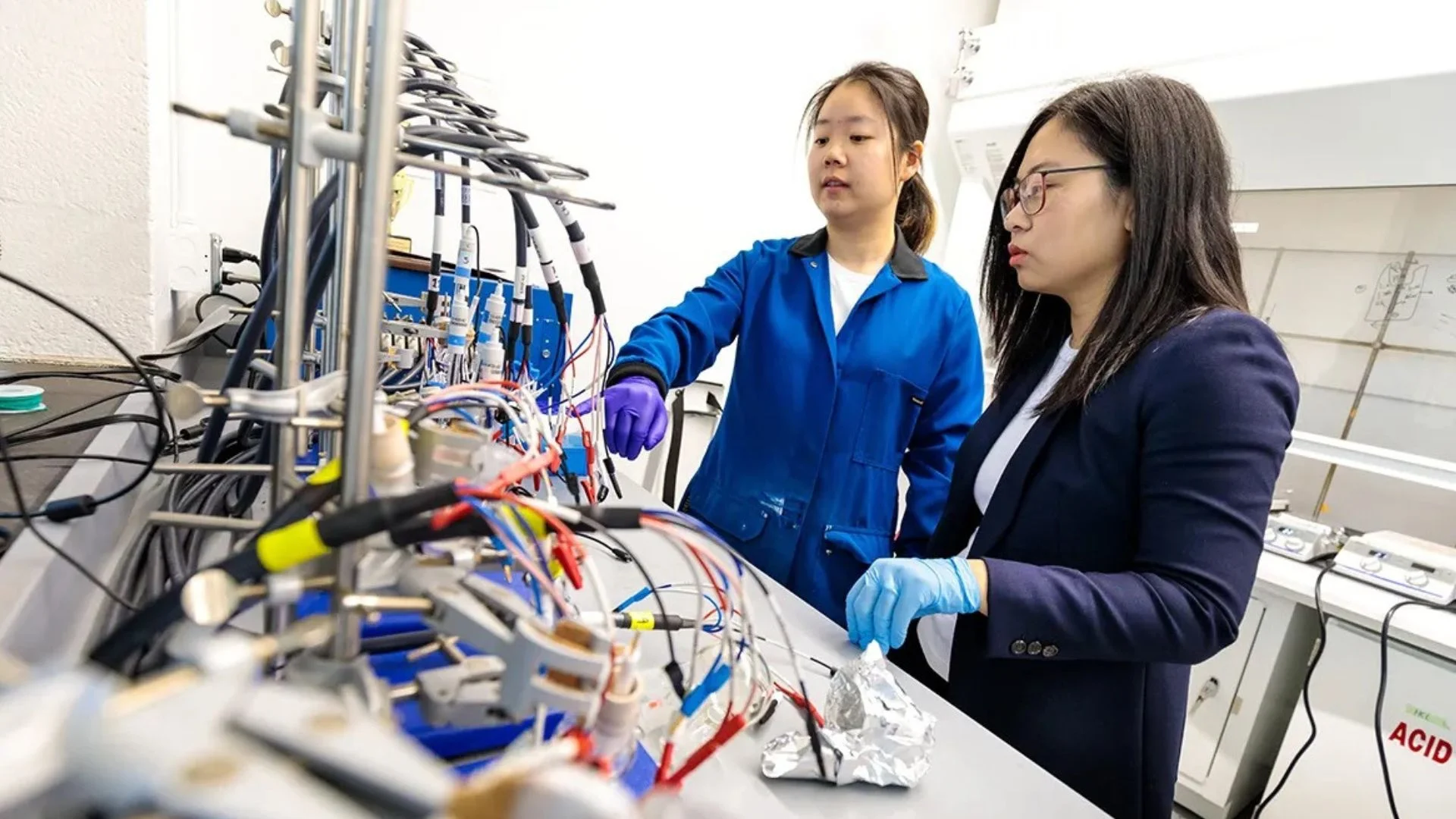
The study was led by researchers at the University of Chicago Pritzker School of Molecular Engineering in collaboration with Northwestern University and Argonne National Laboratory.
Their findings were published in Nature Chemical Engineering. The team said the approach provides new insight into how rare earth elements interact with layered materials while reducing the environmental footprint of the purification process.
Rare Earth Challenge
Rare earth elements include 17 metallic elements, consisting of the 15 lanthanides along with scandium and yttrium. Although these elements are widely used in advanced technologies, they rarely occur separately in nature. They are usually mined together, making purification one of the most difficult and expensive parts of the supply chain.
The challenge arises because the elements have nearly identical chemical properties. Traditional separation methods rely on specially designed chemical compounds and repeated treatment with large volumes of acid and organic solvents. These processes consume significant energy, generate chemical waste, and require multiple purification stages.
Researchers explained that separation remains difficult even after rare earth elements have been extracted from ore or recycled materials. Each element differs only slightly in size and acidity, making conventional techniques slow and resource-intensive. Finding a cleaner and simpler method has become an important goal as global demand for rare earth materials continues to rise.
Associate Professor Chong Liu and her research team focused on one subtle difference between the elements. When dissolved in water, each rare earth ion attracts surrounding water molecules, forming a protective shell. Lighter rare earth elements, such as lanthanum, carry a slightly larger water shell than heavier elements like dysprosium.
READ ALSO: American Fusion Sets Texatron Testing Timeline After Texas Approval, Eyes Commercial Growth
Layered Material Design
To use that difference, the researchers engineered a layered form of manganese oxide with extremely narrow channels between its stacked layers. These spaces measured only a few water molecules wide. The design allowed the material to distinguish between rare earth ions based on the size of their surrounding water shells.
When mixtures of rare earth elements entered the layered material, heavier elements fitted more tightly inside the channels. Their smaller water shells allowed them to bind more strongly with the manganese oxide. Lighter elements expanded the layers slightly, reducing how firmly they remained attached.
This natural difference divided the rare earth elements into separate groups without relying on organic solvents. Instead of using complex chemical reactions, the process depended on the physical structure of the layered material. According to the researchers, this represents the first use of electrochemical intercalation to separate similar lanthanide elements through carefully designed channel structures.
To understand the process in greater detail, scientists combined laboratory experiments with computer modelling.
Researchers at Northwestern University performed density functional theory calculations, a method that predicts how atoms interact using the laws of physics. Scientists at Argonne National Laboratory supported the work with high-resolution synchrotron X-ray measurements that confirmed the computer simulations.
The calculations showed how each rare earth element arranged its water shell while moving through the confined channels. Experimental methods alone could not directly observe these tiny atomic-scale changes. Together, the simulations and X-ray data provided strong evidence supporting the separation mechanism.
Electric Current Helps
Although the method successfully separated heavier and lighter rare earth elements, several commercially important elements remained difficult to distinguish. Neodymium and lanthanum, for example, still behaved too similarly. The researchers therefore looked for another way to increase the separation efficiency.
The team introduced magnesium ions while applying an electric current during purification. Magnesium acted as a structural support inside the layered manganese oxide. It prevented the channels from expanding when larger rare earth ions entered, an effect the researchers described as pinning.
Keeping the channels fixed made even tiny differences between similar elements much more noticeable. Rare earth ions that previously behaved almost identically began binding with different strengths. This significantly improved the material’s ability to separate closely related elements.
The improvement was substantial during testing. The enrichment of neodymium over lanthanum increased from a factor of 1.6 to 5.4 after magnesium was added. After two purification cycles, the researchers produced neodymium that reached approximately 97% purity.
The same strategy also improved separation for several other rare earth elements. The researchers said the process remains competitive with existing purification technologies while avoiding organic solvents. Using only water and electricity makes the approach more environmentally friendly and potentially easier to integrate into future manufacturing.
Future Industry Impact
Rare earth elements play a central role in the global transition towards cleaner energy and advanced electronics. Permanent magnets used in electric vehicle motors and wind turbines depend heavily on purified neodymium and dysprosium. Demand for these materials continues to increase as governments and industries invest in electrification and renewable energy technologies.
READ ALSO: New Sand Damper Design Makes Skyscrapers Safer While Cutting Costs and Maintenance Needs
Today, rare earth ores are mined in many countries, yet much of the world’s processing capacity remains concentrated in a limited number of regions. Cleaner purification technologies may help diversify where these materials are processed. Simpler methods that reduce hazardous chemicals may also lower environmental impacts and improve supply chain resilience.
The researchers emphasised that the technology is still at the research stage rather than ready for industrial deployment. Further work is needed to increase efficiency, test more rare earth combinations and adapt the process for large-scale manufacturing. Scaling the method will require additional engineering and economic evaluation.
Beyond rare earth elements, the study also highlights a broader scientific principle. Carefully controlling the width of tiny channels inside layered materials can determine which ions enter and remain inside them. That concept may find applications in other separation technologies involving batteries, recycling and industrial chemistry.
The research team has already begun testing the method with additional lanthanide elements. Meanwhile, computational scientists are refining their models to understand better how magnesium stabilises the layered structure. Continued progress may help develop cleaner purification systems that support growing demand for rare earth materials while reducing reliance on toxic chemical processing.