The US Missile Defense Agency is seeking a new mobile radar that can be rapidly deployed into a conflict zone and track hypersonic weapons.
The proposed Forward Based Mode Radar Next (FBM Radar Next) is designed to fit aboard a C-17 transport aircraft and become operational within hours. The agency outlined the plan in a pre-solicitation notice posted on September 16.
The program is being managed by the agency’s Mobile Land-Based Sensors Project Office. It aims to supplement or replace existing forward-deployed missile-tracking radars. The new system is intended to move faster and operate with a smaller footprint than many current forward-based systems.
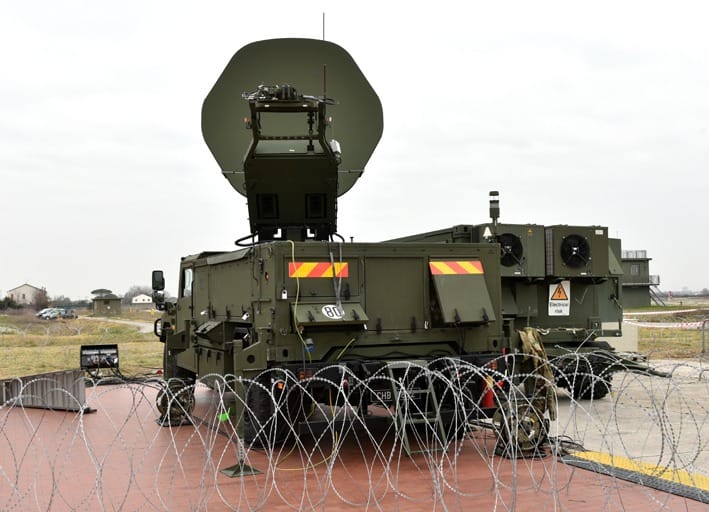
A mobile radar is a sensor system designed to move between locations rather than remain permanently installed. It combines radar antennas, electronic equipment, power systems and command functions in transportable units. Military forces can relocate such systems as operational conditions change.
READ ALSO: https://modernmechanics24.com/post/saildrone-us-navy-atlantic-depths-deal/
FBM Radar Next is being designed for transport inside a C-17 aircraft and tactical ground vehicles. Once it reaches its destination, the system is expected to become operational within hours. It should also be possible to dismantle it within minutes and move it to another location.
This mobility is important for forward-deployed missile sensors. Fixed installations can provide strong and continuous coverage, but their locations are generally easier to identify. A rapidly relocatable radar presents a different operating model by allowing commanders to shift sensors as the battlefield changes.
The proposed radar will monitor ballistic missiles, cruise missiles and hypersonic weapons. It will send tracking information to the wider US missile defense network. The information can help other systems build a clearer picture of an incoming threat and support decisions on how to respond.
Tracking Fast Hypersonic Threats
Hypersonic weapons generally travel at speeds above Mach 5 and can maneuver during flight. Their combination of high speed, maneuverability and changing flight paths makes continuous tracking particularly important. Radar provides this tracking by transmitting radio waves and analyzing the signals reflected from an object.
A radar can estimate an object’s position, direction and speed from these returning signals. Repeated measurements allow the system to build and update a track as the weapon moves. When connected to a broader defense network, this information can be shared with other sensors and command systems.
For hypersonic weapons, tracking is especially dependent on maintaining useful sensor coverage as the target moves. A mobile radar can change position to support different areas of a theater. Its ability to deploy and relocate rapidly is intended to help maintain coverage when the location of the most important threats or military forces changes.
The MDA also wants FBM Radar Next to operate with a minimal onsite crew. Automated health monitoring is another requirement. The system is expected to identify its own operating condition and provide information that can reduce the need for constant manual supervision.
WATCH ALSO: https://modernmechanics24.com/post/elon-musk-unveils-brain-computer-tech/
One Radar, Multiple Configurations
The proposed design is not limited to a single fixed arrangement. The MDA wants the radar to operate either as one large array or as several smaller arrays distributed across a wider area. This would allow the system to adapt its configuration to different operational requirements.
The agency also wants low physical, thermal and electromagnetic signatures. These signatures can reveal the presence of military equipment to an adversary. Reducing them is therefore part of the system’s survivability requirements.
Cost is another major element of the program. The MDA is asking industry to demonstrate a route to high-volume and affordable production. The approach indicates that the agency is considering a radar that can be produced and replaced at scale rather than relying only on a small number of highly expensive systems.
The program will use NOBLE, the MDA’s existing Other Transaction Authority framework for prototype development.
Companies will first have to pass an Entry Gate before they can compete for the main prototype work. The requirement is intended to ensure that participants have demonstrated actual hardware rather than relying only on theoretical designs or computer simulations.
Four Stages Lead Demonstration
At the Entry Gate, companies must provide a fully documented subarray design and working hardware at the array-element level. They must also supply test data covering areas such as transceiver performance and signal-path continuity. The agency will use these requirements to establish that proposed technologies have a physical hardware foundation.
Successful companies will then progress through four competitive prototyping cycles. Each cycle will end with a down-select that determines which participants continue to the next stage. The process is designed to move from early concepts toward a complete operational system.
Cycle 1 will focus on concept development. Cycle 2 will examine manufacturing readiness, while Cycle 3 will involve a subscale prototype supported by modeling and simulation. Cycle 4 will culminate in a full-scale prototype and an operational demonstration.
The MDA has not announced specific schedules for the four cycles. It has also not disclosed an estimated program cost or contract value. Companies that complete the prototype effort are expected to become eligible for a likely sole-source follow-on production contract.
READ ALSO: https://modernmechanics24.com/post/india-semicon2-chips-semiconductor-push/
Program Remains At Early Stage
Participating companies will need to obtain a Facility Security Clearance before beginning Cycle 1. This requirement reflects the classified nature of some work associated with advanced military sensing and missile-defense technology. The clearance process will therefore form part of the industry’s entry into the program.
The announcement is a pre-solicitation notice rather than a formal request for proposals. The MDA said the notice does not commit the agency to issuing a future solicitation. It also said that it is not currently accepting questions or feedback and has not announced when a formal solicitation may be released.
The proposed radar reflects the growing need for flexible missile-warning and tracking systems. For the US and its allies, mobile sensors can provide another layer of coverage alongside fixed radars, satellites and other detection systems.
If the program advances, its emphasis on rapid deployment, distributed operation, automation and affordable production will shape the development of the next generation of forward-based radar systems.