The condition and control of Iran’s nuclear facilities remain uncertain as military operations involving the US and Israel continue.
Officials and lawmakers say many key questions remain unanswered, including the location of Iran’s enriched uranium stockpile and who currently controls it.
The military campaign was launched with the aim of weakening Iran’s nuclear capabilities. However, weeks after the first strikes, the situation surrounding Iran’s nuclear material remains unclear.
Claims About Iran’s Uranium Stockpile
During a recent interview, Steve Witkoff, a special envoy for Donald Trump, said Iranian negotiators told US officials that Iran possessed a significant stockpile of enriched uranium.
Speaking on Fox News, Witkoff said the discussion happened during talks held before the current conflict began.
“Jared and I opened up with the Iranian negotiators telling us they had the inalienable right to enrich all the nuclear fuel they possessed,” Witkoff said, referring to Jared Kushner. “We responded that the president feels we have the inalienable right to stop you in your tracks.”
According to Witkoff, Iranian negotiators acknowledged that they controlled about 460 kilograms of uranium enriched to 60 percent purity.
“In that first meeting, the negotiators told us directly that they controlled 460 kilograms of 60 percent enriched uranium and knew it could make 11 nuclear bombs,” Witkoff said.
READ ALSO: https://modernmechanics24.com/post/3d-printed-prosthetic-limb-socket-sfu/
He added that uranium enriched to 60 percent could be upgraded to weapons-grade in about a week. Uranium enriched to 20 percent could reach weapons-grade levels in three to four weeks.
“They manufacture their own centrifuges to enrich this material,” Witkoff said. “There is almost no stopping them. They have an endless supply.”
Questions About Where Material Is Now
Despite the claims, the US administration has not publicly confirmed the current location of Iran’s nuclear material since the strikes began.
Military operations started Saturday with the goal of damaging Iran’s nuclear program. But there is no clear information about where the enriched uranium is stored now or who controls it.
A senior US official said that much of the material was believed to be located in Isfahan Nuclear Technology Center, while some uranium remained at Natanz Nuclear Facility and Fordow Fuel Enrichment Plant.
“It can be a long and cumbersome process in extracting it and covering it up,” the official said.
“I think the first question is where it is. The second question is how we get to it and gain physical control. After that, the president and agencies like the CIA would decide whether to transport it or dilute it on site.”
Conflicting Assessments of Iran’s Capabilities
Witkoff’s statements appear to conflict with earlier assessments from the Pentagon. In July 2025, Pentagon spokesperson Sean Parnell said previous US strikes had significantly delayed Iran’s nuclear ambitions.
WATCH ALSO: https://modernmechanics24.com/post/china-massive-tank-live-fire-test/
“It’s not just enriched uranium or centrifuges,” Parnell said at the time. “We destroyed the components they would need to build a bomb.”
He estimated that earlier attacks had set back Iran’s nuclear weapons capability by nearly two years.
However, officials now say Iran could rebuild some of those components, including centrifuges used for uranium enrichment.
Iran Rejects Nuclear Weapons Claims
Iran has repeatedly denied seeking nuclear weapons. The country says its nuclear program is intended for peaceful civilian purposes, such as energy production.
Iran was previously part of an international nuclear agreement that limited its nuclear activities. The US withdrew from that deal during Trump’s first term in office.
Iranian Foreign Minister Abbas Araghchi criticized the recent military strikes during an interview with ABC News.
“The attack on our country was unprovoked and unwarranted,” Araghchi said.
He said negotiations between Iran and the US had been progressing before the conflict escalated.
READ ALSO: https://modernmechanics24.com/post/bio-inspired-robotic-wing-underwate/
“A deal was within reach, and we left Geneva believing we could reach an agreement at the next meeting,” Araghchi said.
Congressional Lawmakers Seek Answers
Several members of the US Congress say the administration has not provided enough details about the nuclear situation in Iran.
Five senior Democratic lawmakers, including Gregory Meeks and Adam Smith, sent a letter to officials asking who currently controls Iran’s nuclear facilities and what safeguards are in place to prevent the material from being diverted or lost.
After a classified briefing, Meeks said lawmakers still lacked clear information.
“Here we are again without answers,” Meeks said. “Here we are again without complete transparency.”
Representative Pramila Jayapal also criticized the briefing.
“There’s nothing that we got that you don’t have,” Jayapal said.
READ ALSO: https://modernmechanics24.com/post/fission-power-moon-base-lunar-night/
However, Mike Johnson defended the administration’s actions.
“This is really a simple matter,” Johnson said. “Iran was building ballistic missiles at a pace that created a serious threat to our allies and our forces.”
He said the missile program helped shield Iran’s nuclear ambitions.
International Monitoring and Damage Reports
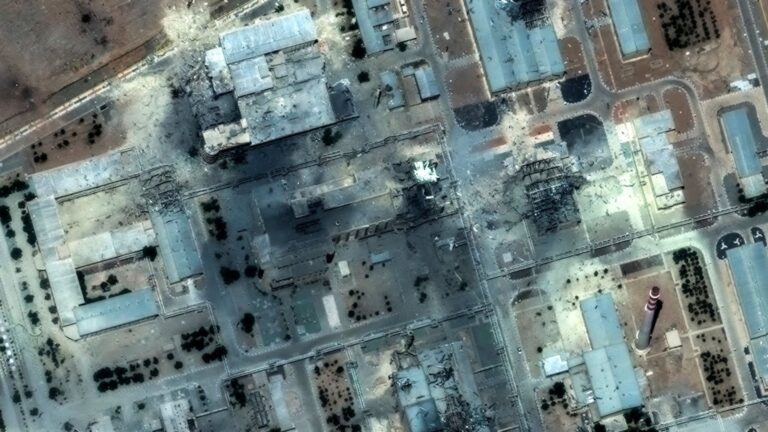
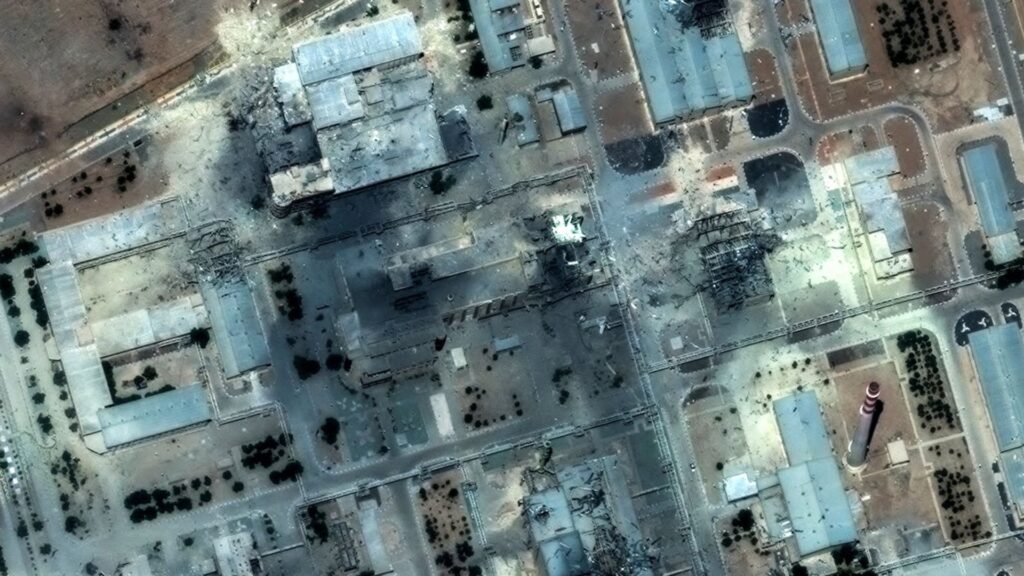
The International Atomic Energy Agency said satellite images showed damage to buildings near the entrance of the underground facility at Natanz. However, the agency said there were no signs of radioactive contamination.
“No radiological consequence is expected and no additional impact was detected at the enrichment plant itself,” the agency said.
Natanz had already been heavily damaged during earlier fighting.
Previous Strikes on Nuclear Facilities
In June 2025, the US and Israel carried out a major military operation targeting Iran’s nuclear sites. The operation, called Operation Midnight Hammer, targeted three major facilities: Natanz, Fordo, and Isfahan.
Officials said the strikes used powerful bunker-buster bombs designed to penetrate underground structures.
WATCH ALSO: https://modernmechanics24.com/wp-content/plugins/feeds-for-youtube/img/lightbox-placeholder.png
At the time, Trump said the operation had completely and totally obliterated Iran’s key uranium enrichment sites.
But later intelligence suggested Iran attempted to rebuild parts of its nuclear infrastructure at new locations.
Continued Military Actions
Israel has also conducted additional strikes against sites believed to be connected to Iran’s nuclear weapons research.
According to the Israel Defense Forces, one attack targeted a compound near Tehran linked to nuclear weapons capabilities. The strike removed an important part of Iran’s ability to develop nuclear weapons.
READ ALSO: https://modernmechanics24.com/post/bizarre-worlds-first-floating-hotel/
“This strike removes a key component in the Iranian regime’s capability to develop nuclear weapons,” the IDF said.
The attack was part of an ongoing campaign called Operation Rising Lion. The uncertainty surrounding Iran’s nuclear materials has raised concerns among international observers.
The main issue now is not just damage to nuclear facilities but control of the enriched uranium itself. If the material has been moved or hidden, it could complicate efforts to monitor Iran’s nuclear program in the future.
With military operations continuing and diplomatic talks stalled, the fate of Iran’s nuclear stockpile remains one of the biggest unanswered questions in the conflict.