

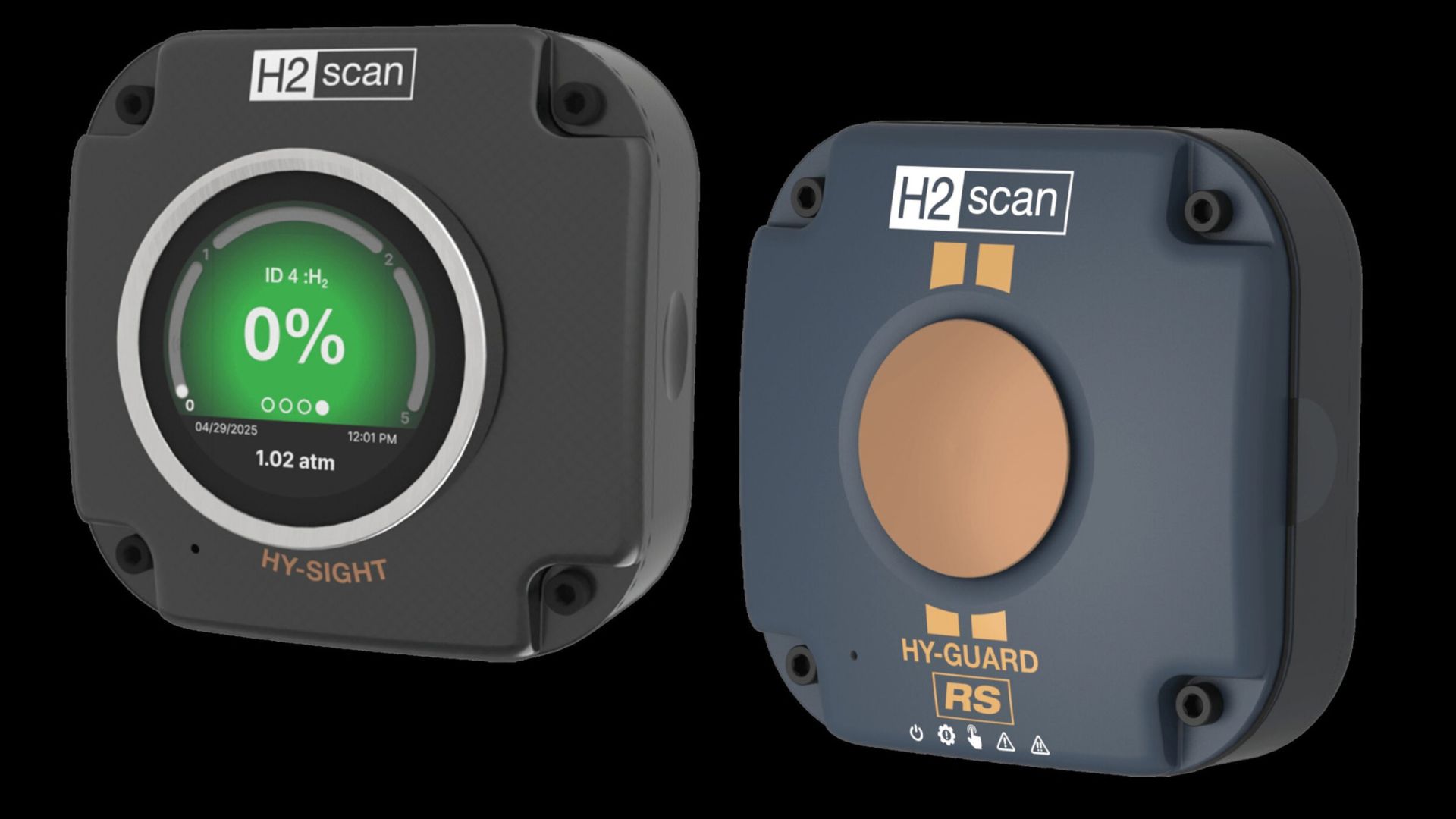
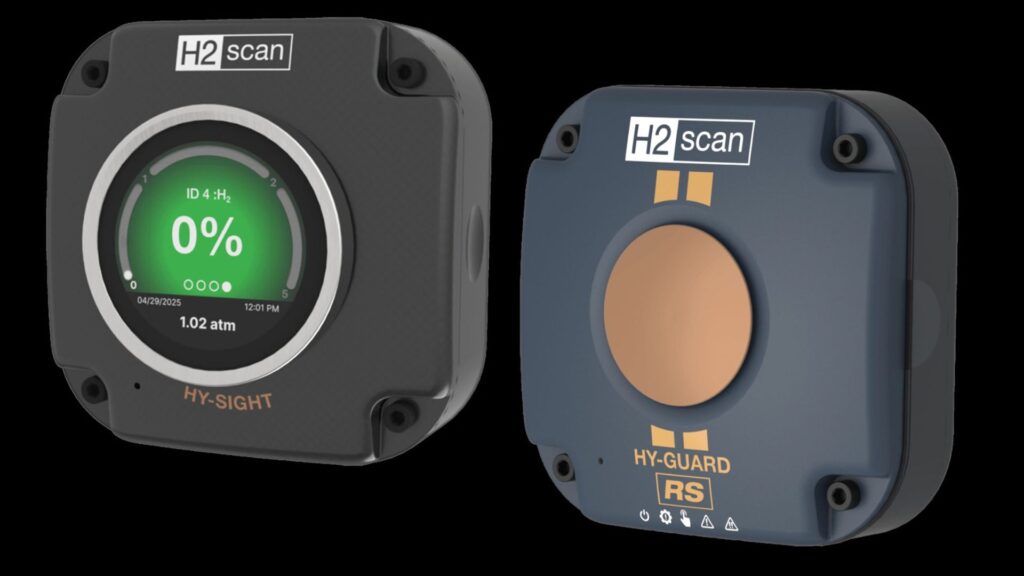
H2scan has introduced two new hydrogen-monitoring products to improve safety around lithium-ion battery systems.
The HY-GUARD RS and HY-SIGHT are designed to detect hydrogen early, provide local visibility, and connect with wider safety systems. The company says the products are intended for battery rooms, energy storage containers, cabinets and other facilities where lithium-ion batteries are deployed.
The HY-GUARD RS is a compact hydrogen monitor designed for continuous operation.
It can be installed near where battery off-gassing may occur, allowing operators to monitor hydrogen near its source. This approach gives facility teams a way to detect changing battery conditions without relying only on monitoring at a central location.
Hydrogen can be released during certain battery fault conditions and may indicate that a battery system requires attention. Early detection allows operators to identify changes before they develop into more serious safety events. The HY-GUARD RS is therefore designed around continuous monitoring rather than occasional checks.
The monitor supports flexible installation across different battery environments. H2scan says it can be positioned inside battery rooms, enclosures and energy storage containers. This flexibility helps operators place sensors where hydrogen detection provides the most useful information.
Centralized Battery Visibility
H2scan has developed the HY-SIGHT as a companion system for the HY-GUARD RS monitors. It provides centralized visibility into the conditions being monitored by connected hydrogen sensors. Operators can use this information to understand the status of monitored battery areas from a common interface.
HY-SIGHT also supports customizable communication options for integration with facility safety systems and Energy Storage Management systems.
This allows hydrogen monitoring information to become part of broader site-level monitoring and response arrangements. The system supports different deployment requirements rather than relying on a single fixed configuration.
The combination of the two products targets facilities that need both local detection and wider system visibility. HY-GUARD RS performs hydrogen monitoring near the battery environment. HY-SIGHT then brings information from those monitors together for centralized oversight.
Built For Long Deployment
H2scan says the new products are designed for long-term operation alongside battery systems. Their service life is intended to match or exceed the expected service life of the batteries they monitor. This can reduce the need to replace monitoring hardware as battery installations remain in operation.
Another feature is continuous self-calibration. According to H2scan, this removes the need for manual calibration and bump tests while supporting long-term operating reliability. The company says this design is intended to simplify maintenance requirements for facilities using the monitors over extended periods.
READ ALSO: https://modernmechanics24.com/post/nebraska-hafnia-antiferroelectric/
The products are also designed to scale across different installation sizes. A deployment can include individual battery cabinets, dedicated battery rooms or larger energy storage facilities. This makes the monitoring architecture applicable to both smaller installations and sites with multiple battery areas.
Expanding Battery Safety Coverage
HY-GUARD RS and HY-SIGHT form part of H2scan’s wider HY-GUARD battery safety system.
The company already positions the platform for applications involving lead-acid and nickel-cadmium batteries, and the new products extend its coverage to lithium-ion systems. This gives operators a common hydrogen monitoring approach across several battery technologies.
Lithium-ion batteries are used in energy storage systems and other applications that require high amounts of stored electrical energy.
As these installations grow, monitoring equipment must provide information operators can use during normal operation and when battery conditions begin to change. Hydrogen monitoring is one part of a wider safety strategy that can include temperature, electrical, fire, and system-management controls.
David Ellis, H2scan’s President and CEO, said the new products extend hydrogen monitoring to the locations where lithium-ion battery risks begin.
He said HY-GUARD RS and HY-SIGHT are intended to provide early warning and system visibility so customers can respond sooner and manage battery safety.
Supporting Global Energy Storage
The launch comes as energy storage systems are being deployed in a wider range of facilities and operating environments.
These systems can contain large numbers of battery cells within cabinets, containers or dedicated rooms. Monitoring technologies that can operate continuously and connect with existing safety infrastructure are therefore relevant to operators managing larger installations.
H2scan’s approach emphasizes detecting hydrogen near the battery source and making that information available at the system level. The two-part design separates local sensing from centralized visibility while allowing the products to work together. It also lets operators scale monitoring as a facility expands.
For international energy storage operators, integration and maintenance are important considerations when selecting monitoring equipment.
H2scan says HY-GUARD RS and HY-SIGHT address these requirements through flexible installation, communication options and continuous self-calibration. Adding them to the HY-GUARD portfolio expands the company’s battery monitoring offering across lead-acid, nickel-cadmium, and lithium-ion technologies.
The new products are positioned to give battery operators another layer of information for managing energy storage facilities. By placing hydrogen monitoring closer to potential off-gassing sources, the system is designed to provide earlier indications of changing battery conditions.












One Response