Huntington Ingalls Industries (HII) is positioning its Odyssey autonomy software as a control layer for naval forces operating with crewed and unmanned vessels in the same mission area.
The company says the system lets unmanned surface and underwater vehicles coordinate tasks, adjust routes, and continue missions when GPS signals or communications are degraded.
The approach targets maritime operations where human crews need to control large numbers of autonomous systems without directing every movement themselves.
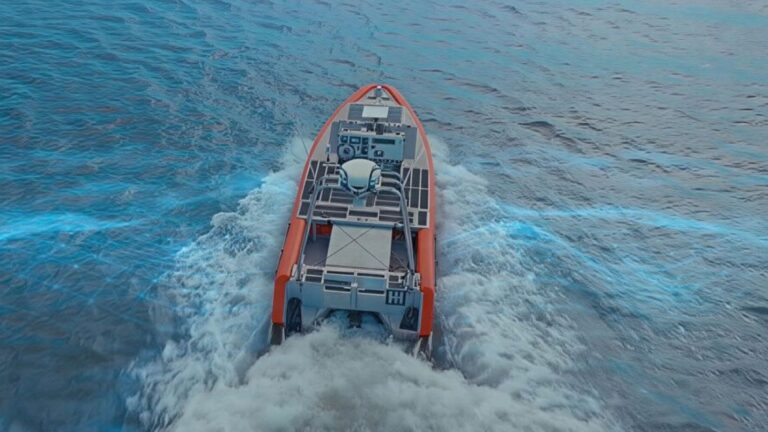
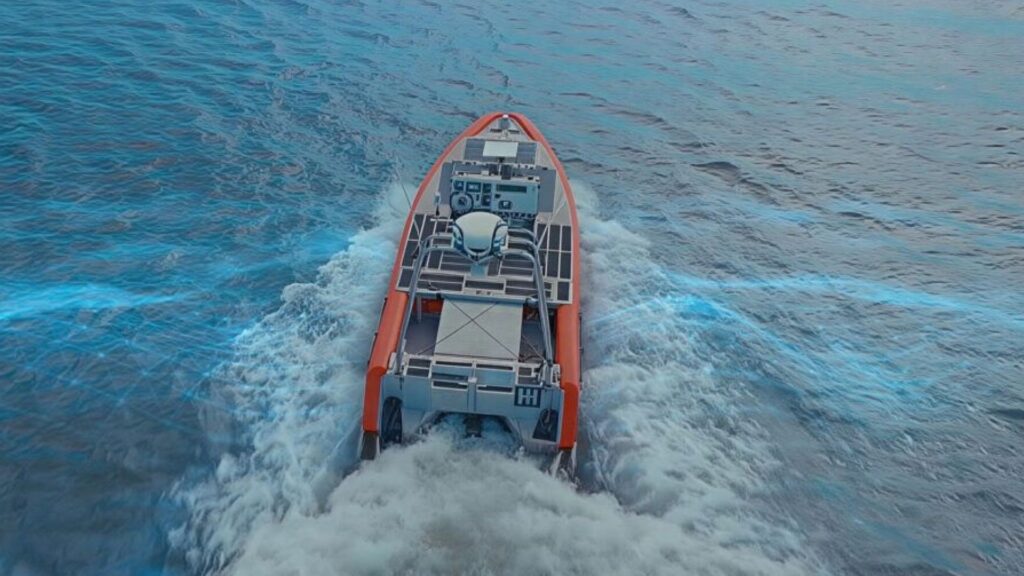
HII describes a mine-countermeasure scenario involving a crewed frigate, ROMULUS uncrewed surface vessels (USVs) and REMUS uncrewed underwater vehicles (UUVs).
The frigate can remain outside a hazardous area while unmanned systems search for possible mines, inspect suspicious objects and coordinate information between surface and underwater platforms. Operators retain control of important decisions, while the autonomous systems handle navigation, vehicle coordination and other routine actions.
In such an operation, a REMUS vehicle can search the seabed for possible mine contacts while another vehicle is directed toward an object for further classification.
A ROMULUS USV can support the underwater vehicles by providing communications, coordinating activities and carrying mission equipment. The arrangement allows different platforms to perform separate tasks while working toward the same mission objective.
This coordination differs from controlling each unmanned vehicle as an independent asset.
Odyssey is designed to support multi-vehicle operations in which platforms exchange information and adjust their actions as the mission changes. HII says its software can support both individual vehicle control and collaborative operations involving multiple systems.
The distinction matters because maritime communications are not always guaranteed. An unmanned vehicle operating underwater may lose direct contact with a surface vessel, while another platform may face a damaged or unavailable communications link.
READ ALSO: https://modernmechanics24.com/post/h2scan-hydrogen-monitoring-batteries/
HII says Odyssey is designed to support operations in limited- or no-bandwidth environments, allowing vehicles to continue executing assigned behaviors rather than relying on constant remote instructions.
Operating Without Constant Links
Odyssey combines navigation, vehicle control, sensor information, payload management and mission functions within a common autonomy framework.
In simple terms, the software gives an unmanned platform rules and capabilities for understanding its surroundings, deciding how to respond, and carrying out assigned tasks. HII describes this as an autonomy layer rather than simply an artificial intelligence system.
Jeremy Shattuck, chief technology officer of HII’s Unmanned Systems business group, has distinguished AI and autonomy.
He said AI can be part of an autonomy system. In contrast, autonomy connects information from the vehicle and mission levels so the platform can understand conditions and make decisions needed to complete an objective.
That architecture is intended to keep unmanned systems useful when normal navigation or communications services are disrupted.
HII says Odyssey can support route changes, obstacle avoidance, energy management, alternate communications paths and other autonomous responses. The company also describes capabilities for detecting and avoiding threats and coordinating with other unmanned platforms without continuous human control.
HII’s approach also extends beyond a single vessel type. The company says Odyssey can integrate with USVs, UUVs, unmanned aerial vehicles, and manned platforms, creating a common framework across different vehicle types. Its current architecture supports standards including the Unmanned Maritime Autonomy Architecture, Robot Operating System and Data Distribution Service.
The software can also connect with wider command-and-control systems. HII says Odyssey can work with its Mission Management System and other networks to support manned-unmanned operations across air and sea domains. That lets operators combine information from different systems rather than managing each autonomous platform through a separate control arrangement.
Open Architecture Drives Upgrades
A major part of HII’s strategy is its Modular Open Systems Architecture, or MOSA, approach. The basic idea is to allow sensors, payloads, software and third-party technologies to be added or replaced without rebuilding the entire vehicle.
HII says this design also reduces dependence on a single technology ecosystem as new capabilities become available.
The same approach applies to mission planning and control. HII’s Odyssey Mission software provides a common interface for configuring unmanned vehicles, planning missions, monitoring multiple operations and reviewing mission data afterward. It supports REMUS UUVs, Odyssey-based USVs and other vehicles that comply with relevant open architecture standards.
HII also offers Odyssey Sim for training and simulation. The company uses software, hardware, and vehicle-in-the-loop testing to evaluate autonomous behaviors before introducing them into operational systems. This lets engineers and operators examine how vehicles respond to different mission conditions without testing every scenario at sea.
The open architecture also allows outside technologies to be incorporated into the wider system. HII has previously integrated third-party autonomy technology with Odyssey aboard ROMULUS platforms, demonstrating how different software components can operate together. The company says this model is intended to make future upgrades faster as new sensors, payloads and autonomy functions are developed.
HII says Odyssey has more than two decades of development and testing behind it. Its current materials state that the technology has accumulated more than 6,000 operational hours on more than 35 USV platforms. At the same time, Odyssey Advanced Autonomy Solutions are integrated with REMUS and ROMULUS platforms in 30 countries.
REMUS And ROMULUS Expand
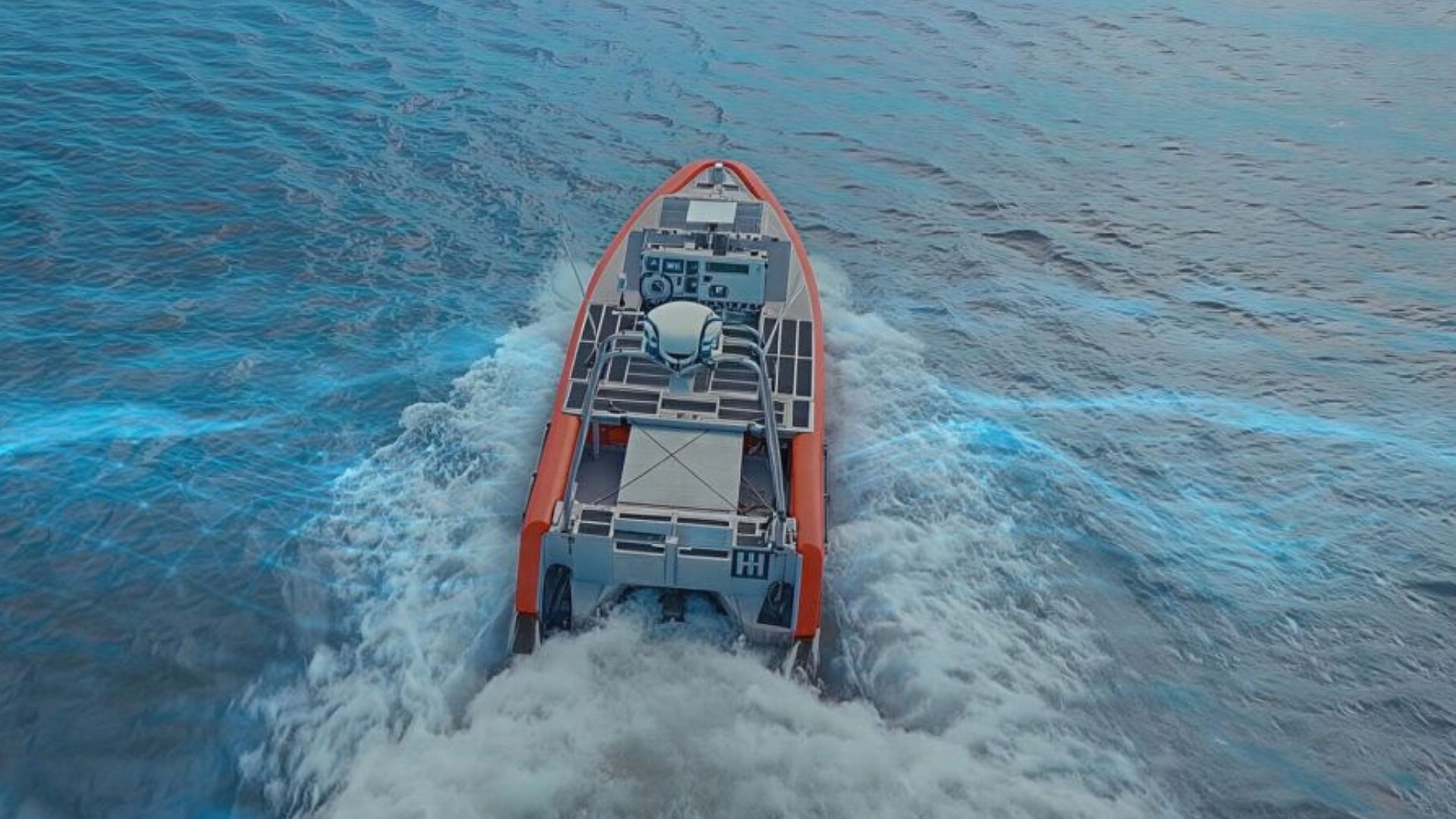
The software is closely tied to HII’s two main maritime unmanned families, REMUS and ROMULUS. REMUS vehicles are UUVs designed for missions including mine countermeasures. ROMULUS, meanwhile, is a family of unmanned surface vessels intended to support missions ranging from mine warfare to other distributed maritime operations.
HII says it has delivered more than 750 REMUS UUVs to customers in more than 30 countries. The company also states that more than 90% of those systems remain in operation after more than two decades, providing HII with a large base of operational experience for further autonomy development.
ROMULUS is being developed as a complementary surface platform for this ecosystem. HII has described the family as modular and AI-enabled, with Odyssey providing the underlying autonomy architecture for navigation, mission execution and collaboration with other vehicles. The company has also tested ROMULUS vehicles working with REMUS UUVs during surface-subsea demonstrations.
HII’s larger ROMULUS 190 is designed around a commercial-standard hull and is intended for repeatable production. HII has stated that the vessel is designed to exceed 25 knots, carry four 40-foot ISO containers and achieve a minimum range of 2,500 nautical miles.
The company is also developing smaller ROMULUS variants for more expeditionary missions. A 2026 demonstration involving the seven-foot ROMULUS 7 validated coordinated operations with a REMUS underwater vehicle, showing how a surface vehicle and an underwater vehicle can share tasks during the same mission.
READ ALSO: https://modernmechanics24.com/post/china-brain-computer-interface-mri-mind/
The wider development reflects a shift toward fleets in which crewed ships and autonomous platforms operate together.
For navies, the software challenge is no longer limited to making one vehicle navigate by itself, since many different systems must exchange information, divide tasks, and respond to changing mission conditions. HII is therefore presenting Odyssey as the coordination layer that connects individual autonomous platforms with the wider fleet.
As autonomous maritime systems move into more demanding operational roles, the ability to update their software without replacing their hardware becomes increasingly relevant.
HII’s Odyssey architecture is designed to support new sensors, payloads, algorithms, communications technologies and mission functions as requirements change. The result is a model in which crewed ships remain responsible for critical decisions while autonomous platforms handle more navigation, coordination, and routine execution around them.
For mine countermeasures and other contested maritime missions, that division of responsibility can let unmanned systems operate closer to areas that pose risks to sailors.
HII’s ongoing work with REMUS, ROMULUS and Odyssey indicates that the company is building the software and vehicle elements together rather than treating autonomy as a separate add-on. As these systems expand across surface and undersea fleets, coordinating them through a common architecture will remain central to their operational use.