Egypt has received a massive shipment of nuclear equipment for the El Dabaa Nuclear Power Plant, marking a major milestone for the country’s first nuclear energy project.
The delivery included a reactor pressure vessel, four steam generators, and a pressuriser sent from Russia to the Mediterranean construction site. Russian state nuclear company Rosatom described it as the largest shipment ever delivered for a single nuclear power plant project.
The cargo arrived from the Atomash manufacturing facility in Volgodonsk, located in Russia’s Rostov region. The equipment travelled aboard the Alexander Udalov, a vessel designed for both river and sea transport. This allowed the shipment to move directly from the factory pier in Russia to the specially built port at El Dabaa without changing transport systems.
The shipment weighed close to 2,000 tonnes. One of the largest components was the 330-tonne reactor pressure vessel intended for Unit 2 of the power plant. The cargo also included a pressuriser for Unit 1 and several steam generators needed for reactor operations.
The reactor pressure vessel is one of the most important parts of a nuclear power plant. It contains the reactor core where nuclear reactions generate heat to produce electricity. The vessel is designed to operate under very high pressure and temperature while keeping the reactor sealed and safe.
Rosatom said the reactor vessel has a planned operational life of 60 years. Engineers can extend the service life to 80 years through upgrades and maintenance. The company recently stated that future nuclear plants built by Rosatom are being designed for operating periods of up to 100 years.
READ ALSO: Airbus and Dassault Lead FCAS Drive to Link Fighters, Drones, and Battlefield Data
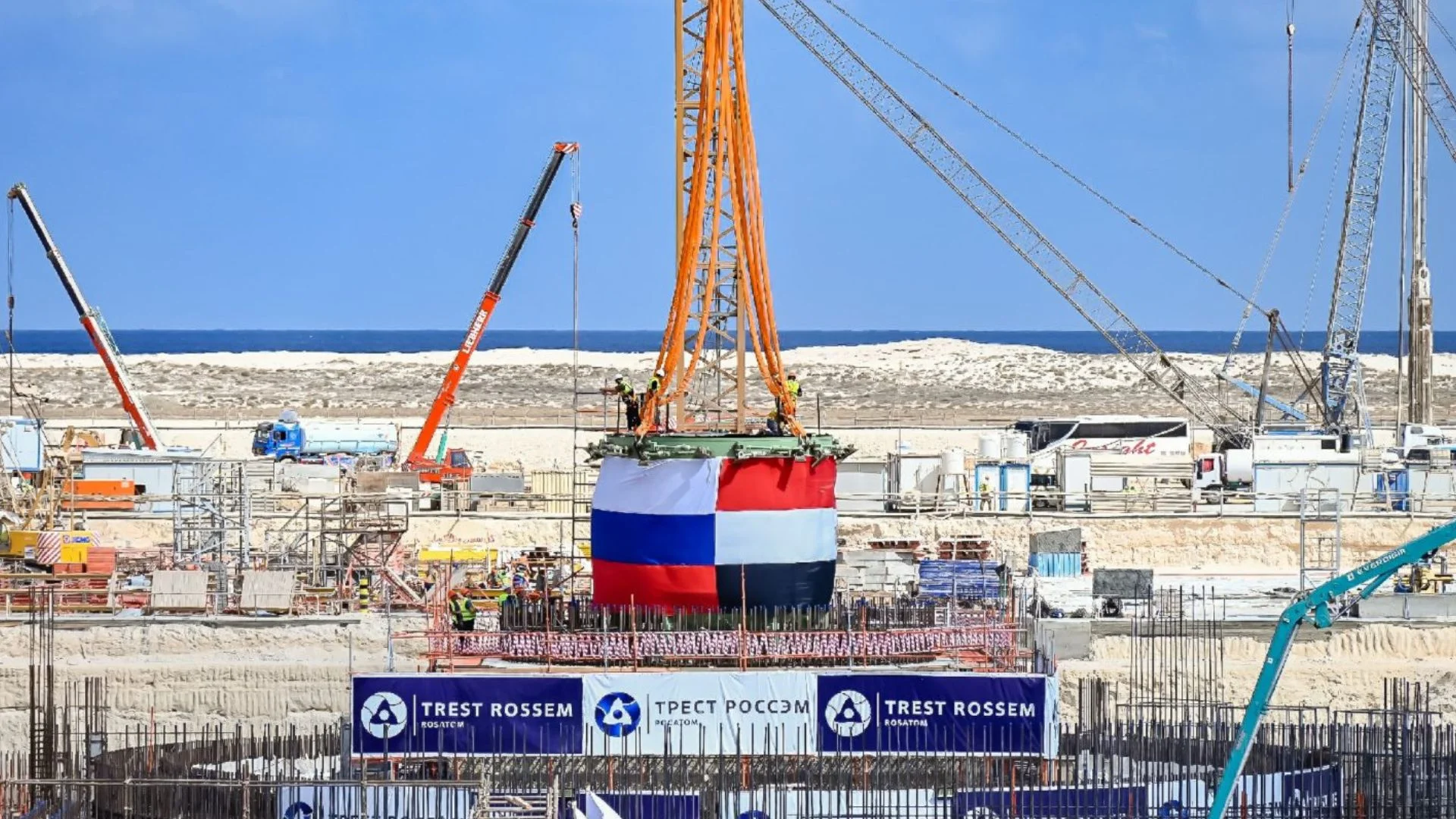
Special protection systems were used during transportation. The reactor vessel travelled under a 500-square-metre protective cover. The cover included an inner canvas layer to protect against moisture and an outer decorative layer for additional shielding during the journey.
Russian and Egyptian officials attended the unloading ceremony at El Dabaa port. Egypt’s Minister of Electricity and Renewable Energy, Mahmoud Esmat, said the nuclear project remains a key part of the country’s long-term energy strategy. He also praised the cooperation between Egypt and Russia and said work on the plant is progressing according to schedule.
Egypt’s Nuclear Power Plant Authority confirmed that training programs for future plant workers are also expanding. The country is preparing engineers and technicians who will eventually operate the reactors. These programs are considered important because nuclear power plants require highly trained staff and strict safety procedures.
El Dabaa Nuclear Plant Construction Moves Forward
The El Dabaa Nuclear Power Plant is located around 320 kilometres northwest of Cairo on Egypt’s Mediterranean coast. It will include four Russian-designed VVER-1200 nuclear reactors once fully completed. These reactors are already operating in Russia and Belarus and are part of Rosatom’s latest-generation nuclear technology.
Construction of all four units is underway almost simultaneously. Unit 1 received its first concrete in July 2022, while Unit 4 began construction in January 2024. The reactor pressure vessel for Unit 1 arrived in Egypt in October 2025 and was installed the following month during a ceremony attended by the presidents of Egypt and Russia.
The VVER-1200 reactor is a pressurised water reactor used in several modern nuclear projects. It includes advanced safety systems that automatically handle emergencies. The reactors are also designed to produce more electricity while using fuel more efficiently than older reactor models.
READ ALSO: MassRobotics Selects 11 Global Startups for 2026 Healthcare Robotics Accelerator Program
Russia’s Long-Term Role in Egypt’s Nuclear Energy Plans
The El Dabaa project is being developed under agreements signed between Egypt and Russia in 2017.
Under those contracts, Rosatom is responsible not only for building the power plant but also for supplying nuclear fuel throughout the plant’s lifetime. Russia will also help manage used nuclear fuel storage and provide support for maintenance during the plant’s first decade of operation.
Egypt sees nuclear energy as an important way to reduce dependence on oil and natural gas for electricity generation. The government aims for nuclear power to provide about 9 percent of the country’s electricity by 2030. Officials believe the first two El Dabaa units entering commercial operation before the end of the decade will help achieve that target.
The project also carries broader regional importance. Africa has seen very little new nuclear construction in recent decades, with South Africa’s Koeberg plant remaining the continent’s only operational nuclear power station for nearly 40 years.
WATCH ALSO: Drum-shaped antenna reflector on NASA-ISRO NISAR satellite deployed
El Dabaa is expected to strengthen Egypt’s position in regional energy production while supporting rising electricity demand and industrial growth.
The latest shipment highlights how construction at El Dabaa is moving into a more advanced stage. Major reactor systems are now arriving on-site as installation work across multiple units accelerates. The project is expected to play a major role in Egypt’s energy mix for decades after the reactors begin operation.