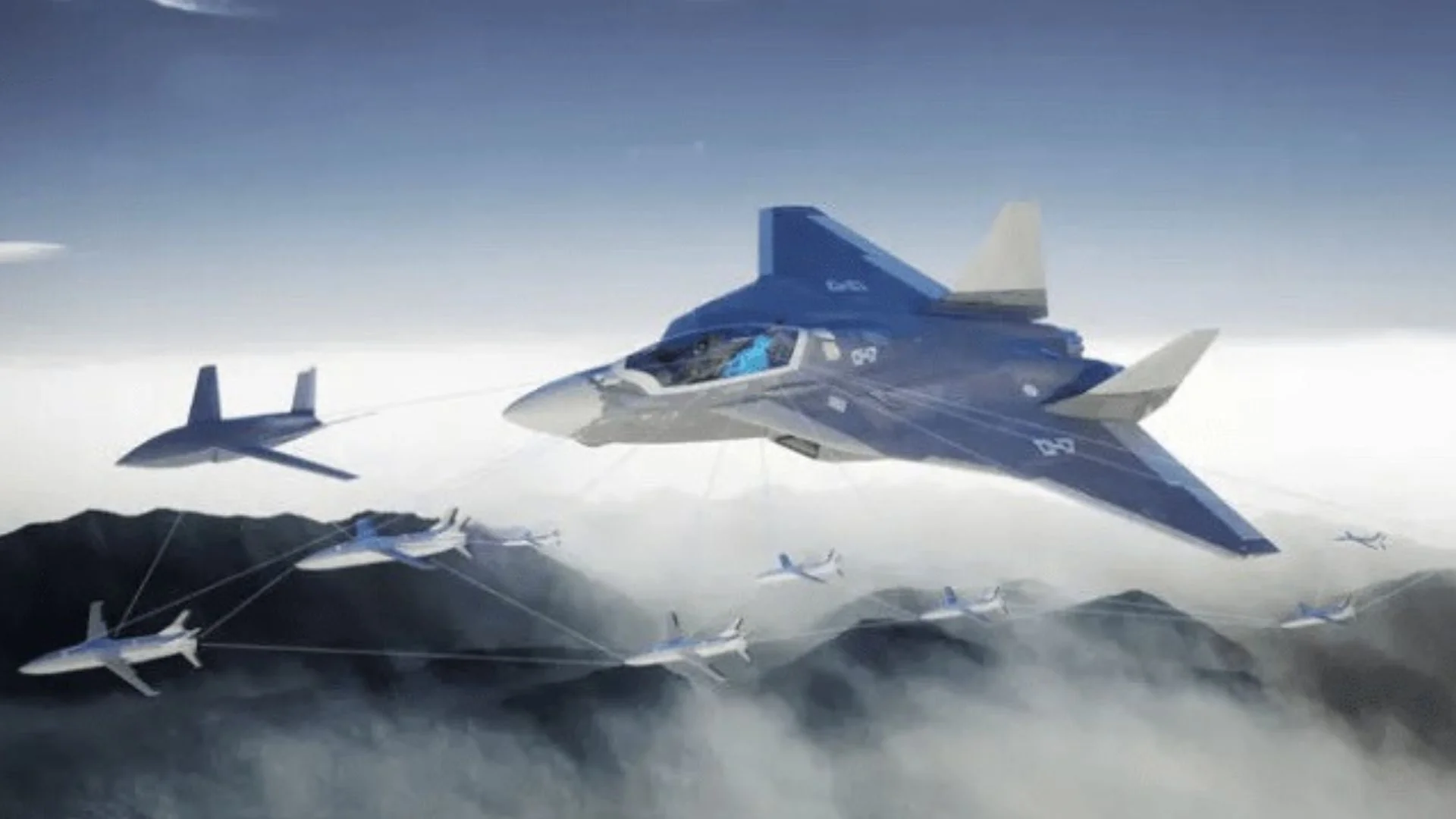
Europe is moving ahead with one of its largest defense technology programs, the Future Combat Air System (FCAS).
The project aims to build a fully connected air combat network that will replace existing fighter aircraft around 2040. France, Germany, and Spain are leading the initiative with support from major defense companies, including Dassault Aviation, Airbus, and Indra Sistemas.
FCAS is designed around a new concept of warfare where aircraft no longer fight alone. Modern combat increasingly depends on fast data sharing, artificial intelligence, and coordination across air, land, sea, space, and cyberspace.
European defense planners see FCAS as a way to maintain technological independence while preparing for future military threats.
FCAS Connects Fighters, Drones
At the center of the project is the Next Generation Weapon System(NGWS). This system combines a sixth-generation manned fighter aircraft with autonomous drones known as Remote Carriers. All platforms will be connected through a digital communication network called the Combat Cloud.
The New Generation Fighter will serve as both a combat aircraft and a flying command center. It will process battlefield information, coordinate missions, and control unmanned systems during operations. The aircraft is expected to feature advanced stealth technology, sensor fusion, and next-generation electronic warfare systems.
READ ALSO: D-Wave Secures Second-Year US Funding to Scale Superconducting Quantum Chip Tech
Remote Carriers will support crewed aircraft during combat missions. These drones will perform tasks such as surveillance, electronic attacks, target detection, and strike operations. Some drones will fly ahead of the fighter jet to reduce pilot risk and improve survivability during high-threat missions.
The Combat Cloud will connect every platform in real time. It will allow aircraft, satellites, drones, ships, and ground forces to exchange secure battlefield information within seconds. Military planners believe this level of connectivity will enable commanders to respond more quickly and make more accurate decisions during combat.
FCAS follows a ‘system of systems’ approach instead of focusing on a single aircraft. Each connected platform will work as both a sensor and a communication node inside a larger operational network. This structure is designed to make European forces more flexible and effective during future conflicts.
The FCAS project has already entered early development and demonstrator phases. Airbus is co-leading major parts of the program, especially the Combat Cloud and Remote Carrier development. Dassault Aviation is leading work on the New Generation Fighter, while Spain’s Indra Sistemas is contributing to sensors and mission systems.
The development timeline stretches across several decades. Initial capabilities focused on improved connectivity and battlefield awareness are expected to appear in the late 2020s. Manned-unmanned teaming systems involving drones and upgraded fighter jets are planned for the early 2030s.
By 2040, Europe aims to achieve the full operational vision of FCAS. Upgraded Eurofighter and Rafale aircraft will work alongside the new fighter platform and advanced drones. Military transport aircraft such as the A400M are also expected to launch Remote Carriers during future missions.
READ ALSO: Ukraine Unveils ARDAL Robotic UGV for Blind Grenade Strikes on Battlefield
Artificial intelligence will play a major role throughout the program. AI systems will help pilots process large amounts of battlefield data quickly and manage drone operations more efficiently. Human operators will still remain in control of weapons and mission decisions.
Secure satellite communications are another major part of the FCAS architecture. Europe plans to rely on satellite constellations for high-speed, encrypted communication and navigation. These systems will help maintain real-time awareness across large operational areas.
Despite its long-term goals, the FCAS project has faced several delays and disagreements. France and Germany have occasionally clashed over industrial leadership, intellectual property rights, and design priorities. These disputes have slowed negotiations and raised concerns about timelines.
Large multinational defense projects often face complex coordination challenges. Different countries want to protect their domestic industries while sharing development responsibilities. FCAS has become a test case for Europe’s ability to build advanced military technology through joint cooperation.
The program also carries major economic importance for Europe. FCAS is expected to create thousands of jobs across aerospace, defense, software, and communications industries. The technologies developed for military use could also support future civilian applications in aviation, cybersecurity, and artificial intelligence.
European leaders view FCAS as a strategic investment in defense independence. Many European countries currently rely heavily on non-European military technology and fighter aircraft. FCAS is intended to strengthen Europe’s ability to design and operate its own advanced defense systems.
WATCH ALSO: NASA rover discovered ancient microbial life signature on Mars
The project arrives amid rising global military competition. Countries including the US, China, and the UK are also developing next-generation combat aircraft and drone networks. Europe sees FCAS as necessary to remain technologically competitive in the coming decades.
As development continues, FCAS is expected to shape the future of military aviation far beyond Europe. The program represents a shift from traditional fighter-focused warfare toward fully connected combat ecosystems driven by data and coordination.