China is expanding its efforts to combat desertification by introducing bamboo as a new material for stabilising shifting sand.
Scientists believe the fast-growing plant offers a more durable and environmentally friendly option than many existing methods. The work supports the country’s long-term Great Green Wall project, which aims to slow the spread of deserts across northern China.
The move follows the release of China’s latest five-year forest and grassland conservation plan on July 22. The strategy includes new projects under the Three-North Shelterbelt Programme through 2030. Officials also plan to increase bamboo plantations and promote biodegradable bamboo products to reduce plastic use.
Desert Control Methods
The Three-North Shelterbelt Programme began in the 1970s to protect China’s arid northwest, north and northeast regions from expanding deserts. The project combines large-scale tree planting with physical barriers that help prevent sand from shifting. Together, these measures aim to protect farmland, communities and ecosystems from land degradation.
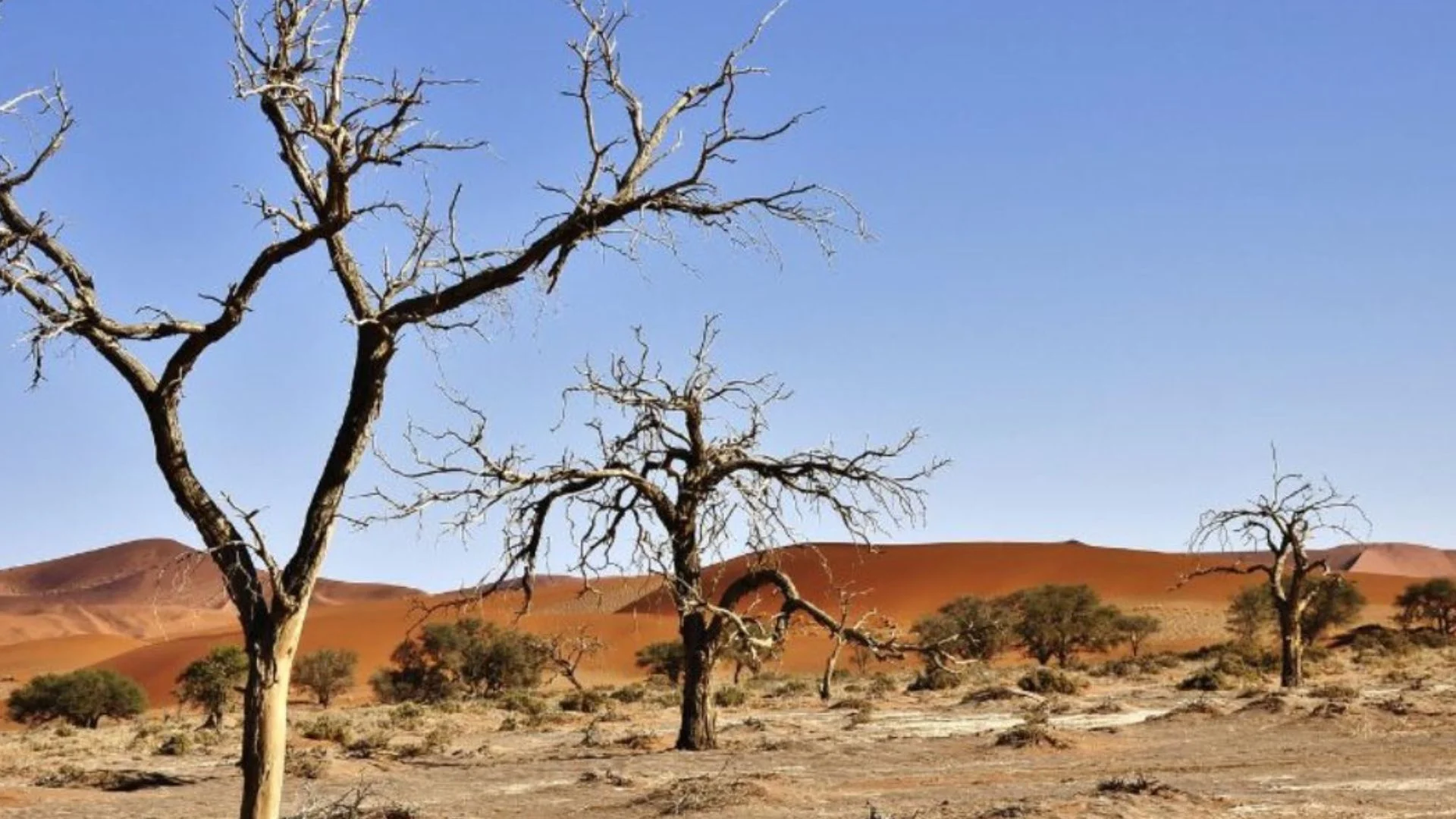
Desertification happens when fertile land gradually loses its productivity and becomes dry and barren. Human activities such as overgrazing and deforestation, along with climate change, accelerate this process. As a result, governments must invest in long-term land restoration measures to protect natural resources.
China has relied on straw checkerboard grids for decades to stabilise loose sand in desert regions. These grids reduce wind speed at the ground level and help young plants establish roots. However, researchers say straw barriers usually remain effective for only two to three years before they break down.
READ ALSO: L3Harris to Quadruple THAAD Propulsion Output Under New Pentagon Agreement
Plastic barriers have also been used in some locations because they last longer than straw. However, plastic takes a long time to decompose and may create long-term environmental problems. Some tree and shrub species planted for sand control have also been linked to increased pollen allergies in nearby communities.
Bamboo Tackles Desertification Head-On
Yu Yanglun, a researcher at the Chinese Academy of Forestry’s Research Institute of Wood Industry in Beijing, said sand-control systems now require solutions that are more durable, affordable and environmentally friendly.
He explained that China’s extensive bamboo resources provide a practical alternative for future projects. His research team has been exploring several bamboo-based technologies for desert restoration.
Bamboo is one of the fastest-growing plants in the world and naturally grows across Asia, Africa and parts of Central and South America. It requires relatively few resources while offering high strength, flexibility and durability. These qualities have made bamboo a widely used material in construction and other industries for many years.
Researchers have developed woven bamboo sand-fixing squares and taller bamboo barriers designed to reduce sand movement. They have also created bamboo and wood-fiber trays that help collect rainwater in dry environments. These systems aim to improve soil conditions while supporting vegetation growth in desert areas.
According to China’s forestry and grassland administration, bamboo barriers are renewable, biodegradable and more resistant to damage from prolonged sunlight than plastic alternatives. Their expected service life ranges from three to ten years, depending on local conditions. Researchers estimate that the longer lifespan can reduce overall sand-control costs by more than 20%.
READ ALSO: Gallium Nitride Powers China’s Geosynchronous Radar Satellite for Nonstop Earth Monitoring
Field Tests Expand
The bamboo barriers have already undergone field testing in Qinghai Province and the Inner Mongolia Autonomous Region. Scientists evaluated their performance under different climates and varying types of sandy terrain. Early results suggest the barriers can replace both straw and plastic systems in many locations.
Researchers are also studying additional ways to improve desert ecosystems beyond physical barriers. One project focuses on cultivating edible fungi to enrich sandy soil and improve its ability to support plant growth. Healthier soil can help vegetation establish more successfully in harsh environments.
China’s latest conservation strategy reflects a broader effort to combine environmental protection with sustainable materials and modern technology. By using bamboo in land restoration, researchers hope to improve the long-term effectiveness of desert control while reducing environmental impacts.