

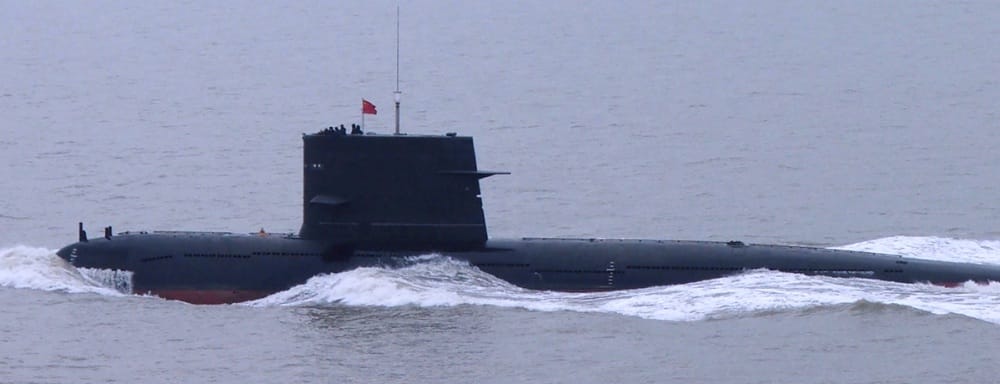
China is building a large vessel that appears designed to operate and support giant uncrewed submarines, according to satellite imagery reviewed by Naval News.
The ship is under construction at the Hudong-Zhonghua shipyard in Shanghai and features a large stern well-deck, a submerged handling system and an internal hangar. Its design points to a dedicated mothership for China’s extra-extra large uncrewed underwater vehicles (XXLUUVs).
The vessel has a layout that resembles an amphibious landing ship, particularly because of its stern well-deck. However, the arrangement appears to have been adapted for handling large underwater drones rather than conventional landing craft. A large cradle can move beneath the ship using 12 vertical jack-up arms, allowing a submarine drone to be lowered into the water.
A large hangar is positioned forward of the well-deck. Its size suggests that the ship can carry several large underwater vehicles while they are out of the water. Based on comparisons with the XXLUUVs already seen in China, the hangar may accommodate about four large vehicles or a larger number of smaller systems.
READ ALSO: https://modernmechanics24.com/post/uss-arizona-virginia-payload-module/
The vessel’s configuration also differs from a standard naval transport ship. The combination of an enclosed hangar and a dedicated underwater handling system gives it the characteristics of a specialised support vessel. Naval News assessed the design from multiple satellite images and identified a drone-submarine support role as the most likely explanation.
China’s Giant Submarine Drones
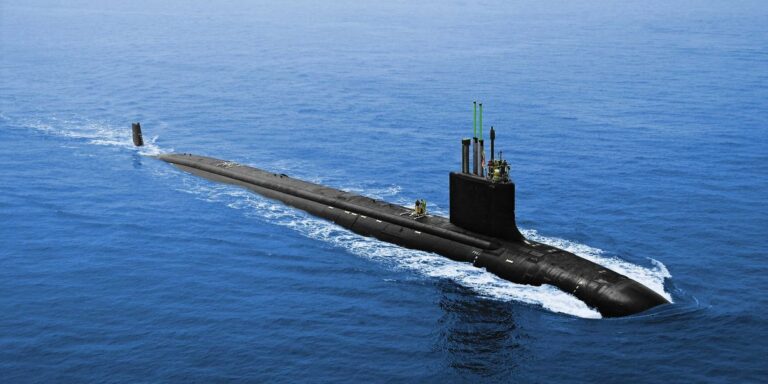
China has been testing full-sized uncrewed submarines known as XXLUUVs. The term means extra-extra large uncrewed underwater vehicles and refers to autonomous or remotely operated underwater craft that are much larger than conventional unmanned underwater vehicles.
At least two Chinese XXLUUV designs have been observed during testing in Hainan. The vehicles measure about 35 and 45 metres in length, or roughly 115 to 148 feet. Their size is around six to eight times the overall length of the US Navy’s Boeing Orca XLUUV.
The two Chinese designs appear to be undergoing separate development and testing. At least one purpose-built floating dock has been used to house and transport the vehicles. The dock can carry an XXLUUV to sea, where the underwater vehicle can be launched and recovered.
XXLUUVs are different from smaller underwater drones because of their size and endurance potential. Their larger hulls provide more room for batteries, sensors, communications equipment and mission systems. Depending on their final configuration, such vehicles can support long-duration missions without requiring a crew onboard.
WATCH ALSO: https://modernmechanics24.com/post/china-disputed-south-china-sea-patrols/
Mothership Adds New Role
The new vessel appears to offer a more flexible system than the floating docks used during earlier testing. Instead of serving only as a transport platform, it can potentially provide storage, maintenance and launch and recovery facilities. Keeping the drones inside a hangar would also provide protection when they are not operating at sea.
The ship’s handling system is one of its most distinctive features. A large cradle can be positioned under the vessel and lowered into the water through the well-deck. This arrangement allows a large underwater vehicle to enter or leave the water without relying on a conventional port crane.
The concept has similarities with a Chinese proposal for an undersea research submersible unveiled in 2025. That design used a comparable cradle system, although the earlier concept was smaller and placed the submersible on an exposed working deck. The new vessel is larger and places its vehicles inside an enclosed hangar.
Possible Naval Applications
The ship’s configuration makes a purely civilian research role less consistent with the available imagery. Its internal hangar, large handling equipment and apparent compatibility with China’s XXLUUVs indicate a vessel intended for sustained underwater-drone operations. It may function as a mobile tender that keeps the vehicles maintained and ready for deployment.
A tender is essentially a support ship for another naval platform. In this case, it can potentially transport the submarine drones, provide maintenance and carry them closer to their operating areas. The same system may also allow the vehicles to be launched and recovered during missions.
China’s eventual use of these large underwater drones remains unclear. Their size gives them the capacity to carry substantial equipment over long distances, while an unmanned design removes the need for a crew to remain inside the vehicle. Possible missions include surveillance, reconnaissance and other long-range naval tasks, depending on the systems eventually installed.
READ ALSO: https://modernmechanics24.com/post/taklimakan-desert-groundwater-discovery/
The development also fits into China’s wider naval expansion. Over the past two decades, the People’s Liberation Army Navy has expanded from a largely coastal force into a fleet operating increasingly farther from Chinese waters. The addition of dedicated infrastructure for very large underwater drones indicates that unmanned systems are becoming part of this wider naval development.
The new mothership does not by itself confirm how many XXLUUVs China plans to operate or when they will enter regular service.
However, the combination of large uncrewed submarines, dedicated floating docks and a purpose-built support vessel shows that China is developing more than individual prototype vehicles. The next stage will depend on testing, naval requirements and how the People’s Liberation Army Navy integrates these large underwater systems into its fleet.


One Response