

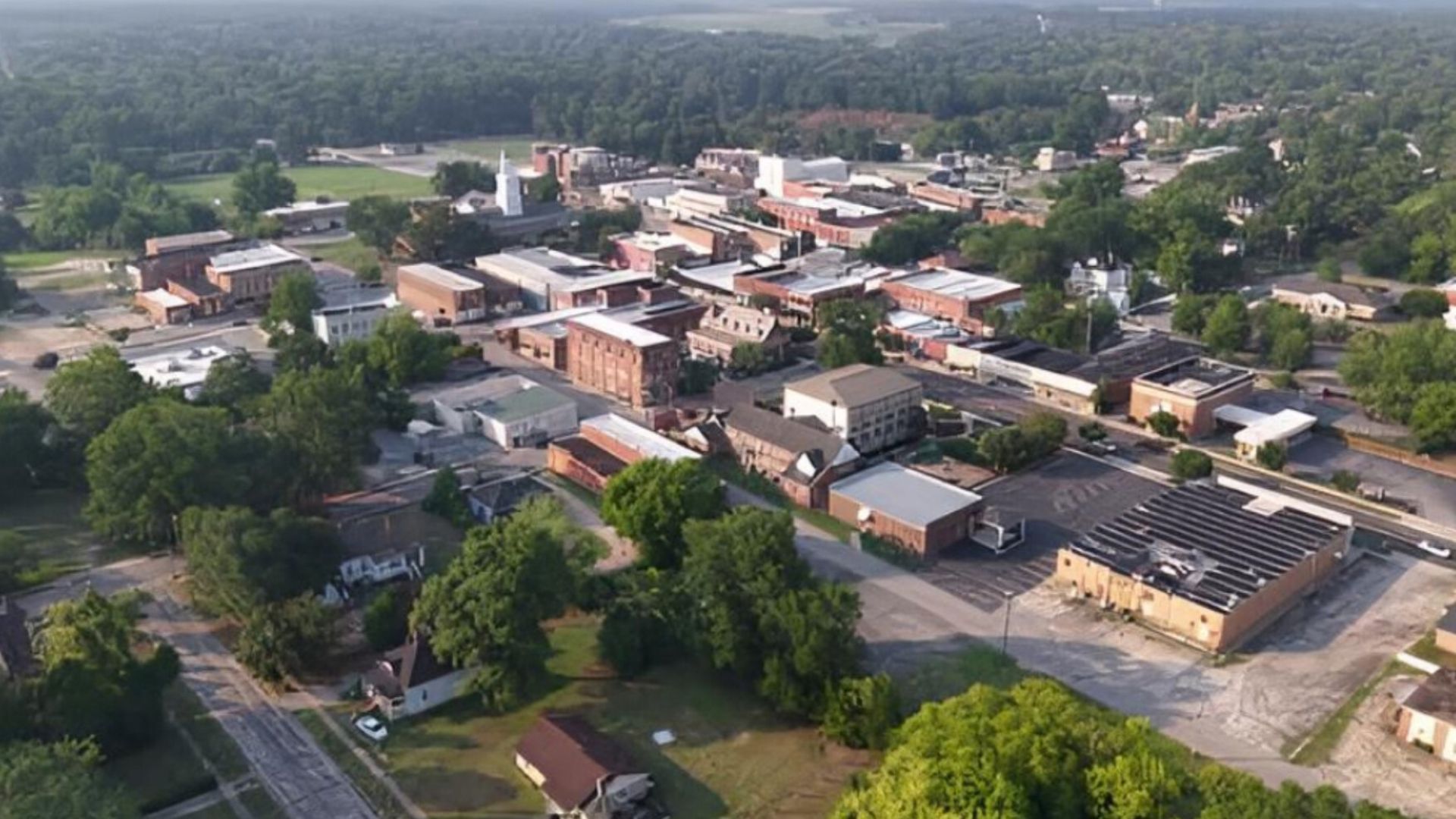
Camden, Arkansas, has become one of the most important missile production centres in the US as Washington pushes defense companies to rebuild depleted weapons stocks.
The town has about 10,000 residents, yet roughly 4,000 workers enter its industrial area on a typical weekday to make missiles, rocket motors, warheads and other military equipment.
The rapid expansion is creating new jobs and investment, but it is also exposing serious limits in housing, healthcare, education and the local workforce.
A Small Town Gets Bigger
Traffic begins building along the roads into Camden from about 6 a.m. on working days. Most vehicles carry employees to a large defense manufacturing complex on the edge of town. Several major companies operate facilities there, with their sites separated by fences but linked by the same road network.
Lockheed Martin, L3Harris, Raytheon, General Dynamics Ordnance and Tactical Systems, and other contractors operate in the area. Their facilities make some of the weapons and components used by US forces and allied militaries. The concentration of factories has given Camden an unusual role in the American defense supply chain.
The town’s defense industry has expanded even as its population has fallen. According to recent US Census data, factory employment has increased by more than one-third since 2020. The Arkansas Department of Commerce says the plants have increased their combined workforce by more than 35% during the same period.
About 500 people have joined the local defense workforce over the past year alone. The companies now plan further hiring as production increases. Some facilities expect their workforces to grow by more than 50%.
The expansion is linked to a wider effort by the US government to rebuild weapons inventories. American missile stocks have faced pressure after years of military support for Ukraine, deliveries to Israel and other allied countries, and US operations in the Middle East. Defense companies are now being asked to produce larger quantities at a faster pace.
Lockheed Martin has said many of its major weapons programs are undergoing large production increases. Tim Cahill, president of Lockheed Martin’s Missiles and Fire Control business, said production for some programs is expected to rise three or four times. The company is also expanding and changing its Camden facilities to support additional shifts.
The scale of the task is placing pressure on workers. Engineers and other employees interviewed during a recent visit described rising production targets, frequent hiring and longer working weeks. Some employees said their schedules have reached more than 70 hours in a week.
One Lockheed Martin engineer reported working 86 hours in a single week. The engineer said another employee had recently worked about 100 hours in one week. Other workers said the workload has caused burnout, although some employees said they accepted the demanding schedules because they understood the work’s purpose.
The production increase is also changing the local labor market. Workers said employees sometimes move between defense companies in Camden after receiving better pay or promotions. The practice has created a small pool of experienced workers that several companies are competing to retain.
Missile Demand Tests Industry
The pressure became more visible after US military operations in the Middle East increased demand for precision weapons. Defense Secretary Pete Hegseth visited Camden shortly before the United States and Israel launched strikes on Iran. During his visit, he described the L3Harris facility as an important part of the US defense industrial base.
L3Harris employs more than 1,500 people at its Camden operation. The site covers about 2,000 acres and includes more than 100 buildings. The company says it produces more than 115,000 solid rocket motors each year.
Solid rocket motors provide the propulsion needed to launch and accelerate many missiles. L3Harris supplies motors for systems such as the Terminal High Altitude Area Defense (THAAD) and Tomahawk. These components are essential because a missile cannot function without a reliable propulsion system.
The US missile stockpile was already under pressure before the conflict with Iran. US forces had used large quantities of precision-guided weapons during earlier operations, while Washington had supplied missiles and interceptors to foreign partners. The additional use of weapons in the Middle East added another demand to an already stretched manufacturing system.
US officials have disputed claims that the country lacks enough weapons for military operations. Pentagon spokesman Sean Parnell said the US has what it needs to strike when the president directs. The Pentagon has also launched measures to increase production and strengthen the defense supply chain.
President Donald Trump has proposed a $1.5 trillion defense budget for fiscal 2027. His administration has also invoked the Defense Production Act to support faster manufacturing. The legislation gives the federal government additional powers to encourage production of materials and equipment considered important for national security.
Workers in Camden said the production targets have continued to rise. One employee at L3Harris described a growing sense of pressure moving from senior officials through different levels of management. The message, according to the worker, is simple: factories need to produce more weapons faster.
READ ALSO: Northrop’s Talon Blue Flies Autonomously in First Flight Test, but Increment 2 Is Still Undecided
A veteran defense industry worker who has spent more than three decades in manufacturing said the current increase is unlike anything he has seen. He remembered a major production surge after the First Gulf War. He said the present expansion is larger in scale and more demanding.
Companies are also trying to increase production without placing the full burden on workers. Automation is becoming a larger part of the strategy. Lockheed Martin has introduced production lines where relatively small teams supervise robots that handle some sensitive manufacturing tasks.
The goal is to raise output while reducing the number of people needed for repetitive or hazardous work. Automation also lets companies run some processes longer without matching increases in staffing. But technology does not remove the need for skilled engineers, technicians, and production workers.
The labor shortage remains one of Camden’s biggest problems. Many workers live outside the town and drive up to an hour to get to work. Some companies therefore compete for employees already familiar with missile manufacturing rather than bringing large numbers of new workers into the region.
Supply Chains Slow Missile Output
Labor is only one part of the production challenge. Missile manufacturing depends on thousands of individual materials and components supplied by hundreds of companies. A delay involving one small part can hold up an entire weapon.
A Patriot interceptor illustrates the problem. Its final assembly can take roughly six weeks, but producing the complete weapon from basic materials can take years. The difference reflects the time needed to manufacture, qualify, and deliver the many specialized components that go into the missile.
Some components require highly specialized materials and manufacturing processes. Suppliers must meet strict military standards before their products can enter a missile production line. When one supplier faces a problem, the effect can spread across several programs.
The THAAD program experienced such a problem in 2024. A program office identified a potentially serious issue involving a component in the missile’s guidance system. Production was disrupted for several months while the supplier upgraded the component.
Another supplier later found that it had installed a part incorrectly in the interceptors’ steering system. That issue caused another production delay. Deliveries of dozens of new interceptors were slowed until the problem was corrected.
Lockheed Martin says it has since improved the way it handles supplier problems. Cahill said the company and the US Army are working to reduce the time needed to identify, assess, and correct manufacturing issues. The company is also looking for additional suppliers so it does not depend on a single source for important components.
That strategy is designed to make the production network more resilient. Lockheed Martin is adding second and third suppliers for some parts where practical. The company is also working with the government to secure supplies of key raw materials years in advance.
The defense industry is facing another complication because warfare itself is changing. The war in Ukraine has demonstrated the value of large numbers of relatively inexpensive drones and other lower-cost weapons. That experience is encouraging defense companies to examine whether every weapon needs the same level of complexity.
Patriot interceptors are among the most advanced air-defense weapons in the US inventory. Their job is to intercept incoming threats at high speed and with high precision. Cahill compared the system to one bullet hitting another, with the interceptor itself weighing almost a ton and traveling at supersonic speed.
That level of performance requires specialized components and adds to the cost. A Patriot interceptor can cost more than $4 million. Lockheed Martin is therefore examining designs that offer useful performance while taking less time and money to manufacture.
One example is the PAC-3 Missile Segment Enhancement family and the newer PAC-3 Adapted Capability Effector (PAC-3 ACE).
Cahill said the newer approach offers lower cost and faster production than the most sophisticated alternative. The company is examining where reduced complexity can shorten manufacturing time without sacrificing the capability needed for the mission.
General Dynamics faces similar competing demands. The company is a major supplier of 155 mm artillery shells, which the US has provided to Ukraine in large quantities. At the same time, changing requirements in the Middle East have increased demand for missile-related components.
General Dynamics and Lockheed Martin are also expanding solid rocket motor production in Camden. A new General Dynamics facility is expected to become operational next year. The project adds another production capability to an industrial area already carrying a large share of the US weapons manufacturing workload.
Camden Faces Local Limits
Camden’s connection with defense manufacturing is not new. The area became a military production centre during World War II, when the Shumaker Naval Ammunition Depot produced rocket bombs and developed testing areas, production lines, storage facilities and rail connections. Those existing industrial assets later helped attract major defense companies.
The current expansion is on a different scale. The town is now being asked to support a growing industrial workforce while its population continues to shrink. Local officials and business owners see the defense industry as an important economic opportunity, but they also face basic problems that cannot be solved inside factory gates.
Housing is one clear example. A 2025 housing assessment commissioned by Camden recommended more than 1,000 additional homes and apartments over the next decade. Manufacturing employers told researchers that some job candidates had rejected offers because they could not find suitable housing.
Rental housing is particularly limited. Younger workers and lower-paid employees often struggle to find affordable homes in acceptable condition. Many therefore live outside Camden and commute to the factories.
The commuting pattern affects the wider local economy. Hotels and motels often fill during the working week with employees from Arkansas and neighboring states. Their parking lots can fill with vehicles from Missouri, Texas, and Louisiana, while many rooms sit empty on weekends.
Restaurants and bars also see the effect. Businesses often have their strongest sales from Tuesday through Thursday when factory workers are in town. Native Dog Brewing, owned by local business owners Bobby and Lauren Glaze, is among the establishments that see strong weekday traffic but limited weekend demand.
Bobby Glaze said the latest expansion feels different from earlier promises of industrial growth. He said defense production has increased at several plants at the same time, creating a chain reaction across the local economy. He also argued that the town needs workers to become residents to gain lasting economic benefits.
The need for housing is linked to another issue. Young engineers may be attracted by starting salaries that exceed $70,000, while some high school recruits can earn more than $25 an hour. But salary alone may not persuade workers with families to move to a town where housing, schools, and healthcare remain limited.
Education is one concern. Some employees have questioned the quality of local school districts when considering whether to settle in the area. Childcare options are also limited, creating another challenge for workers with young children.
Healthcare presents an even more immediate problem. Ouachita County Medical Center, the county’s only hospital, filed for Chapter 11 bankruptcy earlier this year and has furloughed dozens of workers. The hospital also closed its maternity ward in January and had previously closed its intensive care unit.
Residents now have to travel nearly an hour for the nearest hospital providing maternity services. For workers employed at facilities that manufacture military equipment, the lack of nearby emergency medical services is an additional concern. One engineer said it is hard to feel comfortable working in such an environment without a well-equipped hospital nearby.
County Judge Robert McAdoo said the area has struggled economically for years. Many residents live below the poverty line, while the closure of a large paper mill in the 1990s removed an important source of employment. He described the defense industry as a major source of stability for Ouachita County.
Investment May Shape Future
Local officials are now trying to turn the manufacturing expansion into wider development. Realtors and business owners have begun working together to identify vacant properties and persuade owners to sell or renovate them. The immediate goal is to increase the supply of rental homes and make it easier for new workers to settle in town.
Cheri Emerson, owner of Pink Ribbon Realty, said Camden does not need to force every worker to remain permanently. She argues that the town should instead provide a comfortable place to live while allowing people to decide whether they want to stay long term.
Business owners have also questioned how much the defense companies should contribute to local development. They point out that the contractors benefit from the local workforce and infrastructure. They want greater cooperation on housing, downtown improvements and other services that can make Camden more attractive to employees.
Lockheed Martin says it does not plan to become a housing developer. Cahill said the company is working with local authorities, employees and potential investors to identify housing problems and encourage new construction. He also said the company wants investors to understand that the current industrial expansion is expected to continue for years.
Private investment has started to appear. Texas developer John Marlin plans to redevelop a 120-unit residential complex in Camden. He is also planning another project on five acres that would provide between 60 and 70 additional units.
READ ALSO: US Navy Commissions USS Ted Stevens With Advanced SPY-6 Radar And Missile Defence Systems
Marlin expects more private developers to enter the market if early projects succeed. He believes housing development can help support better services and eventually improve the wider quality of life. He estimates visible change may begin within three years, while a more complete transformation may take five to 10 years.
The town is also trying to build a larger local talent pipeline. South Arkansas University Tech sits inside the industrial area, directly across from Lockheed Martin’s facility. The college trains students for manufacturing roles and has become a key source of workers for nearby companies.
The university received a $20 million federal investment in February. The funding will support a planned 50,000-square-foot Defense Manufacturing Center of Excellence. The centre is expected to train about 600 additional students, many of whom are expected to enter jobs at the neighboring defense plants.
Construction on the new training facility is scheduled to begin this fall. It aims to reduce the gap between the skills companies need and the workers available in the region. It also gives local students a direct route into an industry that is expanding rapidly around them.
Local businesses are already closely tied to the defense plants. Highland Machine Works, a family-owned company in Camden, provides urgent repairs when equipment failures threaten production. Owner Jason Duke said his employees can be called in when a factory line stops and a repair is needed immediately.
Duke grew up in Camden and said several employees at his company have worked there for more than 20 years.
He has discussed possible incentives with Arkansas lawmakers, including property or income tax benefits for people willing to relocate to the area for manufacturing jobs. Such measures are intended to address the gap between available jobs and the number of people willing to live nearby.
The defense companies are also aware of the workforce challenge. General Dynamics officials have acknowledged that some employees commute from as far as an hour away. The company has nevertheless recruited and retained workers by drawing on the existing regional workforce.
Workers often move between the companies for better opportunities. Several engineers described this as a regular rotation within Camden’s defense industry. General Dynamics said employees are free to move between contractors when the change benefits their careers.
For the companies, the long-term issue is whether Camden can supply enough skilled workers without relying too heavily on commuters. For the town, the question is whether thousands of new industrial jobs can support stronger local businesses and services. The answers will depend as much on housing, schools, healthcare, training, and private investment as on missile production.
Camden’s experience also reflects a wider challenge for the US defense industry. Washington can approve larger budgets and order higher weapon production, but factories still depend on people, suppliers, materials, transportation and communities. Expanding one part of that system without expanding the others can create new bottlenecks.
The town is now at the centre of that problem. Its factories are preparing for a sustained increase in production, while local leaders are trying to build the housing and services needed to support the workers behind it. As industrial expansion continues, Camden‘s next phase will depend on whether its economic infrastructure can grow as fast as its missile factories.













One Response