

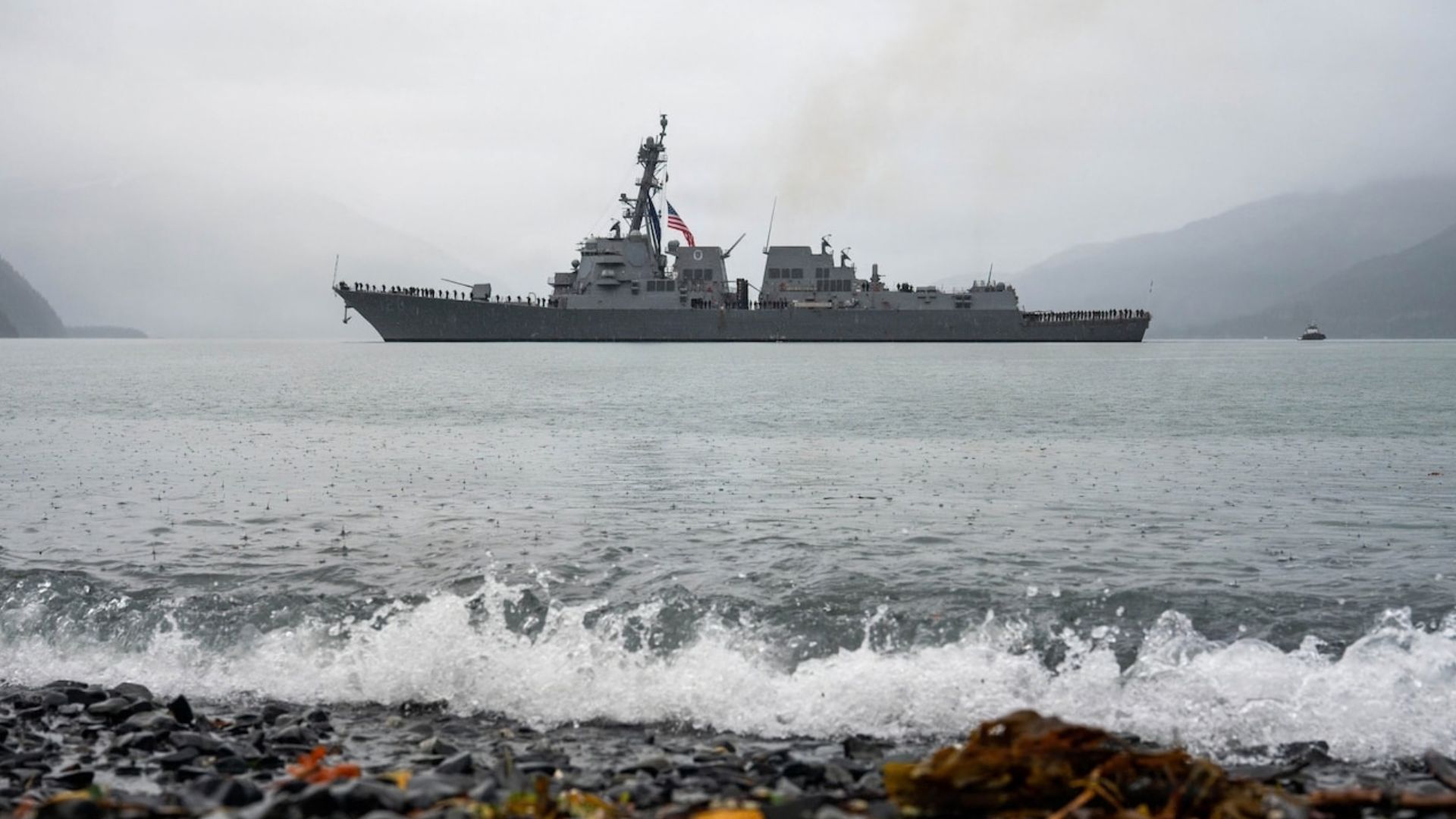
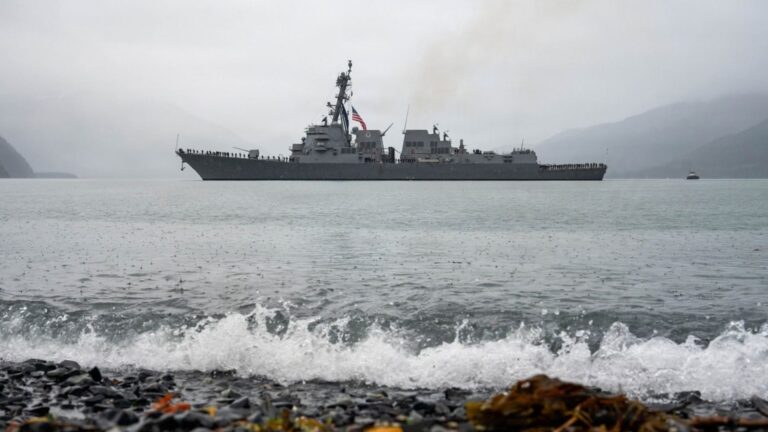
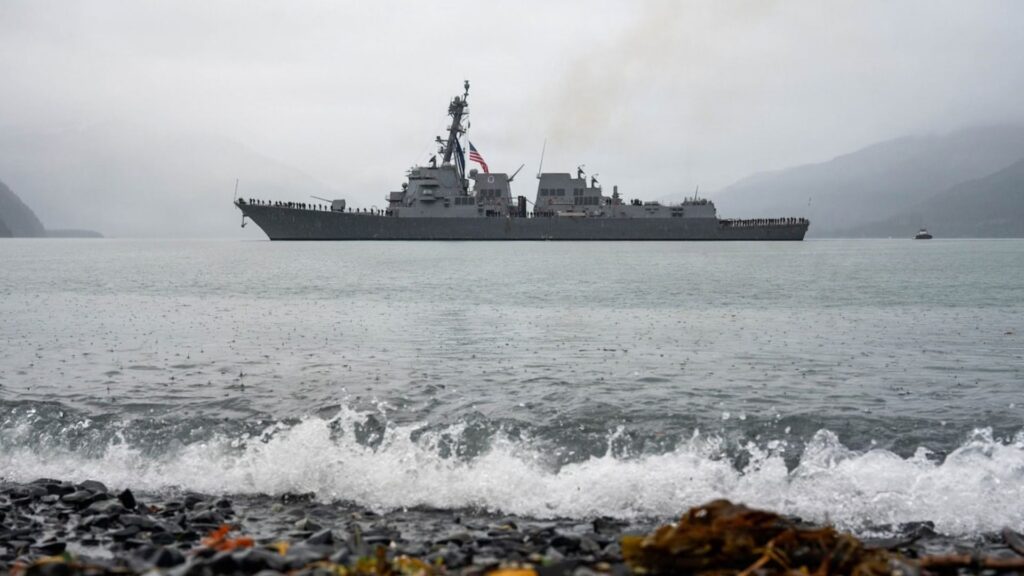
The US Navy has commissioned its newest Arleigh Burke-class guided-missile destroyer, USS Ted Stevens, adding another Flight III warship equipped for modern air and missile defence missions.
The commissioning ceremony took place in Whittier, Alaska, on Saturday, October 3, bringing the ship into active naval service. The destroyer combines the AN/SPY-6(V)1 radar with the Aegis Baseline 10 combat system and is assigned to Naval Station Norfolk, Virginia.
USS Ted Stevens is a Flight III Arleigh Burke-class destroyer, the latest configuration of the US Navy’s widely deployed destroyer family. Its main sensor is the AN/SPY-6(V)1 radar, which gives the ship an improved ability to detect and track aircraft and incoming missiles.
The radar works with the Aegis Baseline 10 combat system, which processes information from the ship’s sensors and helps coordinate its weapons. These systems give the destroyer a central role in air and missile defence operations.
The Flight III design places greater emphasis on radar performance and electrical power than earlier Arleigh Burke-class versions. This allows the destroyer to handle demanding detection and tracking tasks while supporting several combat missions at the same time.
READ ALSO: Tesla Scales Optimus Production to Hundreds Weekly, Still Faces AI, Hardware Hurdles
Multiple Combat Missions
Air defence and ballistic missile defence are among the ship’s main roles. The destroyer can detect and track airborne threats and use its weapons systems to respond to hostile aircraft and missiles.
Its mission set also includes anti-submarine warfare and anti-surface warfare. These roles allow the ship to operate against submarines and surface vessels while supporting other naval units during wider operations.
The destroyer also carries the Mk 41 Vertical Launching System. The system uses launch cells built into the ship to fire different types of missiles, giving the warship flexibility across air defence, missile defence and strike missions.
READ ALSO: https://modernmechanics24.com/post/china-pla-laser-microwave-weapons/
A Ship Named For Stevens
The ship is named after the late Ted Stevens, who represented Alaska in the US Senate from December 1968 until January 2009. During his long career in public service, he became closely associated with Alaska and its interests in Washington.
Stevens also served during World War II as a US Army Air Corps pilot. He flew transport missions in the China-Burma-India theatre, a demanding wartime region that supported Allied operations in Asia.
The destroyer carries his name as the US Navy continues naming Arleigh Burke-class ships after prominent Americans. Its commissioning in Alaska also gave the ship a direct connection to the state represented by its namesake for four decades.
From Construction To Commissioning
Huntington Ingalls Industries built Ted Stevens through its Ingalls Shipbuilding division at the company’s Pascagoula, Mississippi, yard. The ship completed the builder’s sea trials earlier in 2025 before moving into the Navy’s acceptance process.
The destroyer completed acceptance trials in late 2025 under the oversight of the Navy’s Board of Inspection and Survey. The Navy formally accepted delivery of the ship on December 29, 2025.
Ted Stevens left Ingalls Shipbuilding on May 8, 2026, and reached Norfolk seven days later. Norfolk will remain the destroyer’s permanent homeport after it completes its post-commissioning activities.
READ ALSO: MIT Builds Paper-Thin Muscle-Powered Robot That Swims Through Water and Navigates Mazes
Before the commissioning ceremony, the ship sailed from Norfolk to Florida and then continued toward Alaska through the Panama Canal. Its return voyage to its permanent homeport will follow the post-commissioning operations the Navy has planned.
The commissioning adds a new Flight III destroyer to the US fleet with advanced radar, integrated combat systems and a broad range of missions. Its deployment will add another SPY-6-equipped warship to the Navy’s wider network for air defense, missile defense, and maritime operations.





One Response