China has released rare footage showing People’s Liberation Army (PLA) counter-drone units using laser, high-power microwave and missile-gun systems during live-fire exercises.
The drill involved a simulated swarm of low-flying drones and tested how quickly the units could detect, disrupt and destroy incoming targets. It also examined how the force could relocate and restore its defenses after its position was exposed.
A brigade from the PLA’s 75th Group Army conducted the exercise in the Gobi Desert.
According to CCTV News, the training ran from day into night and covered multiple tactical scenarios. The focus was on rapid deployment, coordinated firepower and sustained air-defense operations.
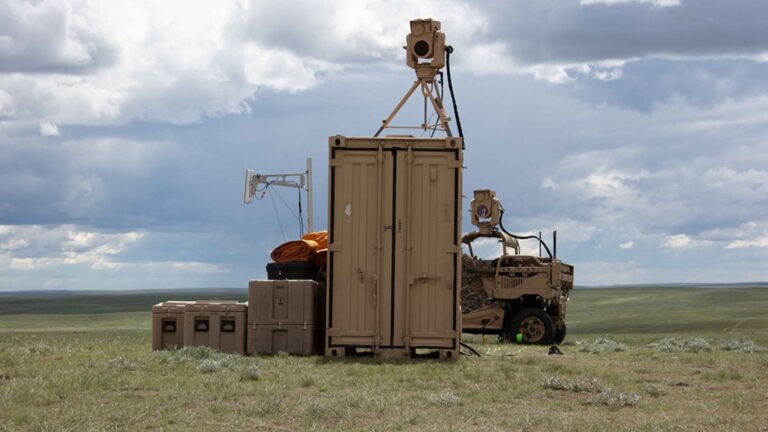
After receiving orders, air-defense units moved to designated positions and deployed their equipment. Radar detected a dense drone formation approaching at extremely low altitude. Ground-based laser and microwave systems were then activated to disrupt the formation.
The initial response combined optical dazzling and electromagnetic effects against the drones. Interceptor drones were launched against targets that passed through the first layer, while anti-aircraft guns engaged remaining aircraft. The sequence showed how several systems can work together instead of relying on a single weapon.
The exercise did not end with the first engagement. Controllers declared the defensive position exposed and ordered troops to withdraw, relocate, and establish a new position. Units redeployed their weapons and camouflage before restoring the air-defense network.
Radar units remained connected to provide early warning and real-time tracking during the movement. As darkness fell, troops shifted to nighttime operations. Radar, electro-optical and infrared equipment continued searching for and tracking aerial targets.
PLA serviceman Jia Jingcheng said the exercise tested coordination between different air-defense systems.
He said personnel had to assess complex aerial threats, respond to unexpected situations and combine several attack methods. Another serviceman, He Qing, said the training also tested mobile defense in the unfamiliar and difficult Gobi Desert environment.
READ ALSO: https://modernmechanics24.com/post/rheinmetall-argotec-surveillance-sat/
Laser Adds Precision
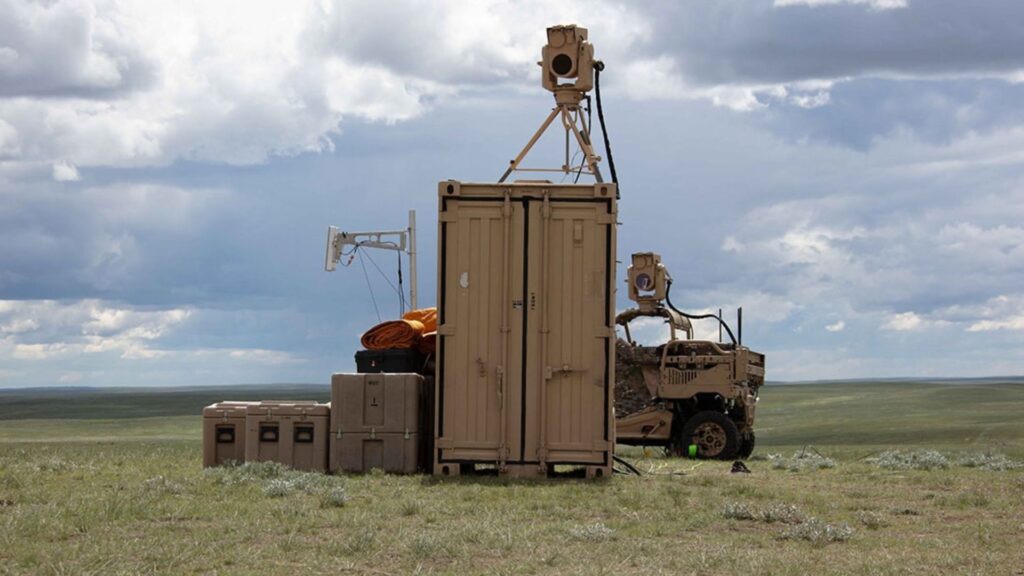
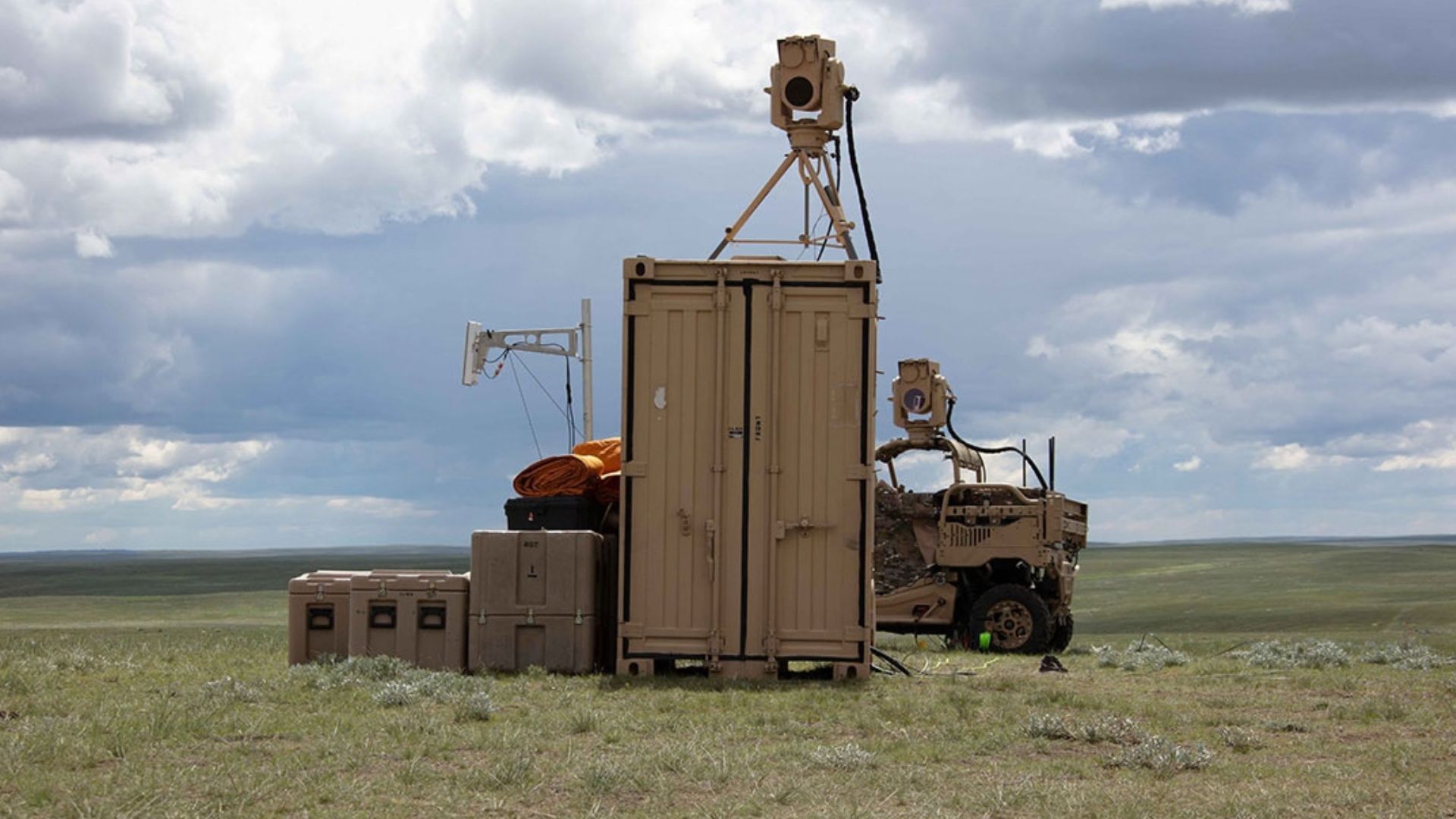
The laser weapon shown by CCTV uses a high-energy beam to damage or turn off drones in the air. Unlike a conventional missile, it directs energy onto a target rather than launching a physical interceptor. Using it requires accurate tracking and enough power to keep the beam on target.
Laser weapons offer another way to engage small drones without using a conventional missile for every target. Their practical performance depends on factors such as power generation, target tracking and atmospheric conditions. They therefore form one part of a wider counter-drone system rather than replacing other defenses.
CCTV showed the laser operating alongside a missile-gun system. The system has a six-barrel rotary cannon mounted in the center and four short-range air-defense missile launchers. The combination lets it use dense gunfire against small, slow targets while saving guided missiles for other engagements.
CCTV said the missile-gun system can operate independently or as part of a networked air-defense system. Its role is particularly relevant to small, low-flying aircraft that may be difficult to engage with larger air-defense weapons. The system adds a conventional kinetic layer to the laser and electronic effects used earlier in the engagement.
Microwave Weapon Targets Electronics
The high-power microwave system shown in the exercise uses an eight-wheel-drive vehicle. A large panel and detection radar are mounted toward the rear of the platform. The weapon produces powerful microwave pulses intended to disrupt or damage electronic components inside drones.
This approach differs from a missile or gun because it attacks the electronics that allow a drone to operate. Strong electromagnetic energy can interfere with circuits and other onboard systems, potentially causing a drone to lose control or fall. The method is particularly relevant when several unmanned aircraft approach together.
CCTV said microwave weapons can affect a wider area and engage multiple drones in a swarm. That gives them a different role from a laser, which directs energy toward a specific target. The two systems can therefore complement each other during an attack involving several aircraft.
Radar, electro-optical sensors and electronic detection equipment support the weapons by providing information about incoming targets. They create a layered defense that moves from detection to disruption and then to physical interception. The system also lets commanders choose different weapons based on the size and behavior of the incoming threat.
Drone Costs Drive Development
The exercise reflects a wider challenge facing modern air defenses. Small drones are relatively inexpensive and can be difficult to detect because of their size, low flight altitude and limited radar signatures. Large numbers of drones can also place pressure on defenders by forcing them to engage many targets in a short period.
Chinese military affairs expert Zhang Xuefeng said conventional air defenses struggle to detect and intercept such aircraft at an acceptable cost.
READ ALSO: https://modernmechanics24.com/post/china-fk-2000-turkmenistan-parade/
He noted that long-range air-defense missiles can cost millions of dollars, while short-range missiles can cost tens or hundreds of thousands of dollars. Using those weapons against inexpensive drones can create an unfavorable cost exchange.
China has developed counter-drone systems alongside its expanding drone capabilities. Military affairs expert Song Zhongping told the Global Times that China had focused on drones and counter-drone technologies before the Russia-Ukraine conflict. He said battlefield experience from the conflict further increased attention on both drone operations and methods for countering them.
The latest footage shows development through a mix of directed-energy weapons, electronic effects, interceptor drones, guns and missiles. The exercise also emphasized movement, camouflage, and continued operations after a defensive position was compromised.
China is expected to continue testing these systems in increasingly realistic conditions as it works to improve its ability to counter larger and more complex drone attacks.