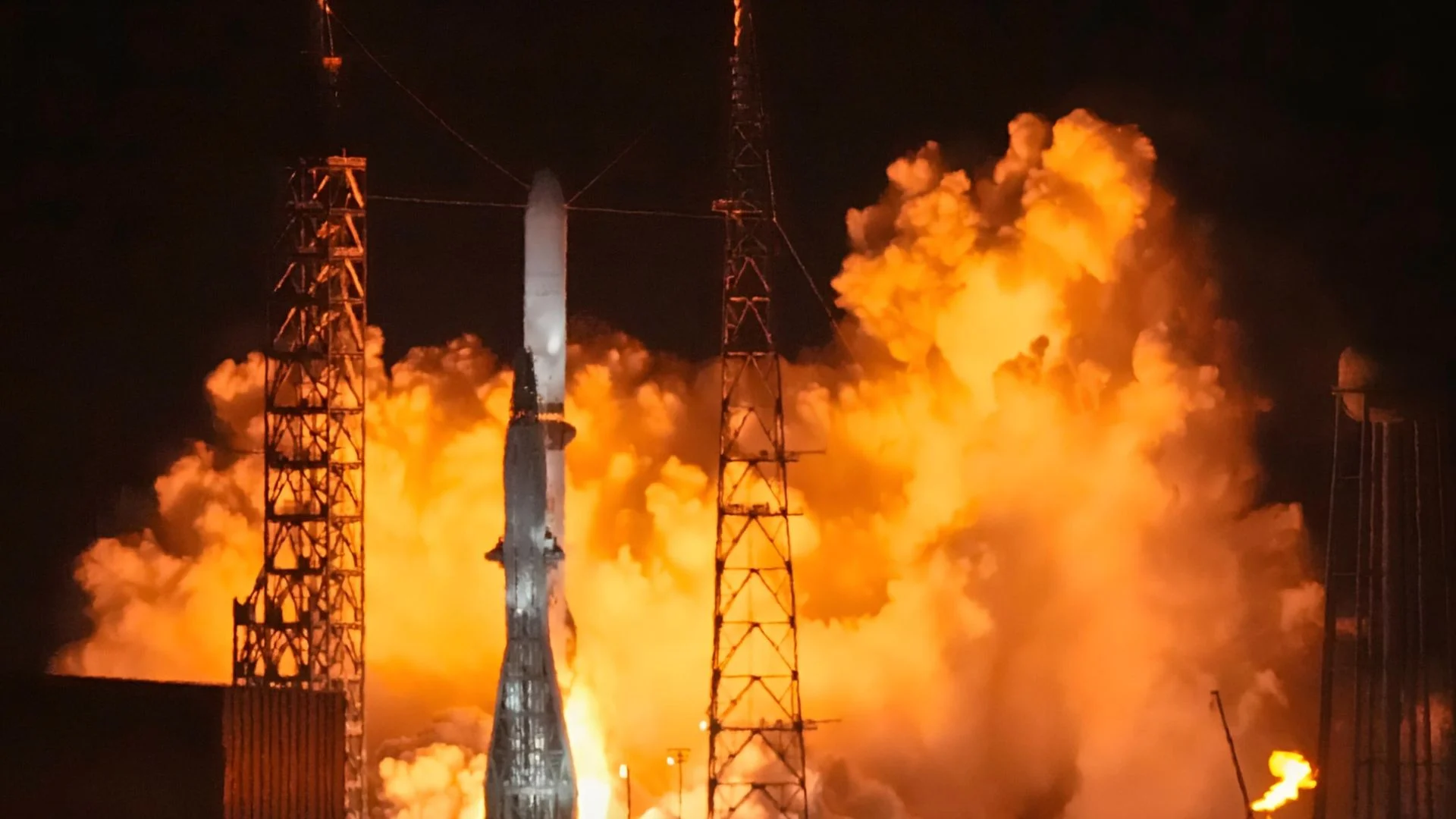
A Blue Origin rocket exploded during a ground test at Cape Canaveral in Florida, creating a massive fireball and damaging the launch area.
The incident happened during a routine engine test ahead of an upcoming mission. All workers were reported safe, but the accident has raised fresh concerns about NASA’s lunar program and Blue Origin’s launch schedule.
Blue Origin confirmed that the explosion happened during a hotfire test at Launch Complex 36 on Florida’s Space Coast. A hotfire test is a ground procedure where rocket engines are ignited while the vehicle remains attached to the launch pad. These tests are done before launches to check engine performance and systems under real operating conditions.
The explosion occurred around 9 p.m. local time and was seen from several nearby cities. Videos shared online showed a large fireball rising into the night sky after the rocket suddenly erupted during the test. Residents in Cape Canaveral and Cocoa Beach reported feeling shockwaves from the blast.
Blue Origin Confirms Anomaly
Blue Origin described the event as an anomaly and said all personnel were safely accounted for after the incident. Emergency crews quickly responded to the launch site while fires continued burning for hours after the explosion. Local officials later confirmed there was no threat to the public from fumes or debris.
READ ALSO: Australia Begins High-Risk A$11 Billion Upgrade to Extend Collins-Class Submarine Fleet
The company was founded in 2000 by Jeff Bezos, who also owns Amazon. Bezos addressed the incident on social media, saying teams were already investigating the cause of the explosion. He added that the company would rebuild damaged infrastructure and continue its launch efforts.
The US Space Force stated that emergency responders were working closely with Blue Origin to collect information from the site. Officials are now examining available test data to determine the cause of the failure. The Federal Aviation Administration also acknowledged the explosion but said the test itself was outside licensed flight operations.
This incident comes only weeks after another setback involving Blue Origin’s New Glenn rocket. During a recent launch, the company failed to place an AST SpaceMobile satellite into its planned orbit. The FAA temporarily grounded New Glenn flights after that mission while investigators reviewed the problem.
Blue Origin later received clearance to resume launch operations after the earlier review. Thursday night’s static fire was the first major engine test since the company returned to flight status. The latest explosion is expected to trigger another detailed investigation into the vehicle and launch systems.
NASA Artemis Faces Pressure
The explosion has created new uncertainty for NASA’s Artemis moon program. Blue Origin is one of NASA’s major commercial partners for future lunar landing missions. The company is building the Blue Moon lander that astronauts are expected to use during future missions to the moon.
NASA Administrator Jared Isaacman said spaceflight development remains extremely difficult and failures are part of the process. He confirmed that NASA would support a full investigation into the accident and examine possible mission impacts. NASA is also reviewing how the incident could affect upcoming Artemis schedules.
NASA recently selected Blue Origin for important lunar cargo missions related to its long-term plans for a moon base. The agency wants to establish a permanent human presence near the lunar south pole during the coming decade. These missions depend heavily on reliable heavy-lift rockets and landing systems.
Blue Origin is also competing with Elon Musk and SpaceX for future lunar transportation contracts. SpaceX is currently developing its Starship Human Landing System for NASA’s Artemis missions. Both companies play key roles in America’s effort to return astronauts to the moon for the first time since 1972.
READ ALSO: NVIDIA’s Alpamayo AI Family Aims to Give Autonomous Vehicles “Humanlike” Reasoning
Artemis III is currently planned for 2027 and aims to test lunar landing systems before later crewed surface missions. Artemis IV, planned for 2028, is expected to include more advanced moon landing operations. NASA is expected to review timelines carefully after the latest Blue Origin failure.
Space Industry Competition Rising
Blue Origin has invested heavily in launch infrastructure near Cape Canaveral to compete with other private space companies. The company’s New Glenn rocket is designed for large cargo launches and deep-space missions. It also supports NASA contracts, commercial satellite launches, and future space exploration projects.
The company successfully launched New Glenn for the first time last year and recovered its reusable booster during the mission. Reusable rockets are important because they lower launch costs and allow faster mission schedules. SpaceX has already proven this approach with its Falcon 9 rocket program.
Blue Origin is also expanding into space tourism through its New Shepard flights. Earlier this year, the company attracted attention after flying an all-female celebrity crew that included Katy Perry and Gayle King. The company hopes commercial tourism will become another major part of its business model.
Industry experts say rocket development often includes major failures before systems become reliable. Large launch vehicles operate under high fuel, pressure, and heat during testing and flight. Even small technical problems can quickly turn into destructive explosions.
The latest accident highlights the intense competition and technical risks facing modern space companies. Governments and private firms are racing to build new systems for moon missions, satellite launches, and future Mars exploration. Every major setback can delay schedules, increase costs, and reshape future contracts.
Investigators will now focus on identifying the exact cause of the explosion and assessing damage to the launch facility. Blue Origin is expected to face months of technical reviews before returning to full operations.
The outcome of the investigation will play an important role in the future of NASA’s Artemis moon ambitions and the growing commercial space industry.