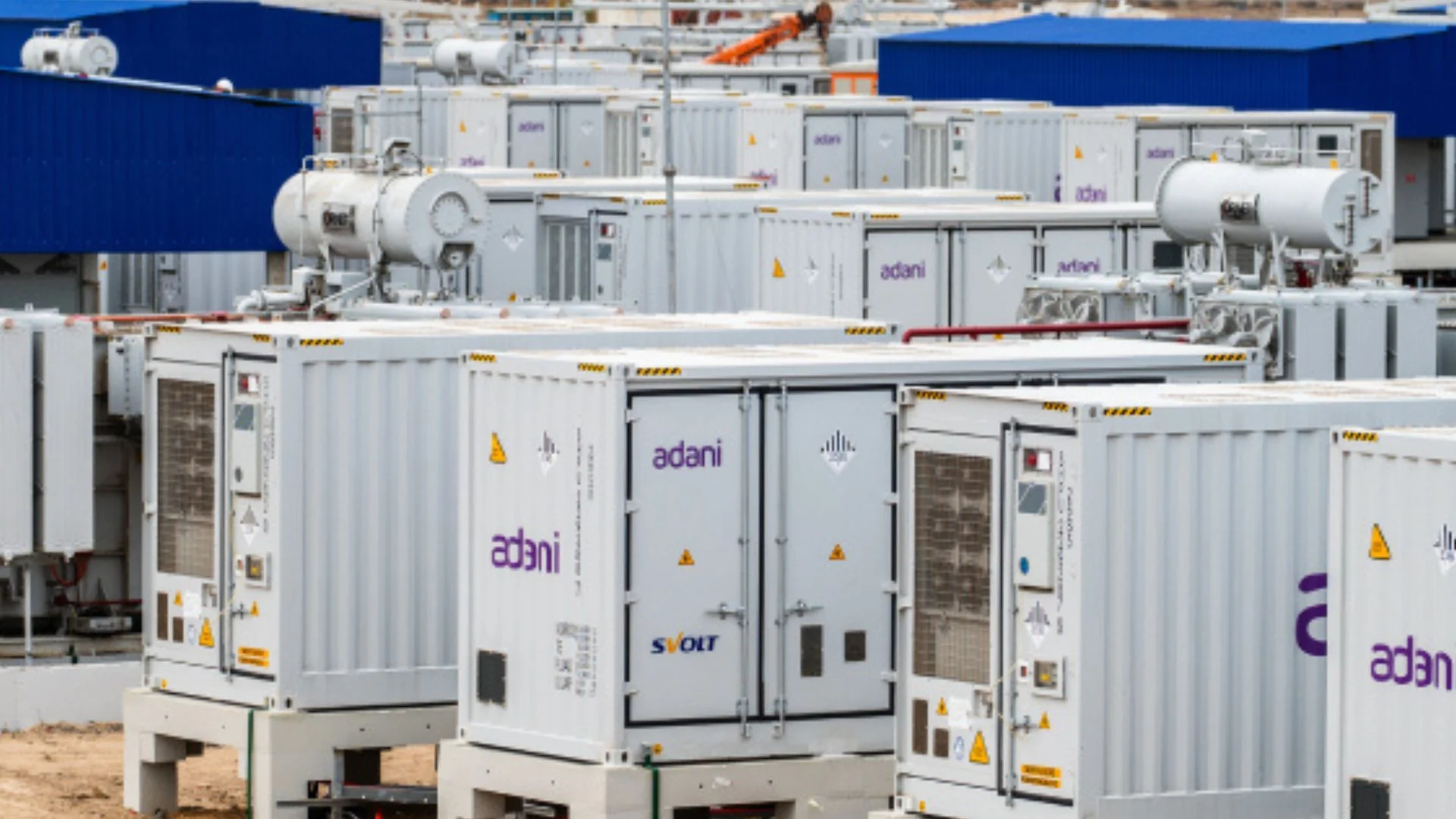
Adani Green Energy has operationalized a 3.37 Gigawatt-hour battery energy storage system at Khavda in Gujarat, creating the largest battery storage facility at a single site outside China.
The project is expected to improve grid stability and ensure a more dependable supply of renewable power across the region. Built in just 10 months, the facility ranks among the fastest-completed utility-scale battery storage projects in the world.
Adani Green Powers Storage
The Battery Energy Storage System(BESS) forms part of Adani Green Energy’s massive renewable energy project at Khavda. The company is developing 30 GW of renewable energy capacity at the site by 2029, while nearly 9.9 GW has already been brought online. Khavda has emerged as one of the most important renewable energy hubs in India.
The latest expansion includes an additional 1.37 GWh of storage capacity commissioned in March 2026. With this addition, the site’s total operational battery storage capacity has reached 3.37 GWh. Adani Green Energy said the project moved from construction to commissioning within a short 10-month execution timeline.
Battery energy storage systems store electricity generated from renewable sources such as solar and wind power. The stored electricity can then be supplied during periods of high demand or when renewable energy production drops. This helps maintain a stable power supply and reduces pressure on electricity grids.
READ ALSO: Quantum Sensors Use Atoms and Light as Ultra-Steady Rulers in Medicine and Space
The company said the storage system can supply enough clean electricity to power nearly one million homes for a full day. It can also support the peak electricity demand of cities such as Indore and Chandigarh, or even the entire state of Goa. In another comparison, the stored energy can power more than 12 million LED bulbs continuously for 10 hours.
Why Battery Storage Matters
Renewable energy production depends heavily on weather conditions, sunlight, wind speeds and seasonal changes. Solar plants stop generating electricity at night, while wind power fluctuates throughout the day. Battery storage systems help solve this problem by storing excess electricity and releasing it when needed.
As countries increase their use of renewable energy, large-scale battery storage is becoming an important part of modern power systems. It allows renewable energy to become more reliable and available throughout the day. Experts consider battery storage a key technology for supporting cleaner electricity grids and reducing dependence on fossil fuels.
Adani Green Energy said its battery storage system uses advanced energy management software and lithium-ion battery technology. These systems monitor electricity flow, optimize charging and discharging cycles, and improve grid response during peak demand periods. The company added that the project strengthens reliable and flexible energy delivery from renewable sources.
READ ALSO: Wisk Aero’s Autonomous Gen 6 eVTOL Takes First Flight, Pioneering U.S. Certification Path
Mr. Sagar Adani, Executive Director of Adani Green Energy, said large-scale storage infrastructure will play an important role in India’s clean energy transition.
He said renewable energy capacity is expanding rapidly, making dependable storage systems increasingly necessary. He also stated that the company’s investment reflects its long-term plan to build large-scale clean energy infrastructure.
Khavda as Global Renewable Energy Hub
Khavda in Gujarat is rapidly becoming one of the world’s most important renewable energy zones. The region offers strong solar and wind conditions, making it ideal for large-scale clean energy projects. Several major energy infrastructure projects are already under development there.
The battery storage expansion also reflects a larger global trend in the energy sector. Countries around the world are investing in energy storage to improve grid reliability and support the growth of renewable energy. China currently leads global battery storage deployment, while India is increasing investments to strengthen its clean energy capacity.
Adani Green Energy has announced plans to add more than 10 GWh of battery storage capacity during FY27. The company also aims to scale its storage portfolio to 50 GWh over the next five years. These additions are expected to support India’s growing electricity demand while helping the country move toward cleaner and more stable power systems.
WATCH ALSO: SpaceX rocket sends 11,000 pounds of scientific investigations, cargo to space station
The commissioning of the Khavda battery storage system marks another major step in India’s renewable energy expansion. As battery technology becomes more widely adopted, large-scale storage projects are expected to play a central role in delivering reliable green electricity.
The project also highlights how energy storage is becoming essential for building modern power infrastructure capable of supporting future clean energy growth.