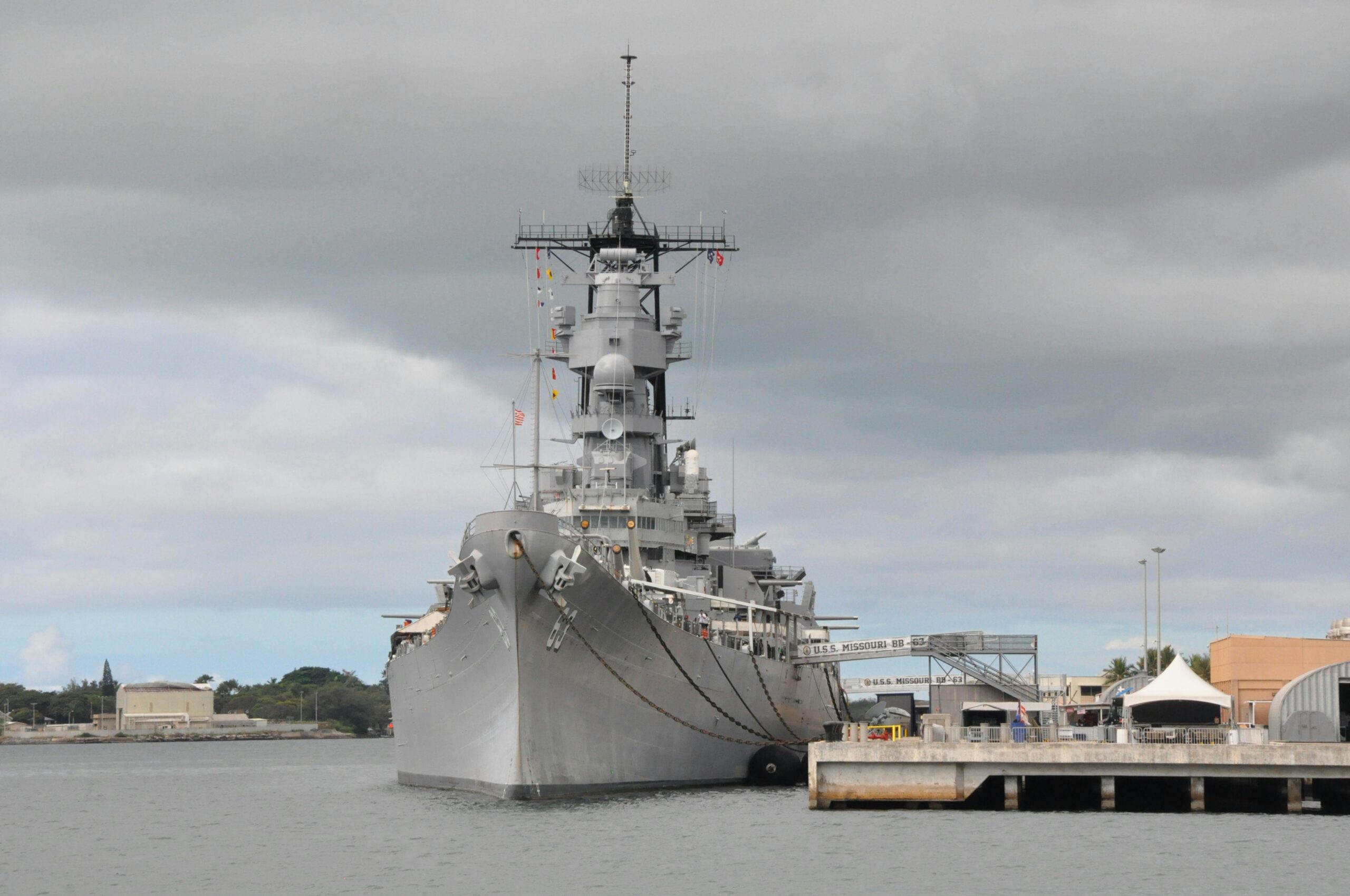
The Trump administration has unveiled plans for a new class of massive, heavily armed surface warships—dubbed the Trump class—with the lead vessel to be named USS Defiant. Flanked by Secretary of War Pete Hegseth and Secretary of the Navy John Phelan at Mar-a-Lago, President Donald Trump announced the ships as the centerpiece of a broader naval expansion called the Golden Fleet, but major questions about cost, timing, and strategic logic loom large.
Envisioned as 30,000-to-40,000-ton behemoths armed with hypersonic missiles, electromagnetic railguns, laser weapons, and nuclear cruise missiles, the Trump class represents a bold—and to many, a nostalgic—leap in naval ambition. “American strength is back on the world stage,” declared Secretary Hegseth, framing the ships as “the biggest and most lethal ever” and a “generational commitment to American sea power.” The goal is to build at least two ships initially, with hopes of eventually fielding a fleet of 10 to 25 hulls.
But can the U.S. Navy, which retired its last true battleships in the 1990s, realistically build and operate such vessels? The design, illustrated in renderings, shows a warship with three large Vertical Launch System (VLS) arrays, multiple gun turrets, and a suite of futuristic weapons still in development. According to the Navy’s release, the ships would also serve as command and control hubs for crewed and uncrewed systems, incorporating unspecified artificial intelligence-driven capabilities. “We’re going to make battle groups great again,” added Secretary Phelan, suggesting the vessels would inspire “awe and reverence” abroad.
READ ALSO: https://modernmechanics24.com/post/students-revive-1903-flight-legacy/
The announcement raises immediate practical concerns. No cost estimates were provided, and the timeline for launching the USS Defiant, let alone achieving operational status, remains entirely unclear. The Navy has struggled with shipbuilding programs for decades, most notably the truncated Zumwalt-class destroyer program, which was cut from 32 ships to just 3. Furthermore, the proposal emerges as the Navy faces a pressing VLS cell shortfall with the planned retirement of Ticonderoga-class cruisers and Ohio-class guided missile submarines by 2030.
Strategic analysts are divided. Proponents see the Trump class as a modern “arsenal ship”—a long-studied concept for a floating missile battery that could offset U.S. missile capacity losses and provide overwhelming firepower. Critics, however, question investing in a small number of extremely expensive, high-profile targets when the Navy consistently states it needs more ships, not just more capable ones. The vulnerability of such a large vessel to modern anti-ship missiles is also a serious tactical concern.
WATCH ALSO: https://modernmechanics24.com/post/us-supersonic-jet-cuts-flight-time-silences-sonic-boom/
Adding a layer of political controversy, this marks the first time a ship class has been named after a sitting U.S. president. President Trump, who has previously expressed strong opinions on naval aesthetics, stated he would be “directly involved in the design process, because I’m a very aesthetic person.” The naming convention and the president’s personal involvement are likely to attract additional scrutiny from Congress and naval observers.
The unveiling coincided with the Navy confirming that its new FF(X) frigates will initially be delivered without VLS systems, prioritizing low cost and rapid production over high-end capability. This high-low mix strategy places even greater pressure on the Trump class to deliver unmatched lethality. Whether this “battleship” vision becomes a transformative pillar of American sea power or a costly, canceled footnote will depend on the coming debates over funding, technology maturation, and strategic necessity.
READ ALSO: https://modernmechanics24.com/post/20-lawmakers-back-rfk-primate-plan/