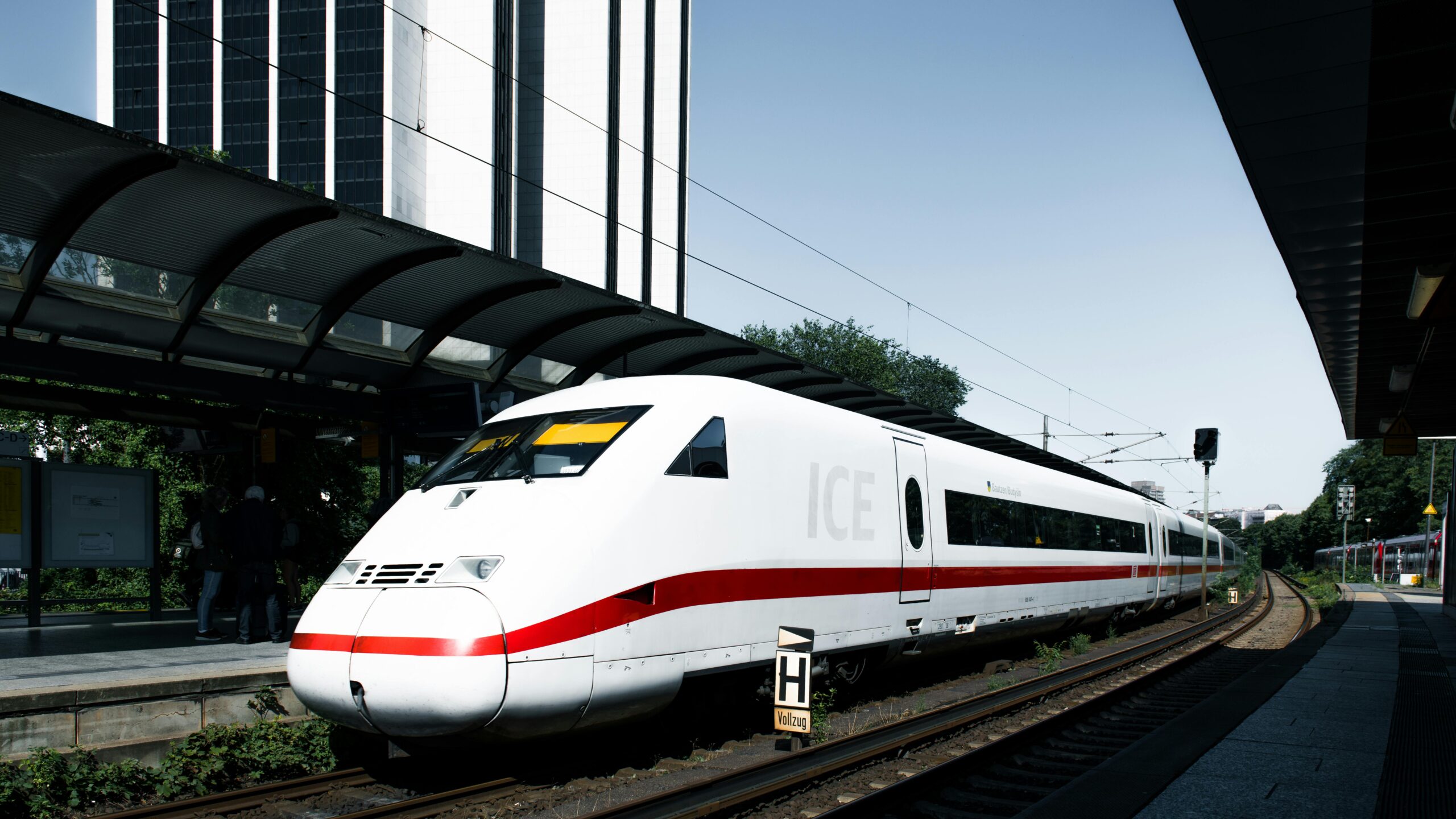
South Korea’s government has announced the completion of core technologies for the EMU-370, a next-generation high-speed train designed to operate at 370 kph—securing its position as the world’s second-fastest in commercial service, trailing only China’s upcoming CR450.
The development, led by the Korea Railroad Research Institute (KRRI), marks a significant leap in national rail capability. The EMU-370 has a technically designed maximum speed of 407 kph, with a target commercial operating speed of 370 kilometers per hour. This speed would place it ahead of current systems in France, Germany, and Japan, which typically run at around 320 kph, according to the Ministry of Land, Infrastructure and Transport.
The ambitious national R&D project, which ran from April 2022 to December 2025, involved a consortium of seven public and private organizations. With a total investment of 22.5 billion won ($15.23 million)—comprising 18 billion won in government funding and 4.5 billion won from the private sector—the initiative focused on developing indigenous core technologies to reduce reliance on foreign imports and boost technological sovereignty.
READ ALSO: https://modernmechanics24.com/post/argonne-xrays-test-hypersonic-materials/
What does this mean for the future of travel on the Korean peninsula? The government’s roadmap is now set: manufacturing of the first train vehicles is slated to begin next year, followed by extensive test operations starting in 2030. If all goes according to plan, commercialization will follow after 2031, potentially revolutionizing domestic and international rail connectivity.
This achievement is not just about national pride; it’s a strategic move in a highly competitive global market. Upon commercialization, the EMU-370 would indeed become the world’s second-fastest train in active service. The current title-holder-in-waiting is China’s CR450, which is undergoing test operations at 400 kph and is aiming for commercial deployment by 2027. The Korean development effectively positions the country as a direct technological follower in the ultra-high-speed rail arena, a sector dominated by a handful of nations.
The ministry’s announcement underscores a focused effort to advance key systems indigenously, including critical components related to aerodynamics, propulsion, braking, and noise reduction—all of which are exponentially more challenging at such extreme velocities. Success in these areas promises not only a faster train but also greater efficiency and safety, paving the way for future exports of Korean rail technology.
READ ALSO: https://modernmechanics24.com/post/thorium-229-laser-nuclear-clock/
The project’s relatively modest budget of $15.23 million for core technology development highlights a focused approach, leveraging existing research infrastructure and public-private collaboration. The Korea Railroad Research Institute has positioned this as a foundational step, with the larger investments in manufacturing and testing still to come. This milestone demonstrates that South Korea is not content to be a perpetual licensee of foreign high-speed rail tech but is determined to carve out its own lane on the global track.