

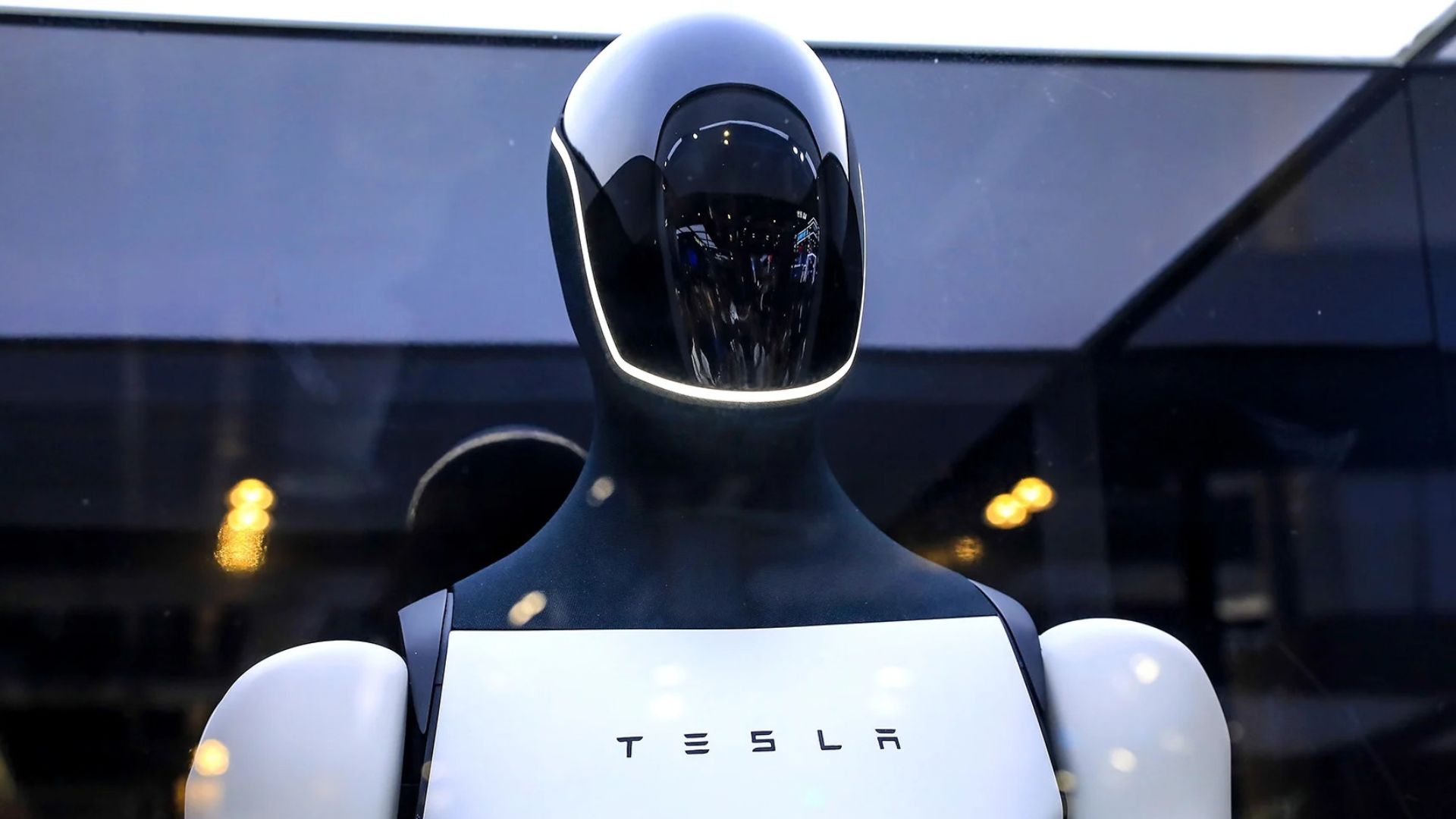
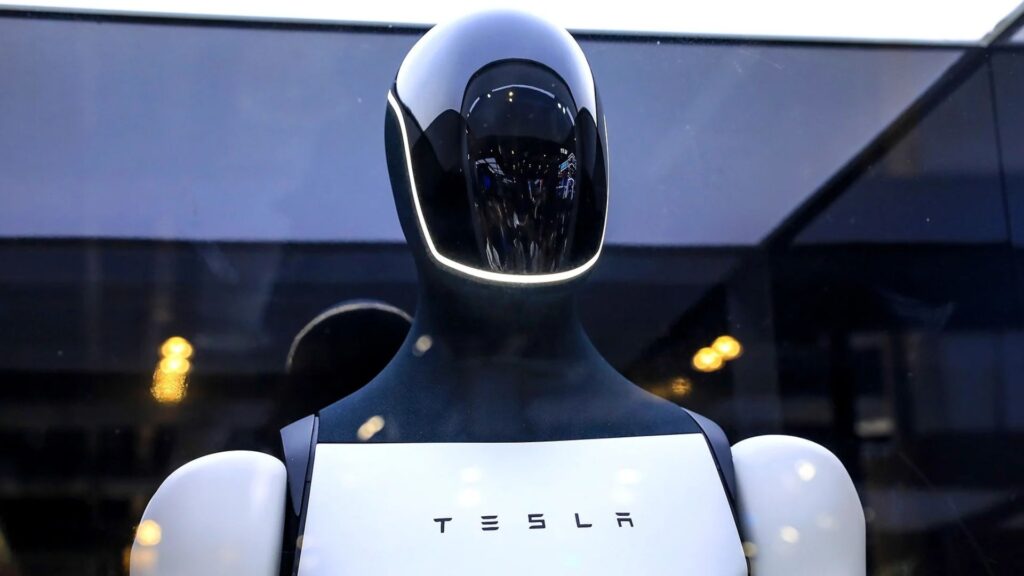
Tesla is sharply increasing production of its Optimus humanoid robot, with several hundred units reportedly being built each week at its Fremont facility.
The increase marks a major shift from the small-batch production seen earlier this year, but the robots are still being used mainly for testing, training and data collection.
Tesla now faces two major challenges as it scales the programme: teaching Optimus to handle unfamiliar tasks and making its hardware reliable enough for large-scale use.
According to a report by The Information, Tesla increased Optimus production from a few dozen units a week during small-scale testing in the second quarter to several hundred units a week in August.
Managers are reportedly working toward an automated production line that can make more than 1,000 robots each week by the end of 2026. Tesla has also set a longer-term target of around 20,000 Optimus units per week.
The production operation is based at Tesla’s Fremont factory in California. The company converted a production line previously used for the Model S and Model X after ending production of the two vehicles in early May. Workers and engineers from the S/X programme were moved to Optimus, while additional employees reportedly shifted from Model Y operations.
Despite the rising output, most of the robots are not yet being deployed as commercial machines. Tesla is using them mainly for internal testing, AI training and collecting operational data. Robots working inside Tesla facilities are reportedly assigned to controlled environments and specific tasks under supervision.
The current production model is also not the final commercial version of Optimus. Tesla’s V3 model is expected to undergo higher durability and reliability requirements before it is ready for wider deployment. This means the growing production numbers do not yet represent large-scale commercial availability.
READ ALSO: https://modernmechanics24.com/post/f-22-raptor-testing-stealth-sensor-pods/
Hardware Remains A Challenge
One difficult area is the robot’s hands. Tesla has previously targeted human-like dexterity for Optimus, but building and maintaining such a compact system at scale remains a manufacturing challenge. The hand and forearm reportedly contain more than 100 screws and other small components that workers still assemble manually.
The report says some assembly fixtures struggle to position small parts accurately. These problems have been reported at stations handling hands, joints and electronics testing. When parts do not align correctly, workers need to do additional work after the robot leaves the production line.
Reliability is another concern. Some touch sensors inside the hands have reportedly experienced problems during testing and operation. Tesla plans to address part of this issue with a replaceable sensing glove, expected to be added next year, which would allow damaged sensing components to be replaced without changing the entire hand.
Tesla also depends on outside suppliers for several specialised components. These include motors and precision gears used in the robot’s joints, with some suppliers based in China. Suppliers that can produce consistent parts in small prototype quantities may struggle to maintain the same quality as production volumes increase.
AI Still Needs More Training
The physical hardware is only one part of the challenge. According to The Information, people familiar with Optimus development said the robot’s AI still struggles to perform a broad range of tasks reliably. Its behavior can also become unpredictable when it encounters situations not included in its training.
Tesla is attempting to address this by creating a library of basic movements. The idea is to let Optimus combine these movements to perform different jobs. However, the reported training process remains lengthy, with the robot taking several days to learn some basic tasks.
Tesla has accumulated more than 500,000 hours of training data for Optimus. The company reportedly plans to double that amount by year-end. Tesla has also moved much of its self-driving data annotation workforce to the humanoid robot programme and hired dedicated workers to collect additional training data.
Some of those workers reportedly use camera helmets and motion-capture suits to record human movements. Tesla has also established training hubs in Colorado, Arizona and Florida. These efforts are intended to give the AI more examples of how people perform physical tasks in different environments.
READ ALSO: https://modernmechanics24.com/post/huawei-tau-chip-heat-performance/
Tesla Plans Controlled Expansion
Tesla’s reported approach to commercial deployment reflects the technology’s current limits. Instead of immediately offering Optimus to a wide range of customers, the company reportedly plans to lease the robots to a limited group of businesses. These companies are expected to have factories and warehouses with working conditions similar to Tesla’s own facilities.
The strategy would give Tesla greater control over the environments in which Optimus operates. It would also let the company gather more data from real-world deployments and use it to improve the robot’s software. The approach resembles Tesla’s broader strategy of using deployed systems to collect data and improve automated functions over time.
The current situation is also different from some of Tesla CEO Elon Musk’s earlier targets.
In January 2025, Musk said Tesla planned to build about 10,000 Optimus robots during 2025, with several thousand expected to perform useful work by the end of that year. Later, he acknowledged that no Optimus robots were then doing useful work at Tesla.
Musk also said Tesla would reveal the V3 version of Optimus by mid-2026. By late September, that expected demonstration had not taken place, according to the information provided for this report. Meanwhile, other companies are advancing their own humanoid robot programs.
Chinese electric vehicle maker XPeng reportedly began operating an automated production line for its IRON humanoid robot in Guangzhou this month. The company is targeting commercial sales of the robot in 2027, adding another competitor to an increasingly active humanoid robotics market.
For Tesla, the next stage of Optimus development will depend on more than production volume. The company needs to improve the robot’s ability to handle unfamiliar tasks while maintaining consistent hardware quality at higher manufacturing rates.







One Response