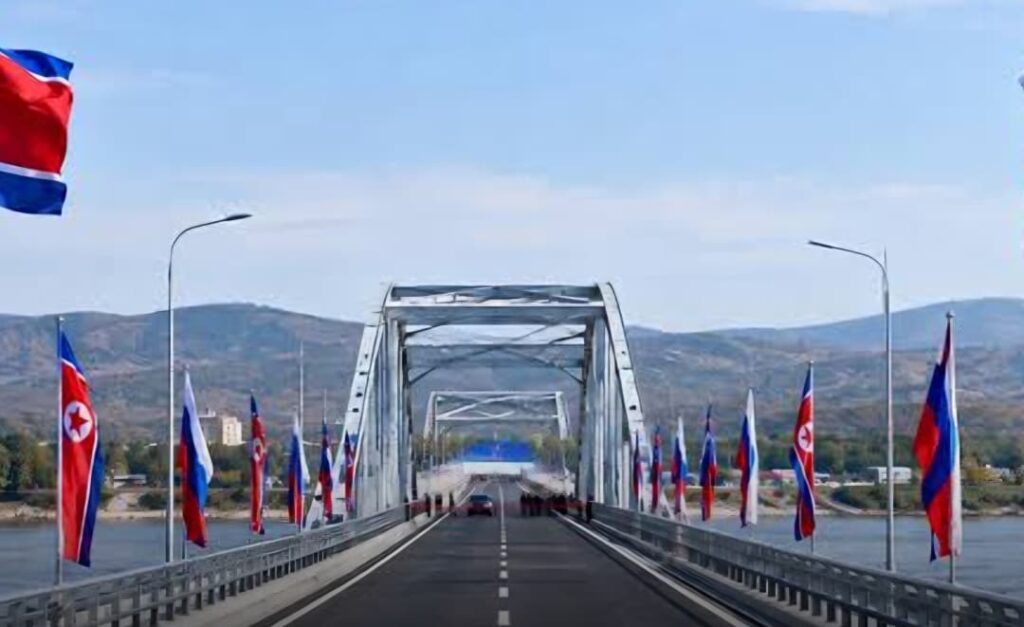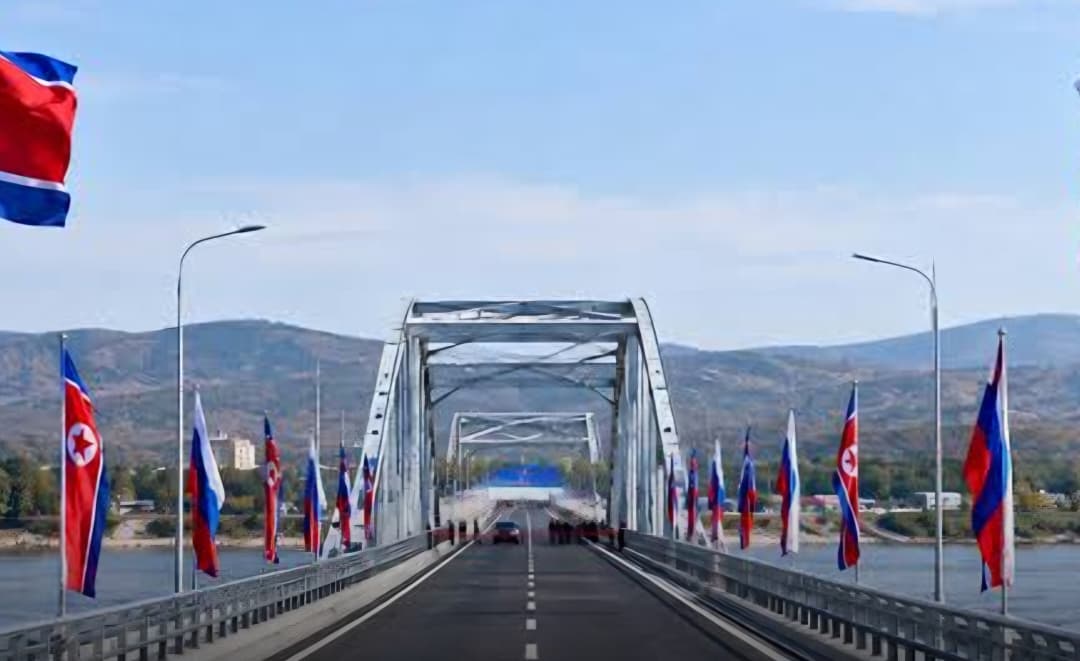
Russia and North Korea have opened their first road bridge across the Tumen River, creating a direct land route for cargo and passengers between the two countries.
The new crossing links the Russian border region with North Korea and adds a road connection to existing rail and air routes. Its opening comes as Moscow and Pyongyang deepen economic and military cooperation following Russia’s invasion of Ukraine.
New Border Route Opens
The bridge is designed to support personnel movement, tourism and trade between the neighbouring countries.
North Korean state media described the crossing as a route for greater exchanges, while Russian Prime Minister Mikhail Mishustin called it a new symbol of friendship between Moscow and Pyongyang. North Korean Prime Minister Pak Thae Song described the opening as a historical event.
READ ALSO: https://modernmechanics24.com/post/romulus151-unmanned-ship-hull-completed/
Russian state news agency TASS reported that the bridge can handle up to 300 vehicles and 2,323 people each day. The Russian government said cargo transport will begin first, with passenger traffic expected to start later this year. The capacity gives both countries a much more practical road route than the temporary arrangement used before.
The new bridge is about one kilometre long and crosses the Tumen River, which forms part of the border between Russia and North Korea.
Satellite images examined by BBC Verify in May showed the bridge alongside new access roads, a border checkpoint, parking areas and other supporting facilities. These additions indicate that the crossing was built as part of a larger border transport system.
Replacing Temporary Crossing
Before the bridge opened, the two countries had no permanent road connection across their border. Cars could cross the existing rail bridge only through a special arrangement in which wooden planks were placed over the railway tracks. The new road removes that temporary solution and provides a dedicated route for vehicles.
Russia and North Korea already have air connections and a railway crossing. The road bridge gives both sides another option for moving people and goods and may make cross-border transport more flexible. It also connects directly with newly built roads and border facilities on the Russian and North Korean sides.
Construction began in 2025 after Russian President Vladimir Putin and North Korean leader Kim Jong Un agreed to build the bridge during Putin’s visit to North Korea in 2024. That visit was Putin’s first trip to the country in 24 years and resulted in a strategic partnership treaty between Moscow and Pyongyang. Construction took 495 days after delays before the crossing was completed.
WATCH ALSO: https://modernmechanics24.com/post/china-five-destroyers-firepower-drill/
Trade Meets Military Needs
The bridge is being presented publicly as an economic and civilian transport project, but its opening comes against the backdrop of rapidly expanding military cooperation.
Ukrainian investigative organisation Truth Hounds has argued that the crossing is intended primarily to create a covert military logistics route supporting Russia’s war in Ukraine. The organisation said the bridge could also allow North Korean military personnel, construction workers and senior officials to travel directly into Russia.
North Korea has already supplied Russia with large quantities of military equipment, according to estimates cited in the source material.
Researchers at South Korea’s intelligence agency estimate that Pyongyang has transferred weapons worth between $7 billion and $14 billion, including rockets, missiles and artillery shells. The same estimates put the number of North Korean troops involved in fighting alongside Russian forces at about 11,000.
The bridge may also make the movement of labour between the two countries easier. Around 10,000 North Korean workers are estimated to be employed at construction sites and logging camps in Russia. Their presence comes despite a United Nations ban on countries employing North Korean labour, with some workers reportedly entering Russia under student visas.
The route can also support movement in the opposite direction. Truth Hounds said Russia could use the connection to send technology and resources into North Korea. That adds an economic dimension to a relationship that has increasingly included defence cooperation, labour and military supplies.
Tourism And Future Trade
Mishustin said the bridge would give fresh momentum to trade and cooperation in areas including the economy, science, technology and culture.
Civilian travel between the two countries has also increased in recent years. Russian tourists have been allowed to visit North Korea since 2024, with organised trips taking visitors to Pyongyang and the Wonsan-Kalma coastal resort. North Korea continues to restrict tourism from many other countries, making Russia an important source of foreign visitors.
READ ALSO: https://modernmechanics24.com/post/general-atomics-wildfire-drone/
He said relations between Moscow and Pyongyang had reached an unprecedented level. The new transport route provides physical infrastructure for that expanding relationship.
Victor Cha of the Center for Strategic and International Studies said the speed of construction reflected the growing volume of activity between the two countries.
He linked that growth largely to North Korea’s supply of troops, weapons, ammunition and labour to Russia during the Ukraine war. Before the conflict, he described the Russia-North Korea road connection as one of the least active links between North Korea and its neighbours.
The bridge therefore has a role that extends beyond ordinary border traffic. Its initial use for cargo, followed by passenger services, gives Moscow and Pyongyang a permanent road channel for trade and travel. At the same time, its location and timing make the crossing relevant to the wider security relationship between Russia and North Korea.
The opening marks a new stage in physical connectivity between the two countries. As cargo and passenger traffic expands, the bridge is likely to become an important route for their growing economic relationship while also providing infrastructure that can support their wider strategic partnership.