

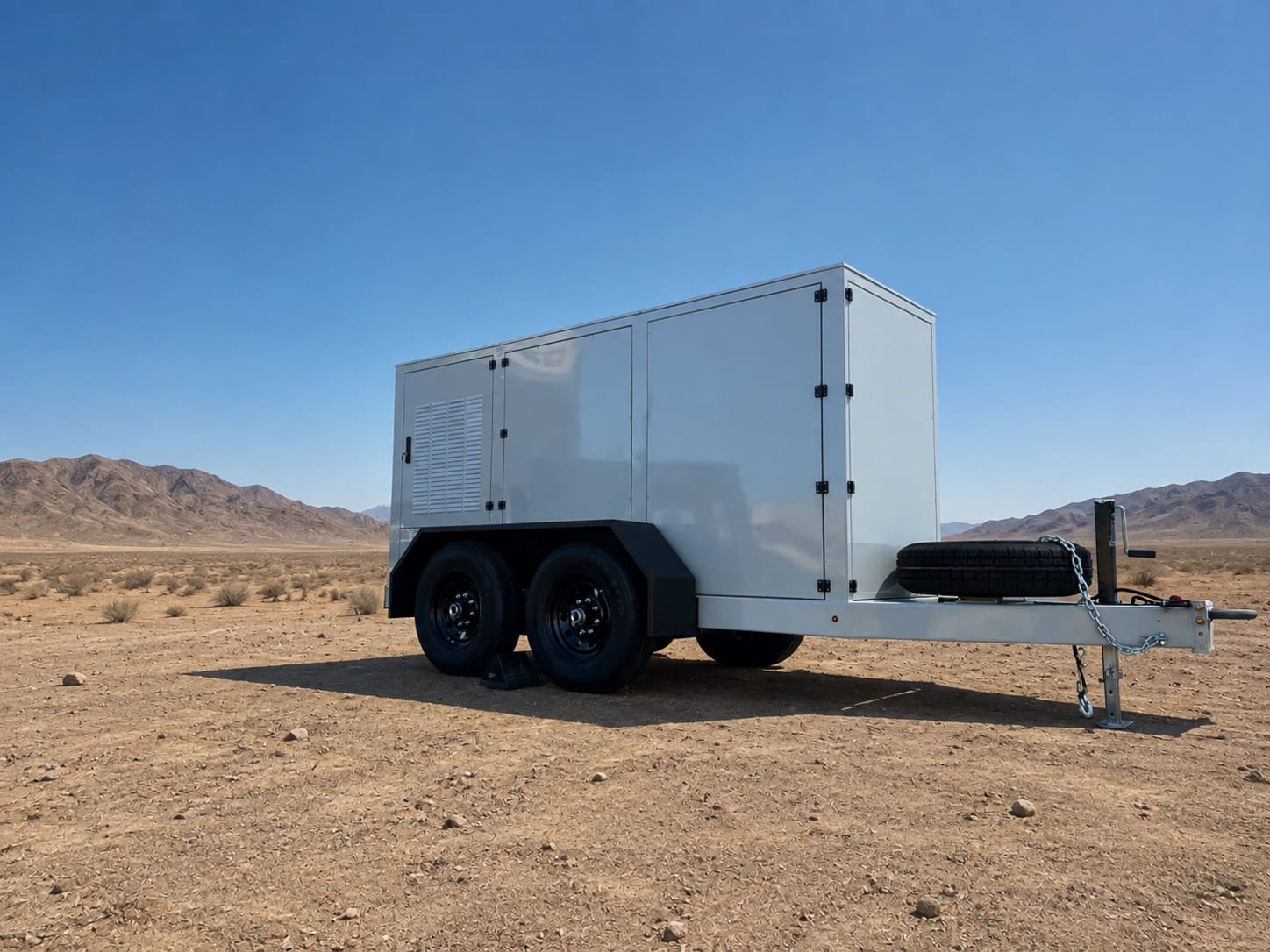
US electric vehicle company Xos Inc. said that a single mobile charging system has delivered more than one gigawatt-hour of energy in real-world operations, highlighting growing use of flexible charging infrastructure.
The Xos Hub has supplied 1,020,143.6 kilowatt-hours through more than 33,600 charging sessions since entering heavy-duty service in early 2025.
The company is expanding the platform as electric fleets, utilities and other customers seek alternatives to permanent charging infrastructure.
Hub Reaches Major Milestone
The Xos Hub is a mobile, grid-independent energy storage system that can provide electricity without being connected to a permanent charging installation.
READ ALSO: https://modernmechanics24.com/post/lynx-xm30-army-testing-bradley-replace/
It is designed to store energy and deliver it to vehicles or other equipment at locations where grid capacity is limited or unavailable. The system has been used to charge trucks, cars, buses and autonomous vehicles in different operating environments.
The unit that crossed the 1 GWh mark has been operating at high utilization since early 2025. Xos said it has typically delivered between 1,800 and 2,000 kWh of energy each day. Across the company’s deployed Hub fleet, cumulative energy delivery has now exceeded 5 GWh.
The milestone provides data on the system’s performance under repeated, long-term use. For battery storage equipment, the ability to maintain energy output over time is an important consideration alongside its initial capacity and charging performance.
Company Expands Product Range
Xos has increased the capacity of its Hub systems as it seeks to serve a wider range of customers. In January 2026, the company expanded its available capacity tiers to as much as 630 kWh per unit, targeting additional fleet and site-based applications.
In June, Xos introduced the Power Hub, a containerized system aimed at larger electricity loads. It is offered in 1.2 MWh, 2.5 MWh and 4.0 MWh configurations, extending the company’s technology into higher-capacity energy storage applications.
The company has also expanded into utility projects. In August, Xcel Energy ordered three additional Xos Hub systems in Colorado to support electric vehicle charging at service centers and for residential customers during grid upgrade work.
Xos has also entered the defense market. The company said in August that it had received a prototype Other Transaction Agreement from the US Air Force to provide deployable mobile charging for electrified vehicles and equipment in field environments.
The Xos Hub received UL 2202 certification in August for fleet energy storage systems, providing a safety certification as the company expands commercial deployments.
WATCH ALSO:https://modernmechanics24.com/post/lockheed-martin-grizzlymissile-launcher/
Grid Delays Drive Demand
The expansion comes as energy storage and electric vehicle infrastructure face rising demand in the US. Energy storage installations reached a record 18.9 GW in 2025, up 52% from the previous year, according to Wood Mackenzie and the American Clean Power Association.
At the same time, connecting new generation and storage projects to the US power grid remains a lengthy process. Lawrence Berkeley National Laboratory estimates that about 2,061 GW of generation and storage capacity is waiting in interconnection queues, while a typical project takes more than five years to reach commercial operation.
Mobile energy storage systems are intended to provide a way to add charging capacity without waiting for permanent grid upgrades. For electric fleets, this can be particularly relevant at sites where existing electrical infrastructure cannot immediately support the required number of vehicles.
The technology can also serve temporary needs. Utilities can use mobile systems during infrastructure construction, while fleet operators can deploy them at new or expanding facilities before permanent charging equipment is installed.
Focus Shifts To Scale
Xos Chief Operating Officer Giordano Sordoni said the company’s field data supports its assessment of the system’s long-term operating costs.
He said the company expects the accumulated data to support the rollout of higher-capacity Hub systems and the Power Hub.
The company said its systems have operated in varied climates, including northeastern US winters and Arizona summers. Such deployments give XO’s operating experience across different temperatures and applications as it seeks to expand beyond its initial commercial vehicle market.
The company is now targeting four broad areas: fleet charging, utility services, industrial applications and defense. While the requirements differ between these markets, each can involve locations where permanent charging or grid infrastructure is difficult, expensive or slow to establish.
READ ALSO: https://modernmechanics24.com/post/ornl-hydropower-potential-us-dams/
For Xos, the 1 GWh milestone is therefore both an operating record and a measure of accumulated field experience. The company plans to use that experience as it expands its mobile energy storage platform and larger-capacity systems into additional markets.
As electric vehicle adoption increases and grid connections remain a constraint for some projects, demand for flexible charging infrastructure is expected to remain an important part of the broader electrification market.
Xos’s next phase will depend on how effectively its higher-capacity systems perform as deployments move from individual fleet applications to larger utility, industrial and defense projects.















One Response