

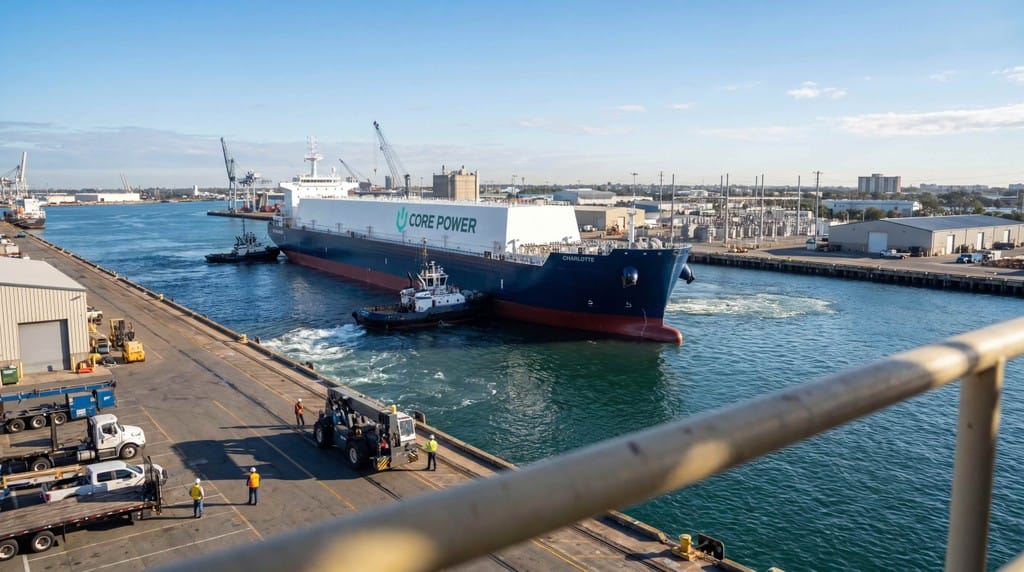
The US is moving ahead with plans for a fleet of 50 nuclear-powered merchant ships, marking a major step in efforts to bring nuclear propulsion into commercial shipping.
The seven-year agreement between British nuclear energy company Core Power and the US Maritime Administration covers LNG tankers and container ships, with the first vessel targeted for delivery in 2033. The initiative also comes as Chinese shipbuilders pursue their own plans for large nuclear-powered commercial vessels.
Core Power is seeking to develop nuclear propulsion systems for commercial ships as part of a wider effort to expand the use of nuclear energy at sea.
Under the latest plan, each vessel is expected to cost about $700 million, compared with roughly $250 million for a conventionally powered ship of similar capacity. The higher upfront cost is intended to be offset by lower fuel expenses, greater time at sea and higher cruising speeds, according to the project proposal.
READ ALSO: https://modernmechanics24.com/post/yangtze-rail-tunnel-shield-machine/
The planned fleet will consist of a mix of LNG tankers and container ships, two major categories in global maritime trade. Nuclear propulsion uses a reactor to generate heat, which is converted into energy to drive the ship without relying on conventional marine fuels during normal operation. Core Power estimates that conventionally powered merchant vessels would need 66 percent more tonnage to transport the same volume of goods as the proposed nuclear-powered fleet.
Using Military Nuclear Expertise
The latest proposal follows an earlier effort by Core Power to work with the US Department of War on maritime nuclear energy applications.
In February, the company explored using regulatory arrangements associated with nuclear plants aboard vessels operating from defense-owned ports, where the US military already has decades of experience managing nuclear reactors at sea. Such an approach was intended to provide a faster route for deploying maritime nuclear technology than relying entirely on the regulatory framework used for civilian nuclear facilities.
Core Power initially considered using established reactor designs, including the Westinghouse 550-megawatt A4W reactor used aboard Nimitz-class aircraft carriers. It also examined the Rolls-Royce PWR2 reactor used in British submarines, a design related to the technology behind Rolls-Royce’s small modular reactor program in the UK.
The company has since selected a reactor produced by US-based BWX Technologies for the commercial application. The shift reflects the project’s move toward a dedicated nuclear propulsion system rather than directly adapting existing naval reactor designs.
WATCH ALSO: https://modernmechanics24.com/post/lockheed-martin-grizzlymissile-launcher/
US Builds Against China
The US initiative is also being presented within the wider competition between American and Chinese maritime industries. At the Marintec China conference in Shanghai in June, state-owned Jiangnan Shipyard announced plans to build a 25,000-TEU nuclear-powered container ship, highlighting China’s growing interest in nuclear propulsion for large commercial vessels.
The US government has separately increased its focus on advanced nuclear technology for strategic and industrial applications. In May 2025, the White House issued an executive order directing the development of an advanced nuclear reactor at a military base by September 30, 2028.
For the merchant fleet project, the ship hulls are planned to be constructed in Japan and South Korea, two of the world’s leading commercial shipbuilding centers. The nuclear propulsion systems would then be installed at a new US shipyard, with Corpus Christi, Texas, emerging as a possible location after Core Power signed a preliminary agreement there.
First Ships Targeted 2033
The proposed fleet is designed to address both shipping efficiency and emissions. Nuclear propulsion eliminates the need for conventional fuel combustion during operation, removing sulfur emissions associated with marine fuel and supporting the industry’s efforts to reduce greenhouse-gas emissions.
The project nevertheless faces practical challenges, including the high construction cost, nuclear safety requirements, regulation, specialized infrastructure and the need to establish a US-based facility capable of installing maritime reactors.
The seven-year agreement provides a framework for advancing the program, but turning the proposal into a functioning commercial fleet will require progress across shipbuilding, nuclear technology and regulation.
READ ALSO: https://modernmechanics24.com/post/china-tanker-refuels-egypt-rafale-drill/
If the schedule remains on track, the first US nuclear-powered merchant vessel would enter service in 2033. The project will therefore be closely watched as the US and China explore whether nuclear propulsion can move from primarily military applications into large-scale commercial shipping.










2 Responses