

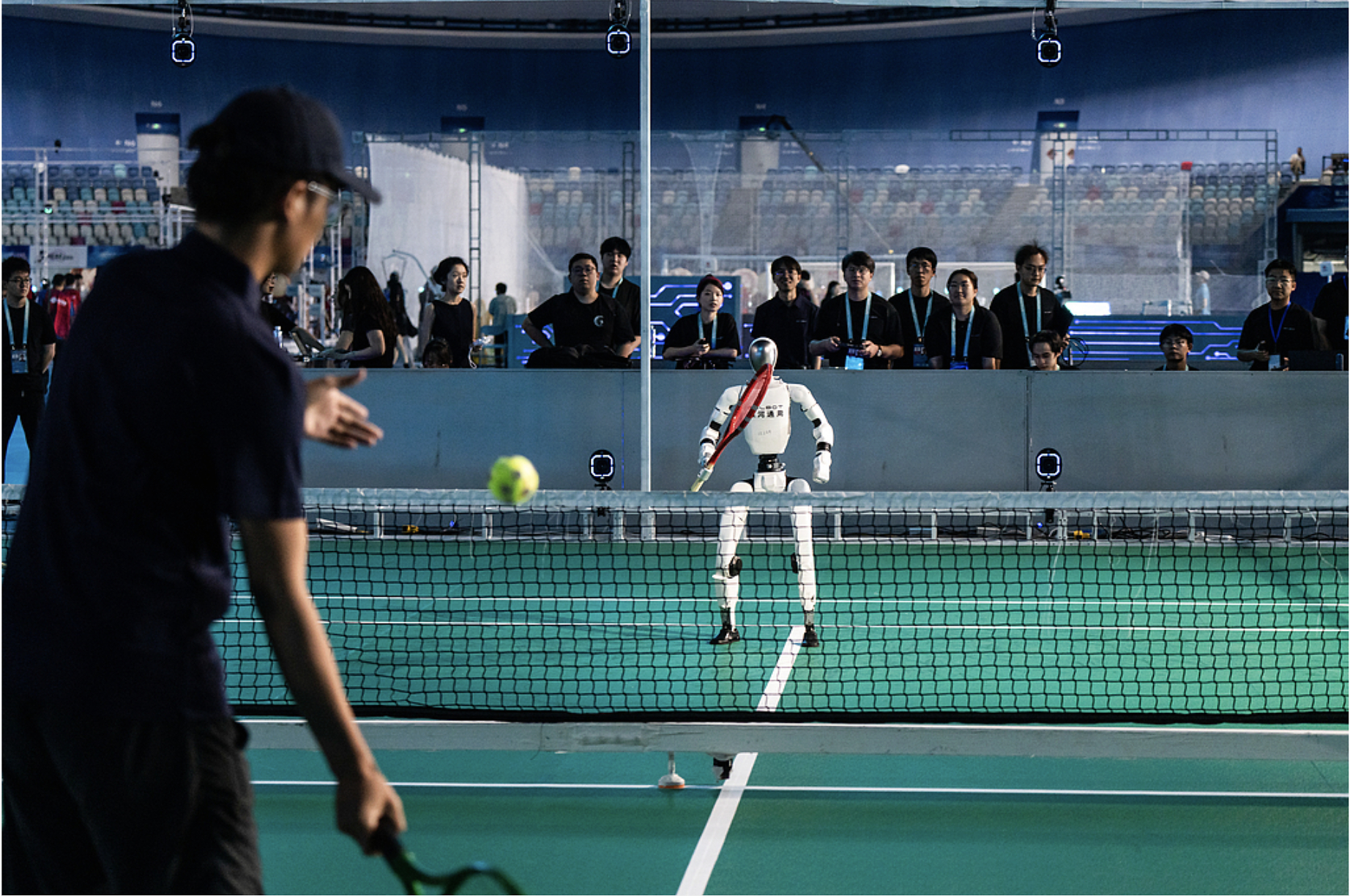
GALBOT humanoid robots have completed more than 100 consecutive tennis rallies during what the company describes as the world’s first live autonomous humanoid robot tennis match. The robots competed with human athletes during the opening ceremony of the 2nd World Humanoid Robot Games, showing how robots can handle fast-moving physical tasks in real time.
The match was part of GALBOT’s AstraTennis system. The robots tracked tennis balls, moved around the court, selected shots and responded to human players without relying on a fixed sequence of movements.
The event marked a shift from simple robot demonstrations to a complete sports match. The GALBOT robots had to watch the ball, move into position and choose how to return each shot.
READ ALSO: https://modernmechanics24.com/post/chinas-humanoid-robot-running-style/
According to the company, the robots completed 100+ consecutive rallies, setting a new record for humanoid robot tennis.
GALBOT developed the system to combine vision, decision-making and full-body movement. The robots could track fast tennis balls and respond to changing situations on the court.
They performed serves, forehands, backhands and returns. They also handled baseline rallies, net play and difficult recovery shots.
The key difference was that the robots were not simply repeating a fixed set of tennis movements. They adjusted their position and selected different shots based on what was happening during the match.
The system also allowed the robots to work with human tennis players in doubles matches. They could adapt their movements and responses as the game changed.
Fast sports can easily push a humanoid robot off balance. During the match, some GALBOT robots lost their balance during quick exchanges but were able to recover and continue playing.
This ability is important because real-world robots cannot depend on perfectly controlled conditions. They need to react when movement, timing or the environment changes unexpectedly.
Tennis requires several tasks to happen at once. A robot must identify a fast-moving ball, predict where it will go, move its body into position and hit it with the right timing.
WATCH ALSO: https://modernmechanics24.com/post/gen-1-5-robots-one-shot-learning-ai/#google_vignette
It must also respond to an opponent and adjust its next move. That makes autonomous tennis a useful test of what researchers call physical intelligence — the ability of an AI system to understand and act in the real world.
The GALBOT demonstration shows how AI is moving beyond digital tasks and into physical environments. The same combination of vision, decision-making and movement could eventually be useful for robots working around people.
The technology is still at an early stage, and a tennis match does not prove that humanoid robots are ready for everyday work. But the ability to complete long autonomous rallies offers a useful test of how well robots can perceive, move and react in real time.














One Response