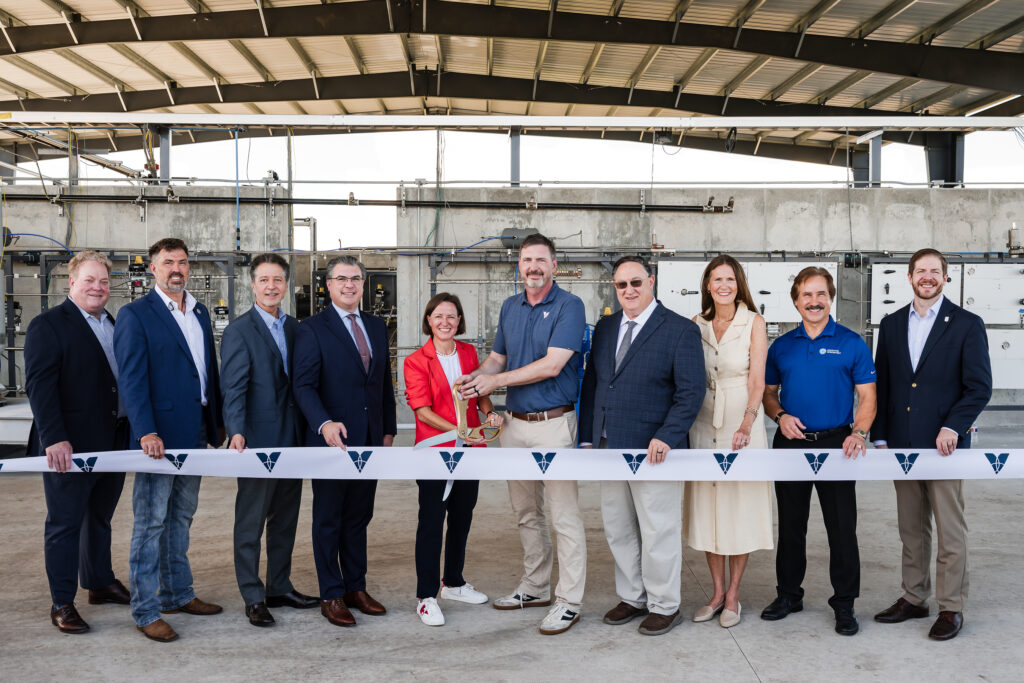
Electra has selected Springfield in Clark County as the location for its first manufacturing plant dedicated to the EL9 Ultra Short aircraft.
The company said the investment marks its transition from aircraft development to full-scale commercial production. The facility will be built at AirPark Ohio beside Springfield-Beckley Municipal Airport.
The project carries an investment of $850 million and is expected to generate 1,975 new jobs across manufacturing, engineering, and support functions. Electra plans to produce its hybrid-electric aircraft for commercial operators, military customers, and humanitarian missions. Company leaders said the investment reflects long-term confidence in American aircraft manufacturing.
Electra Bets Big on EL9
The new manufacturing campus will cover 96 acres and will be developed in multiple stages. Design work will begin immediately, while construction is scheduled to start next year. The first production phase will support up to 400 aircraft annually before expanding to 800 aircraft per year during the second phase.
Electra’s EL9 Ultra Short is designed to carry nine passengers while using far less runway than conventional aircraft. The aircraft combines a fixed-wing design with hybrid-electric propulsion and blown-lift technology, allowing it to take off and land in about 150 feet. That distance is much shorter than traditional regional aircraft, enabling operations from smaller sites.
Instead of depending on conventional airports, the aircraft is designed to use compact locations such as parking areas, sports fields, and barges where appropriate. Electra describes this operating model as Direct Aviation, which focuses on connecting communities through point-to-point flights. The concept aims to reduce travel time by allowing aircraft to operate closer to passengers.
Chief Executive Officer Marc Allen said the agreement moves the company from aircraft demonstrations into commercial manufacturing.
He said Springfield offered the right combination of skilled workers, available land, aerospace expertise, and support from state and local authorities. Allen added that Electra intends to complete certification before placing the aircraft into service.
Why Ohio Won
Electra evaluated more than 140 potential locations during a year-long national site selection process. The company assessed workforce availability, infrastructure, room for expansion, supply chains, and support from government agencies. Springfield ultimately met the company’s long-term manufacturing requirements.
READ ALSO: From Aircraft Carriers to MIT: How One US Navy Veteran Is Automating Nuclear Reactors
The Dayton-Springfield region has become one of the leading centres for advanced air mobility development in the US. Springfield-Beckley Municipal Airport hosts the National Advanced Air Mobility Center of Excellence and SkyVision, an FAA-approved detect-and-avoid system. This infrastructure allows companies to test aircraft beyond the pilot’s visual line of sight in unrestricted airspace.
The region also benefits from its proximity to Wright-Patterson Air Force Base and the Air Force Research Laboratory. These organisations provide access to aerospace research, engineering expertise, and specialised testing capabilities. Nearby manufacturing facilities also strengthen the area’s aviation supply chain.
Ohio Governor Mike DeWine said aviation began in Ohio and the state continues to play an important role in the industry’s future.
He said Electra’s decision to establish production in Springfield would have a significant economic impact on Clark County. State officials believe the investment reinforces Ohio’s leadership in advanced aviation.
JobsOhio President and Chief Executive Officer J.P. Nauseef said the project builds on years of efforts to establish Springfield as a national hub for advanced air mobility.
He noted that Electra will benefit from local testing facilities, experienced aerospace workers, manufacturing suppliers, and nearby research institutions. Officials expect these advantages to support the company’s long-term growth.
Aircraft Development Progress
Electra’s investment will receive state and local incentives linked to job creation, workforce development, infrastructure improvements, and manufacturing expansion. The company plans to apply for a Job Creation Tax Credit through the Ohio Department of Development. JobsOhio also intends to provide financial assistance after final agreements are completed.
The EL9 Ultra Short is designed around six priorities: accessibility, quiet operations, payload, range, safety, and affordability. Hybrid-electric propulsion combines a conventional engine with electric power systems to improve fuel efficiency while lowering emissions and operating costs. The design also aims to reduce aircraft noise compared with helicopters and many electric vertical take-off aircraft.
According to Electra, the EL9 carries approximately 2.5 times the payload of many electric vertical take-off and landing aircraft while offering around ten times the range. The company also estimates operating costs will be roughly 70 percent lower than helicopters and many eVTOL aircraft. These advantages are intended to make regional air travel more practical for a wider range of operators.
Earlier this year, Electra secured $115 million in Series B funding led by Prysm Capital. The funding supports aircraft certification activities and pre-production preparations before manufacturing begins. Jay Park of Prysm Capital said the company has consistently met major development milestones.
Electra recently signed a life-of-program agreement with Safran Helicopter Engines to develop the TG600 turbogenerator for the EL9. The agreement includes an initial order for 250 units to power the aircraft’s hybrid-electric propulsion system. The partnership forms a key part of the aircraft’s long-term production programme.
The company has also reached a pre-delivery payment agreement with Bristow Group. The agreement includes binding commercial terms and non-refundable deposits, subject to aircraft certification. Bristow has secured the first delivery position for the EL9 equipped with the TG600 propulsion system.
Future Aviation Market
Electra has submitted the EL9 Ultra Short to the US Federal Aviation Administration for Part 23 type certification. The FAA recently completed the G-1 Issue Paper, establishing the certification basis for the aircraft. The company expects the first flight of the production aircraft in late 2027 or early 2028.
READ ALSO: China Develops Over 400 Humanoid Robot Models, More Than Half of Global Total
In May, Electra published its Direct Aviation Market Outlook examining travel demand across the US. The study found that journeys between 50 and 250 flying miles remain underserved by existing aviation services. Electra estimates the market will require between 12,000 and 16,000 aircraft between 2030 and 2040.
The company believes these shorter regional routes offer an opportunity for aircraft that require very little runway while carrying meaningful passenger and cargo loads. Such aircraft may also support military logistics, emergency response, humanitarian relief, and cargo transport in locations with limited infrastructure. Smaller operating areas also provide greater flexibility than conventional airport-based services.
Electra will continue operating part of its business from its facilities in Manassas, Virginia. Together with the new Ohio manufacturing campus, the company expects to strengthen its engineering, production, and certification capabilities. The dual-site structure is intended to support future expansion as customer demand grows.
The company already counts the US Air Force, US Army, US Navy, and NASA among its contracted customers. It also reports receiving more than 2,200 letters of intent from over 60 commercial customers, including airlines and helicopter operators. These commitments indicate growing interest in hybrid-electric regional aircraft across both government and commercial markets.
The Ohio facility represents a major step in Electra’s plan to move from aircraft development into high-volume manufacturing. As certification work progresses and production capacity expands, the company aims to establish the EL9 Ultra Short as a practical option for regional air travel, military operations, and specialised transport services in the years ahead.