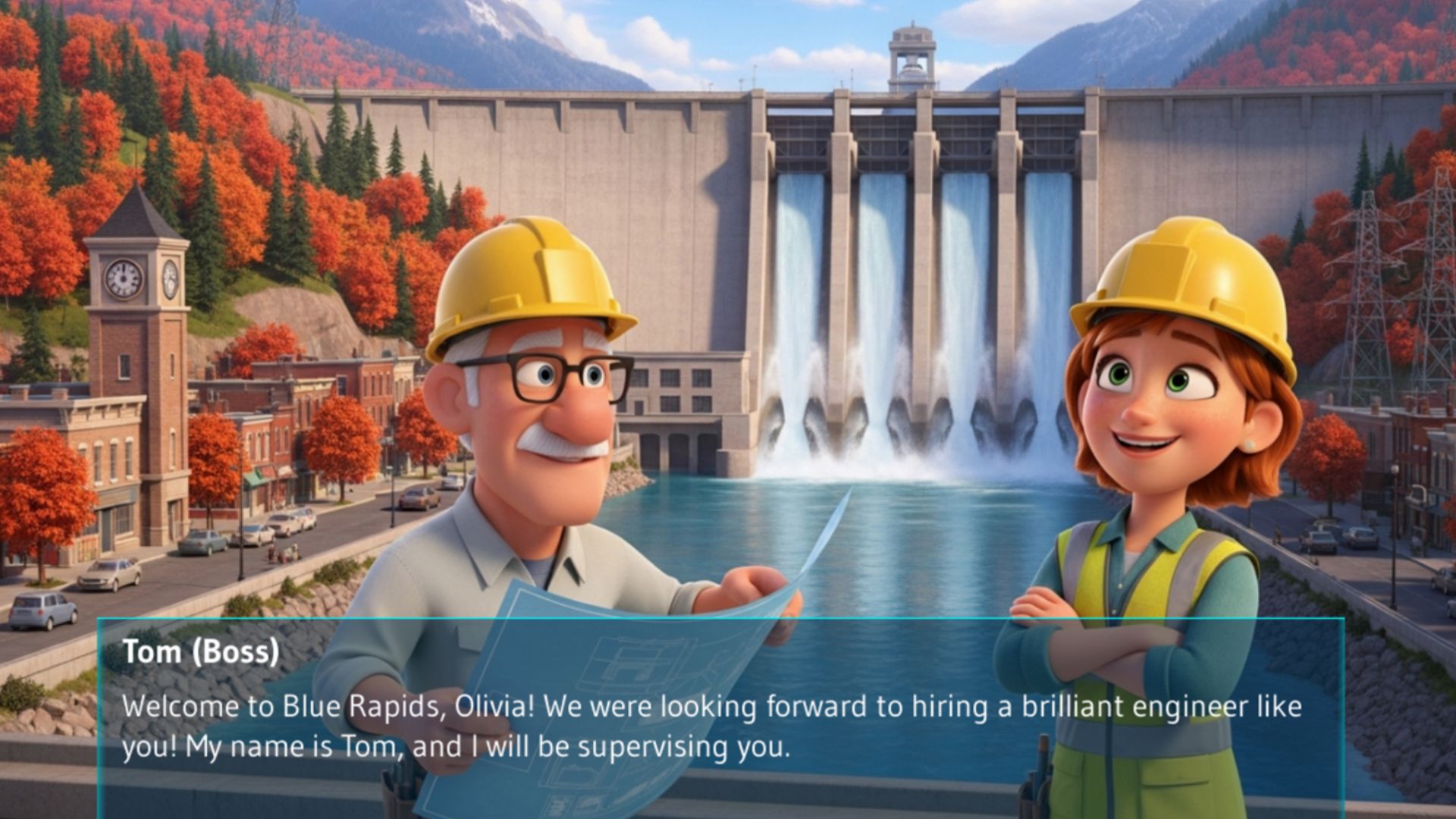
The US Department of Energy’s Argonne National Laboratory has introduced an interactive learning game to make hydropower easier for students and future professionals to understand.
Developed with the National Laboratory of the Rockies (NLR), the Hydropower Market Game aims to attract more people to careers in the hydropower industry. The initiative comes as the sector prepares for a significant workforce transition over the coming years.
Hydropower remains one of the oldest and most reliable sources of electricity in the US. However, the industry faces a growing shortage of skilled workers as many experienced employees approach retirement. Researchers hope the game will introduce younger generations to hydropower before they begin choosing career paths.
The project began in 2024 with support from a $100,000 Seedling Award from the US Department of Energy’s Hydropower and Hydrokinetic Office, formerly known as the Water Power Technologies Office.
Developers focused on creating an educational experience that feels more like a game than a traditional classroom lesson. Their goal was to make learning about electricity generation simple, practical, and engaging.
Learning Through Gameplay
Instead of relying on textbooks or technical diagrams, the Hydropower Market Game teaches players through interactive challenges. Users manage water flow, respond to changing electricity prices, and see how their decisions affect the power grid in real time. This hands-on approach allows players to understand energy management through active participation rather than simply reading about it.
Players begin as hydropower interns in the fictional town of Blue Rapids, where several types of hydropower plants operate. As they complete different tasks, they learn how electricity is generated and how power stations support the electrical grid. Each completed challenge unlocks new responsibilities and higher job titles inside the game.
One early activity introduces players to a run-of-river hydropower plant. They learn that increasing water flow generally produces more electricity before operating the facility themselves. Players adjust wicket gates, which control the amount of water entering a turbine, to balance electricity supply with demand.
As the game progresses, the challenges become more advanced. Players explore different plant designs, environmental considerations, operational planning, and electricity market conditions. Performance scores encourage users to replay levels and improve their understanding of hydropower operations.
READ ALSO: Raytheon’s NGSRI Missile Passes Key Test, Set to Replace US Army’s Stinger System
Industry Faces Challenge
The game was created in response to a growing workforce concern within the hydropower industry. According to a 2022 report by NLR, more than one-quarter of the US hydropower workforce aged 55 and older is expected to retire over the next decade. Replacing this experienced workforce has become an important priority for the industry.
Argonne energy systems engineer and project manager Quentin Ploussard said hydropower often receives less attention than newer renewable energy technologies. He described it as the forgotten giant of energy despite its continued importance to the electricity system. Ploussard said the technology still offers enormous long-term potential.
He also explained that education in hydropower remains limited in many engineering programs. Ploussard said he completed his master’s degree in electrical engineering in France in 2014 without taking a single class focused on hydropower. That experience helped inspire the development of an educational tool that introduces students to the field much earlier.
Hydropower currently supplies about six percent of US electricity. According to projections from the US Energy Information Administration, electricity demand is expected to grow between 0.9% and 1.6% annually through 2050. This increasing demand highlights the need for reliable power sources that can respond quickly to changes in electricity usage.
Argonne’s Hydropower Game Gains Momentum
Interest in the Hydropower Market Game has extended well beyond the US. Since its release in August 2025, the software has been downloaded more than 500 times across 55 countries. The international response surprised the development team because the project was originally funded as a US government educational initiative.
Ploussard said the global interest demonstrated that interactive learning tools have value for audiences worldwide. The response also highlighted the growing need to improve public understanding of hydropower technologies. Similar educational resources may help other countries strengthen their future clean energy workforce.
Although the number of large hydropower plants in the US has remained relatively stable, the sector continues to evolve. Existing facilities are being modernized with digital technologies and upgraded equipment. Pumped-storage hydropower is also expanding, allowing electricity generated during low-demand periods to be stored and released when demand increases.
These improvements make hydropower an increasingly flexible part of today’s energy system. Unlike some renewable energy sources that depend on weather conditions, hydropower plants can quickly adjust electricity production when needed. This flexibility helps maintain grid stability as more renewable energy sources are added.
Future Development Plans
The Hydropower Market Game was developed by a nine-member team that included hydropower experts, environmental scientists, communication specialists, and software developers.
Undergraduate student Lukas Livengood played a central role in programming the game through the Department of Energy’s Science Undergraduate Laboratory Internships (SULI) program. He transformed complex engineering concepts into interactive simulations that are easy for players to understand.
The current version of the game is available for Windows and Mac computers. Developers now plan to expand access by creating a browser-based version that works on nearly any internet-connected device. The online version may also introduce multiplayer features that allow users to learn together.
Argonne and NLR are seeking additional funding to continue improving the platform beyond its initial development phase. Researchers believe wider access will help more students discover career opportunities in hydropower and related energy fields.