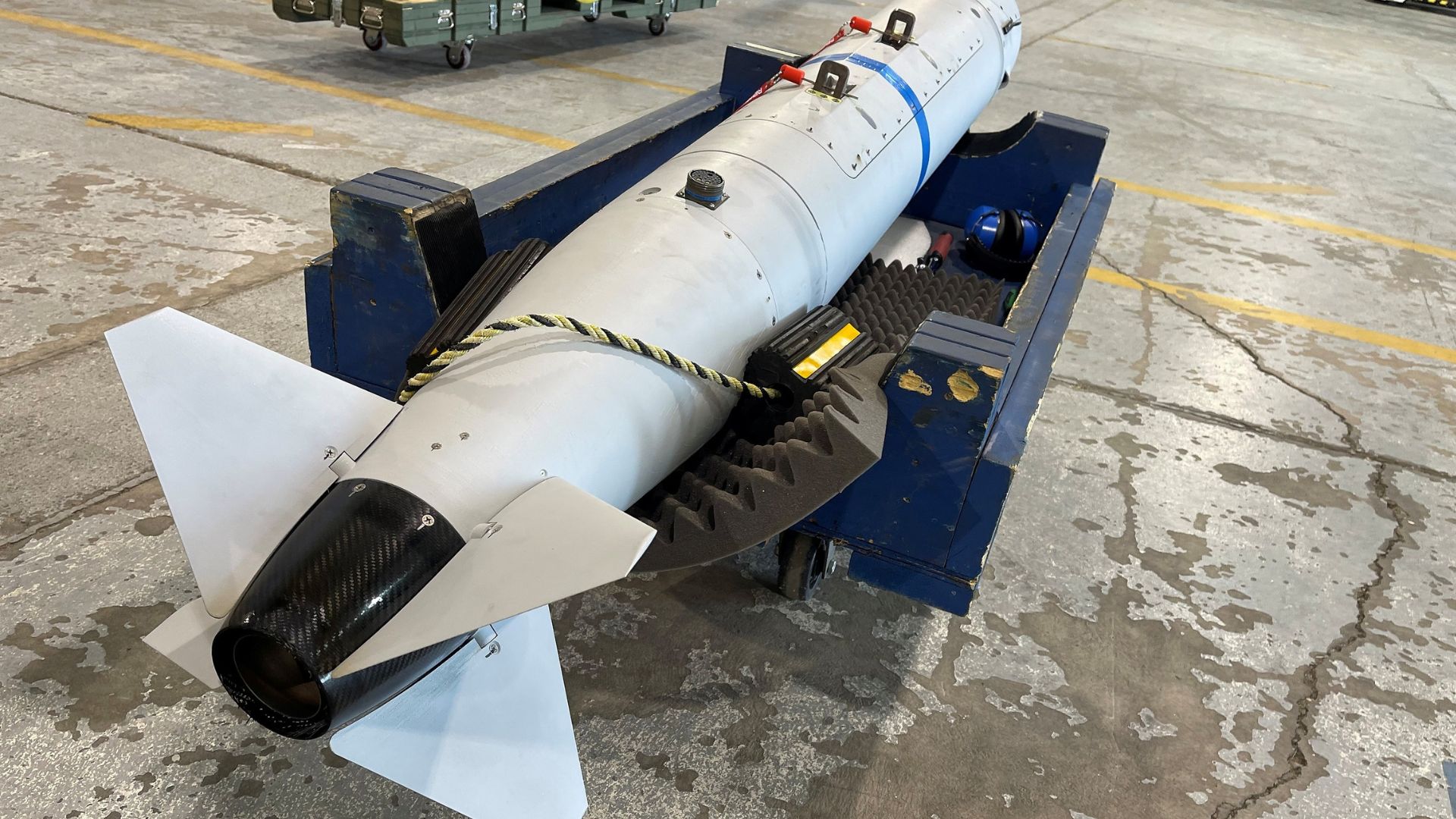
The US Air Force has expanded its Family of Affordable Mass Missiles (FAMM) program by selecting CoAspire under a new multi-year framework agreement.
The agreement establishes a pathway for large-scale production of affordable air-launched cruise missiles over the coming years. CoAspire will support the effort with its Rapidly Adaptable Affordable Cruise Missile(RAACM).
The agreement aims to help the Air Force build long-range strike capabilities in higher numbers while keeping production costs under control. It also expands participation by non-traditional defense companies in military manufacturing. CoAspire is the only small business selected under this production framework.
Long Range Missile Plans
The FAMM program is designed to increase the availability of affordable long-range cruise missiles for the US Air Force. Subject to congressional approval and funding, the program plans to deliver 28,000 missiles during its first five years, beginning in fiscal year 2027. The larger production target reflects growing demand for weapons that can be manufactured quickly and in significant numbers.
The initiative is being coordinated by several Department of War organizations. These include the Office of the Under Secretary for Acquisition and Sustainment, the Munitions Acceleration Council, the Economic Defense Unit, and the US Air Force. The Air Force’s weapons program office at Eglin Air Force Base in Florida will oversee program execution.
The Department also wants to strengthen the US defense industrial base through broader industry participation. By working with companies outside the traditional defense sector, the government hopes to improve manufacturing capacity and increase competition. This approach also supports job creation across the country while expanding production capability.
READ ALSO: 29,193 Dominoes Set New Guinness World Record in Stunning 3D Pyramid Display
RAACM Development Progress
CoAspire’s involvement follows earlier work under a developmental Other Transactional Agreement awarded by the US Air Force in late 2025. That agreement included aircraft integration and flight testing activities for the RAACM missile. The successful development phase led to the company’s inclusion in the new framework agreement.
Company founder and CEO Doug Denneny said the agreement highlights CoAspire’s ability to support affordable long-range strike capabilities.
He added that the company and its network of 56 first-tier suppliers are prepared to support the Air Force’s production requirements. He also noted that the project will help expand manufacturing jobs across many US states.
The company expects the agreement to support the procurement of thousands of cruise missiles over a seven-year period. The framework also demonstrates the Department’s effort to diversify its supplier base. Greater supplier participation may reduce production risks while improving long-term manufacturing resilience.
CoAspire Powers Missile Expansion
The RAACM missile family includes different versions for air, surface, and ground launch operations. This flexibility allows the same design to support multiple military platforms and operational needs. A common design can also simplify logistics and future upgrades.
The baseline RAACM is designed to travel hundreds of miles. It uses an additively manufactured fuselage, a process commonly known as 3D printing, which creates parts layer by layer instead of using traditional manufacturing methods. This approach increases internal space for fuel while reducing production time and manufacturing costs.
Additive manufacturing also allows engineers to modify missile designs more quickly. New versions can be developed within months instead of taking several years, helping manufacturers respond faster to changing operational requirements. The process also reduces the need for new production tools, allowing factories to continue manufacturing with fewer interruptions.
Growing Strategic Importance
CoAspire also offers an extended-range version called RAACM-ER. Both missile variants are available for US military services and allied nations, subject to approval from the Department of War and the State Department. Export approvals remain part of the standard government review process.
Affordable cruise missiles are important as military planners prepare for future high-volume operations. Lower production costs combined with faster manufacturing allow armed forces to maintain larger inventories without relying only on expensive systems. This balance has become a key priority for many modern defense programs.
The framework agreement marks another step in the Air Force’s effort to expand affordable precision strike capabilities through broader industry participation.
As development and testing continue, the FAMM program is expected to play an important role in the future US military procurement plans. Its progress may also influence how advanced missile systems are designed and produced in the years ahead.