The US Navy is moving ahead with one of its most important defense modernization programs to keep its sea-based nuclear deterrent effective for decades.
The effort includes the next-generation Trident II D5 Life Extension 2 (D5LE2) missile system and the new W93/Mk7 nuclear warhead.
These programs will support the future Columbia-class ballistic missile submarines while replacing aging technology that has served for more than three decades.
US Navy Modernizes Trident II
The modernization effort is being led by the US Navy’s Portfolio Acquisition Executive Strategic Systems Programs (PAE SSP). The organization manages the complete life cycle of the Navy’s sea-based strategic weapons. Its mission covers everything from design and development to testing, deployment, maintenance, and eventual retirement.
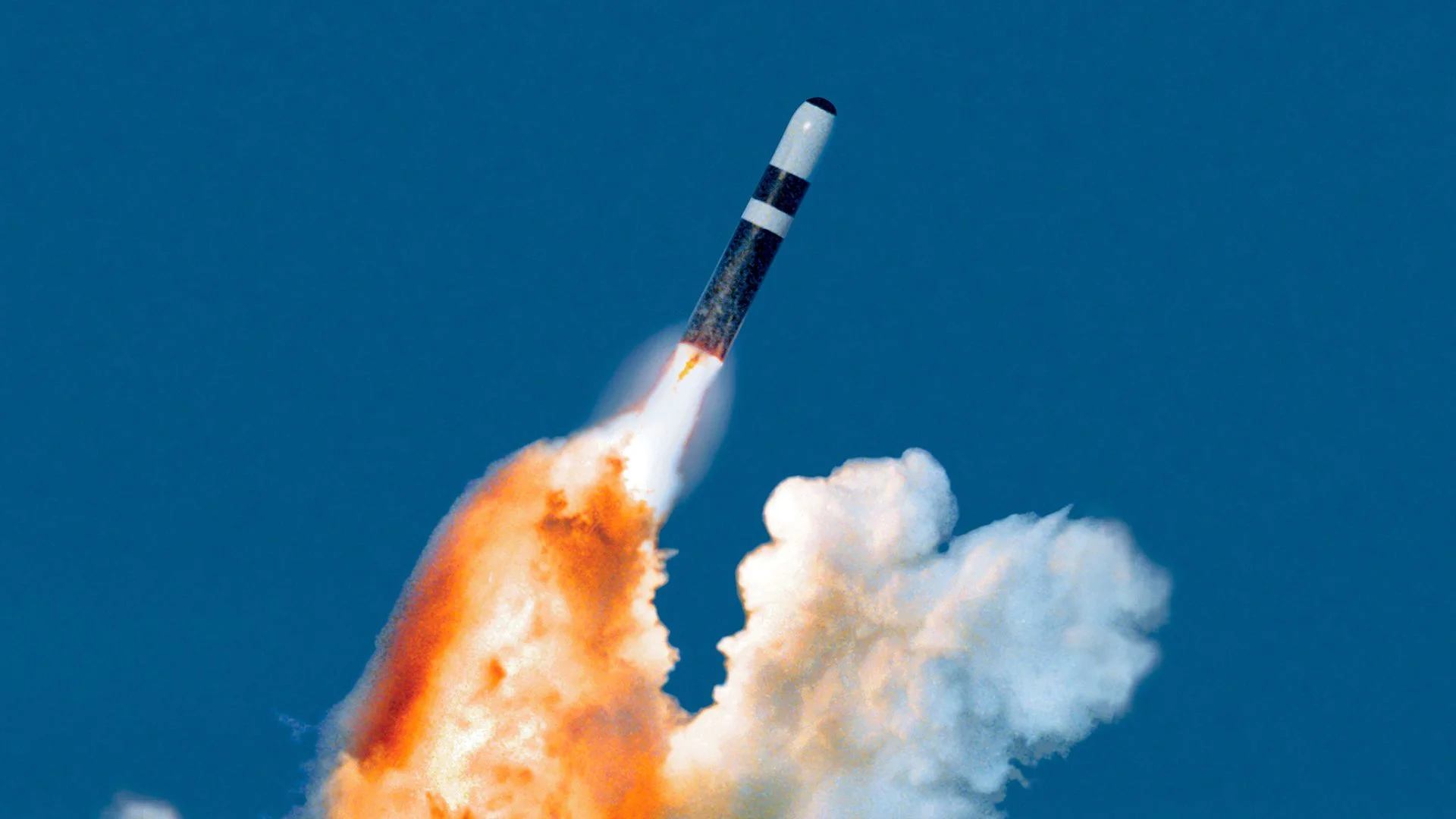
The main focus is the Trident II D5 Life Extension 2 weapon system(D5LE2). This system will replace the current Trident II D5 missile that first entered service aboard Ohio-class ballistic missile submarines more than 35 years ago. The existing missile has remained one of the most reliable strategic weapons ever deployed by the United States.
The Navy has already extended the missile’s service life through the current D5 Life Extension program. That upgrade keeps the existing Trident II D5 in operation through the 2040s. It also allows the missile to serve as the first weapon carried by the new Columbia-class submarines.
Officials say the current upgrade program has reached its practical limits. Many parts of the missile system are becoming outdated, and replacing individual components is no longer enough. A broader modernization effort is now required to maintain long-term reliability and readiness.
READ ALSO: UK Unveils Common Combat Vessel to Replace Type 45 Destroyers With Drone-Led Fleet
The D5LE2 program addresses those challenges by introducing updated technologies while keeping proven design features that have demonstrated decades of dependable performance. This approach helps reduce technical risk while improving reliability. It also ensures the weapon remains effective against future security challenges.
Unlike previous missile generations, the current Trident II family has remained in service for an exceptionally long period. Its operational life will exceed that of earlier submarine-launched ballistic missiles by more than twice. That long service makes modernization essential instead of designing an entirely new missile from scratch.
A submarine-launched ballistic missile forms one part of America’s nuclear triad. The other two parts are land-based intercontinental ballistic missiles and long-range strategic bombers. Maintaining all three systems helps ensure the United States always has a credible nuclear deterrent.
W93 Warhead and Columbia-class Submarines
Alongside the missile modernization, the Navy is working with the National Nuclear Security Administration to develop the W93/Mk7 warhead. Officials describe it as the first entirely new US nuclear warhead development program in nearly four decades. The new design is intended to replace aging systems while meeting modern safety and security standards.
The W93 program represents an important milestone for the US nuclear enterprise. Nuclear warheads require continuous maintenance because many components naturally age. Developing a modern replacement helps ensure long-term reliability without increasing the size of the nation’s nuclear stockpile.
The future Columbia-class ballistic missile submarines will become the primary carriers of the D5LE2 weapon system and the W93 warhead. These submarines are replacing the Ohio-class fleet, which has served since the 1980s. Columbia-class submarines are expected to remain in service well into the second half of this century.
Ballistic missile submarines are considered the most survivable part of the nuclear triad. They operate quietly beneath the ocean for extended periods, making them extremely difficult to detect. This survivability strengthens deterrence because they remain capable of responding even after a surprise attack.
The Navy officially elevated Strategic Systems Programs to Portfolio Acquisition Executive status on March 16. The move gives the organization greater authority and responsibility over strategic weapons acquisition. It also strengthens oversight across regional and homeland deterrence programs.
READ ALSO: Rocket Lab Buys Iridium for $8 Billion to Build a Global Space Communications Powerhouse
PAE SSP Chief Engineer James Jim Kern emphasized complete ownership throughout the system’s life cycle.
He said the organization accepts full responsibility for every stage of development and long-term support. He credited that culture of accountability as one of the reasons behind the program’s success.
Executive Director Kelly Lee highlighted another major milestone during the D5LE2 program. The project achieved its Milestone B decision in mid-2025, allowing it to enter the engineering and manufacturing development phase. She said the program continues to move forward at an aggressive pace, with support from industry partners.
Current plans call for the D5LE2 system to begin entering the fleet during fiscal year 2039. The broader deployment will continue as Columbia-class submarines gradually replace the older Ohio-class fleet. This phased approach allows the Navy to transition without disrupting its continuous at-sea deterrence mission.
The Navy is also investing heavily in testing facilities and support infrastructure. These upgrades are designed to ensure the future weapon system performs safely before reaching operational submarines. Modern testing also reduces technical risks during deployment.
One major addition is the Strategic Weapons Systems Ashore facility that became operational in November 2025. Engineers use the site to test upgraded Trident II weapon systems and supporting equipment before installation aboard submarines. The facility expands the Navy’s ability to evaluate new technologies under controlled conditions.
Another major project began in February when the Naval Ordnance Test Unit started construction of a new Engineering Test Facility. The building is one of nearly 30 infrastructure projects planned through 2032. These investments will strengthen testing, evaluation, and long-term system support.
Former PAE SSP Director Vice Adm. Johnny R. Wolfe Jr. described the Engineering Test Facility as a key investment for the Navy’s strategic mission.
He said it will help engineers develop and test advanced technologies for future submarine forces. He also noted that the work supports modernization of the most survivable part of the US nuclear triad.
Infrastructure improvements are also expanding beyond research facilities. Strategic Weapons Facility Atlantic in Kings Bay, Georgia, is increasing missile production capacity to support future Columbia-class submarines. This expansion ensures enough weapon systems are available as the new fleet enters service.
On the West Coast, Strategic Weapons Facility Pacific in Bangor, Washington, is preparing for a large recapitalization program. Officials compare the scale of the work to projects handled by the country’s largest construction companies. The effort is also expected to create new opportunities for local industry partners.
The organization is applying faster-acquisition methods introduced by the Department of Defense to accelerate development. Officials are coordinating every stage of the D5LE2 program, from initial requirements to long-term maintenance and final disposal. This integrated approach aims to improve efficiency throughout the weapon system’s life cycle.
Training is also receiving attention before the first Columbia-class submarine enters service. Sailors assigned to the future fleet are already visiting testing facilities and meeting engineers, laboratories, and industry partners. These exchanges help crews better understand the technologies they will eventually operate.
WATCH ALSO: High-pressure monster gun can make 40-ton military vehicle more lethal on battlefields
Senior Chief Adrian Rowe said direct interaction with developers gives sailors a clearer understanding of the new systems.
He explained that seeing the technology during development helps crews prepare for future operations. That knowledge supports smoother integration once the weapons enter operational service.
While nuclear modernization remains its primary mission, PAE SSP is also expanding into other strategic capabilities. The organization is supporting development of the nuclear-armed sea-launched cruise missile and the non-nuclear Conventional Prompt Strike hypersonic weapon. These systems broaden the range of strategic options available to US military planners.
Former US Strategic Command Commander Adm. Chas Richard previously noted that strategic weapons extend beyond nuclear arms alone. His comments reflect the changing nature of modern deterrence as conventional long-range weapons become increasingly important.
However, these modernization efforts position the US Navy to support national security well into the future while preparing its weapons, infrastructure, and personnel for the Columbia-class era.