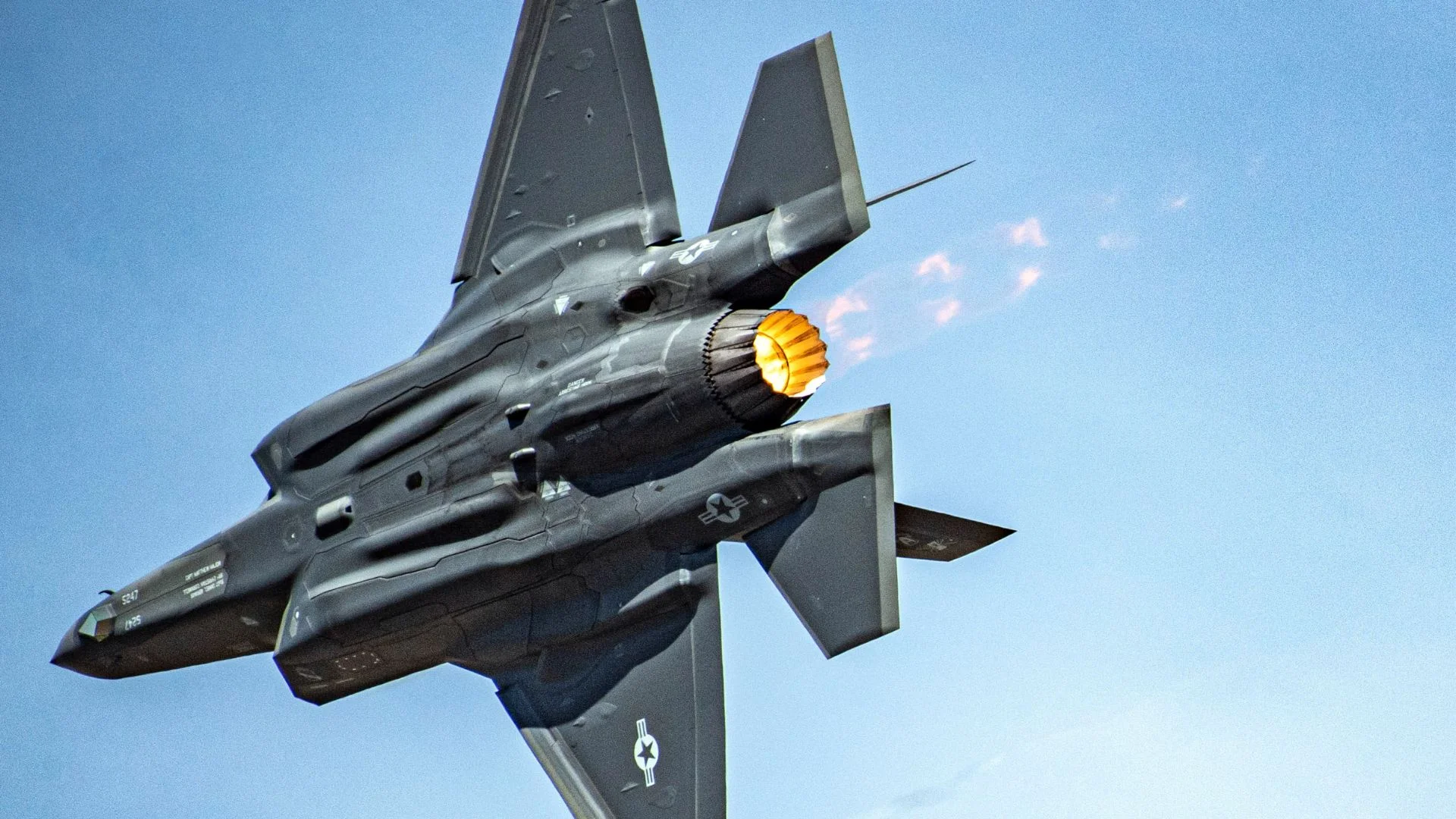
The US Air Force has found an inexpensive way to solve a costly problem affecting F-35A Lightning II operations.
The solution came from two experienced weapons specialists at Luke Air Force Base in Arizona. Their invention costs about $98 but helps protect aircraft worth more than $80 million each.
Tech. Sgt. Zach Allbee and Tech. Sgt. Nik Yakel created the device after noticing a recurring issue during weapons maintenance. They serve with weapons units responsible for loading and unloading the F-35’s internal 25mm gun system. Both airmen have around 15 years of experience working on military aircraft.
The tool is called Project ZACH, which stands for Zero Point Ammunition Cartridge Handler. It guides empty ammunition casings into a collection container during unloading. This prevents metal casings from falling onto the flight line.
Foreign Object Debris (FOD) is one of the biggest risks to military aircraft. Even a small metal object can be sucked into a jet engine during takeoff or taxiing. Such damage can destroy engine parts and result in repair costs reaching tens of millions of dollars.
Allbee explained that a single loose casing can pose a serious hazard. If an aircraft engine pulls it into the intake, the damage can be extremely expensive. He said preventing that risk is far easier than repairing it afterward.
Simple Design Improves Safety
Before Project ZACH, crews relied mostly on gravity while unloading spent ammunition. The casings dropped from more than six feet above the ground into an ammunition can. Even experienced teams often missed several casings during the process.
READ ALSO: Swarm Aero Picks Honeywell’s TPE331 Engine For New Autonomous Defense Aircraft
During daylight, crews usually found the scattered brass after searching the area. Night operations made the task much harder because the small metal casings were difficult to see. Any missed casing remained a potential hazard for aircraft moving across the flight line.
Allbee estimated that he has handled between 200,000 and 300,000 rounds during his career. His experience includes work on both the A-10 Thunderbolt II and the F-35A. He said losing brass during unloading happened regularly despite careful handling.
Yakel said the problem also interrupted the team’s normal workflow. Loading ammunition follows a well-practiced sequence that crews perform smoothly. Chasing loose casings around an active flight line broke that rhythm and added unnecessary stress.
The idea for the new tool came to both airmen while they watched brass scatter across the concrete during an unloading operation. They immediately discussed ways to guide the casings into the container. Their goal was to create a simple solution that worked during both day and night.
The pair presented the idea to their leadership for approval. They also contacted other Air Force units using the same loading equipment. Feedback confirmed that the problem existed at multiple F-35 locations and was not limited to Luke Air Force Base.
Civilian engineers from Detachment 9 helped transform the idea into a working prototype. The first version used a 3D-printed bracket and mesh netting purchased from a local arts-and-crafts store. Later versions became stronger and more durable.
The final design uses a three-piece 3D-printed bracket attached to the existing ammunition loader. A heavy-duty canvas funnel directs every spent casing into the ammunition can. The attachment does not require any modification to the aircraft or the original loading equipment.
READ ALSO: Laser Pulses Set Metals Vibrating 1 Trillion Times a Second, Reveal Electron Motion
Allbee said the durable canvas material performs well in different weather conditions. He added that the improved version costs even less than the original prototype. The entire device can be built for around $98.
F-35A Expands Air Force
The low price makes the invention especially valuable for the Air Force. Spending less than $100 to reduce the risk of multi-million-dollar engine damage offers a strong return on investment. It also improves safety for maintenance crews working around aircraft.
The design files can be shared easily with other F-35 units. Teams only need access to basic manufacturing equipment such as a 3D printer and common materials. This allows units to produce their own versions without waiting for large procurement programs.
The team is now preparing to distribute Project ZACH across additional F-35 units at Luke Air Force Base. Engineers and maintenance crews will provide further testing and operational feedback. Any improvements will be added before wider adoption.
After final testing, the design will be placed into the Air Force’s global innovation system. That will allow F-35A units around the world to build the tool locally. The process supports faster adoption while keeping production costs low.
Yakel said the project is about leaving the Air Force better than they found it. He hopes future generations of airmen will use the tool as a standard part of everyday maintenance. For him, improving safety and helping fellow service members remains the greatest reward.
WATCH ALSO: An American company has launched an autonomous delivery robot that’s one-tenth the size of a car
Master Sgt. Austin Fahad praised the two airmen for identifying a long-standing problem and working through months of development.
He said their willingness to test ideas, gather feedback, and improve the design reflected the innovative culture the Air Force wants to encourage. Their work shows that practical improvements often come from the people performing the job every day.
However, simple innovations like Project ZACH can improve maintenance efficiency, reduce operational risks, and protect valuable aircraft. The device also highlights how low-cost ideas from frontline personnel can deliver lasting benefits across an entire military fleet.