China’s newest air-to-air missile is attracting growing attention from defense analysts worldwide.
Known as the PL-16, the weapon is seen as China’s latest step in the race to develop longer-range, more capable air combat missiles.
Experts say the missile is designed to strengthen the combat effectiveness of the People’s Liberation Army Air Force and improve its ability to engage targets at extended distances.
The PL-16 falls into the category of beyond-visual-range missiles. These weapons allow fighter aircraft to attack targets far beyond the distance a pilot can see with the naked eye. Such missiles rely on advanced sensors, radar systems, and guidance technology to locate and strike enemy aircraft.
Reports from defense analysts and industry observers suggest the PL-16 is intended to succeed the older PL-15 missile. The PL-15 already represents one of China’s most advanced air-to-air weapons and is considered a major improvement over previous Chinese missile designs. The new missile appears focused on extending range while also improving performance during the final stages of flight.
One feature receiving significant attention is its reported dual-pulse or variable-thrust rocket motor. This technology allows the missile to conserve energy during part of its journey and then generate a second burst of power later in flight. In simple terms, the missile can regain speed near its target rather than gradually slowing throughout the mission.
Defense analysts say this capability can be important during long-range engagements. Aircraft often attempt to evade incoming missiles by changing direction or speed. A missile that still has energy available near the end of its flight has a better chance of maintaining maneuverability and tracking its target.
Available reports estimate the PL-16’s range at between 200 and 300 kilometers. If accurate, this would place it among the longest-range air-to-air missiles currently associated with Chinese fighter aircraft. Such distances would allow pilots to engage threats from farther away while remaining outside the range of some opposing weapons.
READ ALSO: Turkey’s Kizilelma Drone Flies in Formation With Italy’s M-346 in Historic Combat Trial
The missile is frequently compared with the US’s AIM-260 Joint Advanced Tactical Missile (JATM). The AIM-260 is being developed by Lockheed Martin and is expected to replace or complement older American missile systems. Analysts believe the American weapon was partly developed in response to advances made by China’s PL-15 program.
Like the PL-16, the AIM-260 is expected to focus on long-range engagements and improved propulsion technology. Public information about both missiles remains limited because many details are classified. As a result, comparisons are based largely on estimates, defense assessments, and unofficial information.
PL-16 Changes Everything
Experts believe one of the PL-16’s main missions would be targeting high-value support aircraft. These include airborne early warning aircraft, aerial refueling tankers, and reconnaissance platforms. Such aircraft often operate behind front-line fighters and play critical roles in coordinating military operations.
Military planners consider these support aircraft essential because they extend the reach and effectiveness of combat forces. Early warning aircraft help detect threats, while tanker aircraft allow fighters to remain airborne longer. Disrupting these assets can reduce an opponent’s ability to conduct sustained air operations.
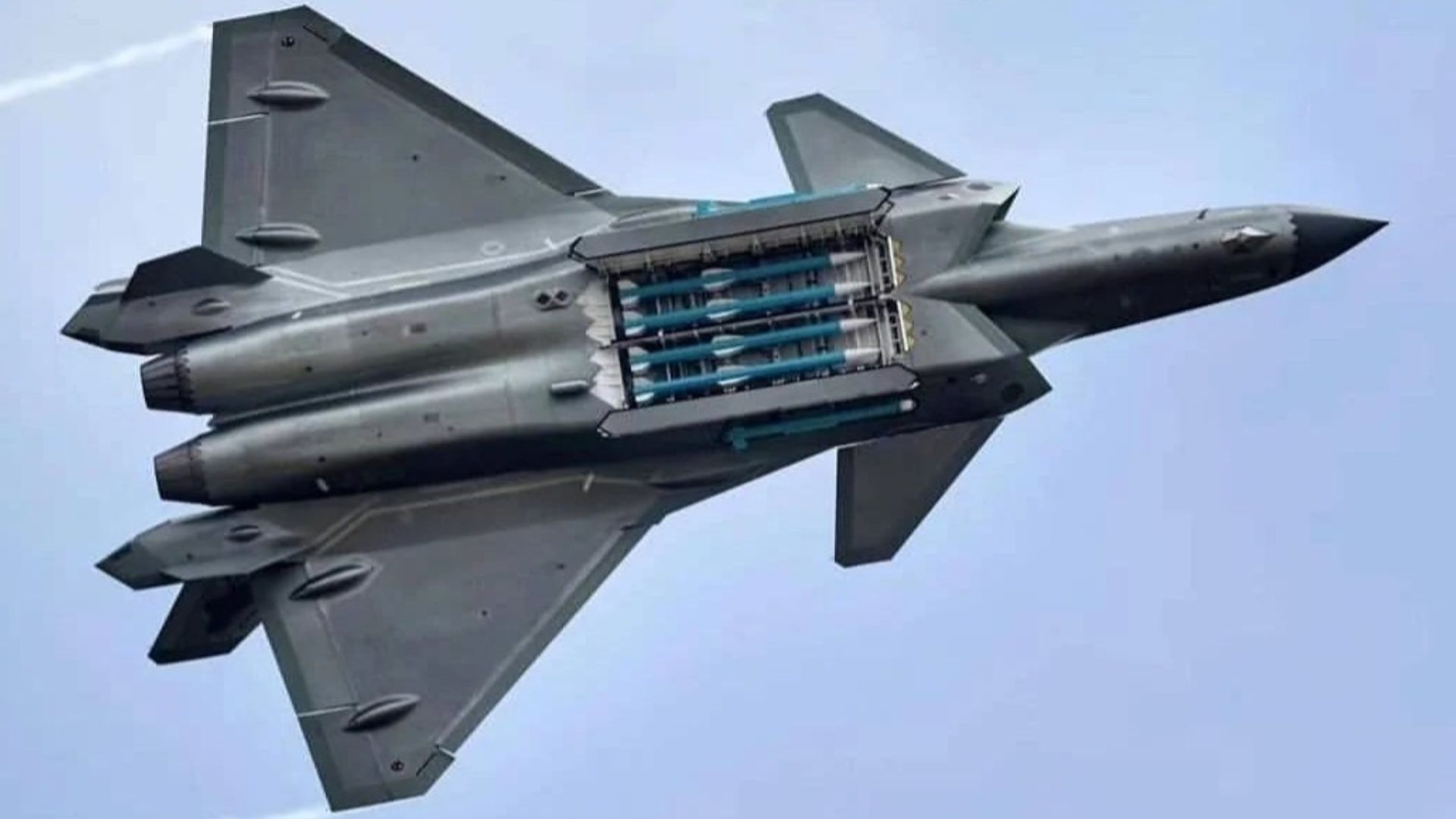
Analysts also point to another possible advantage of the PL-16. Reports suggest the missile has a slimmer design than some earlier systems. This could allow Chinese stealth fighters to carry more missiles inside their internal weapons bays without affecting their low-observable characteristics.
The Chinese J-20 stealth fighter is frequently mentioned in these discussions. Current configurations reportedly carry four PL-15 missiles internally. Some analysts believe the aircraft could carry up to six PL-16 missiles if the newer weapon occupies less space.
WATCH ALSO: World’s first motorbike backflip between two moving trucks successfully completed
An increased missile load offers several potential benefits. Pilots could engage more targets during a mission and remain in combat areas for longer periods. It would also reduce the need to return to base immediately after launching a small number of weapons.
Despite growing discussion, many questions remain unanswered. Chinese authorities have not officially confirmed the missile’s specifications, operational status, or production timeline. Much of the available information comes from leaked presentation slides, social media posts, and reports from military aviation events.
Analysts therefore caution against treating every reported detail as confirmed fact. Key information, such as the exact range, propulsion technology, and production numbers, remains uncertain. Independent verification of many claims is still unavailable.
The emergence of the PL-16 highlights a broader competition between China and the US in advanced missile technology. Both countries are investing heavily in systems that extend engagement ranges and improve air superiority capabilities. These developments are becoming increasingly important as military planners prepare for future conflicts in the Indo-Pacific region.
However, the PL-16 will remain a closely watched program. Its true capabilities and operational impact will only become clear once reliable details emerge and the missile enters wider service. The ongoing missile competition between China and the US is expected to shape the future of air warfare for years to come.