Chinese scientists have identified a new species of feathered dinosaur from the Early Cretaceous period.
The fossil was discovered in Liaoning Province in northeast China, a region famous for its well-preserved dinosaur remains. Researchers estimate the animal lived around 120 million years ago.
The fossil is remarkably complete and preserves clear traces of feathers around the skeleton. These feathers provide rare information about the dinosaur’s appearance and lifestyle. Such preservation is uncommon and helps scientists study ancient evolutionary changes in detail.
The research was recently published in the scientific journal Vertebrata PalAsiatica. Scientists named the species Changzhousaurus sinensis. The name honors Changzhou, in eastern China’s Jiangsu Province, for its long-standing support for dinosaur education and tourism.
Unique Feather Features Offer Flight Clues
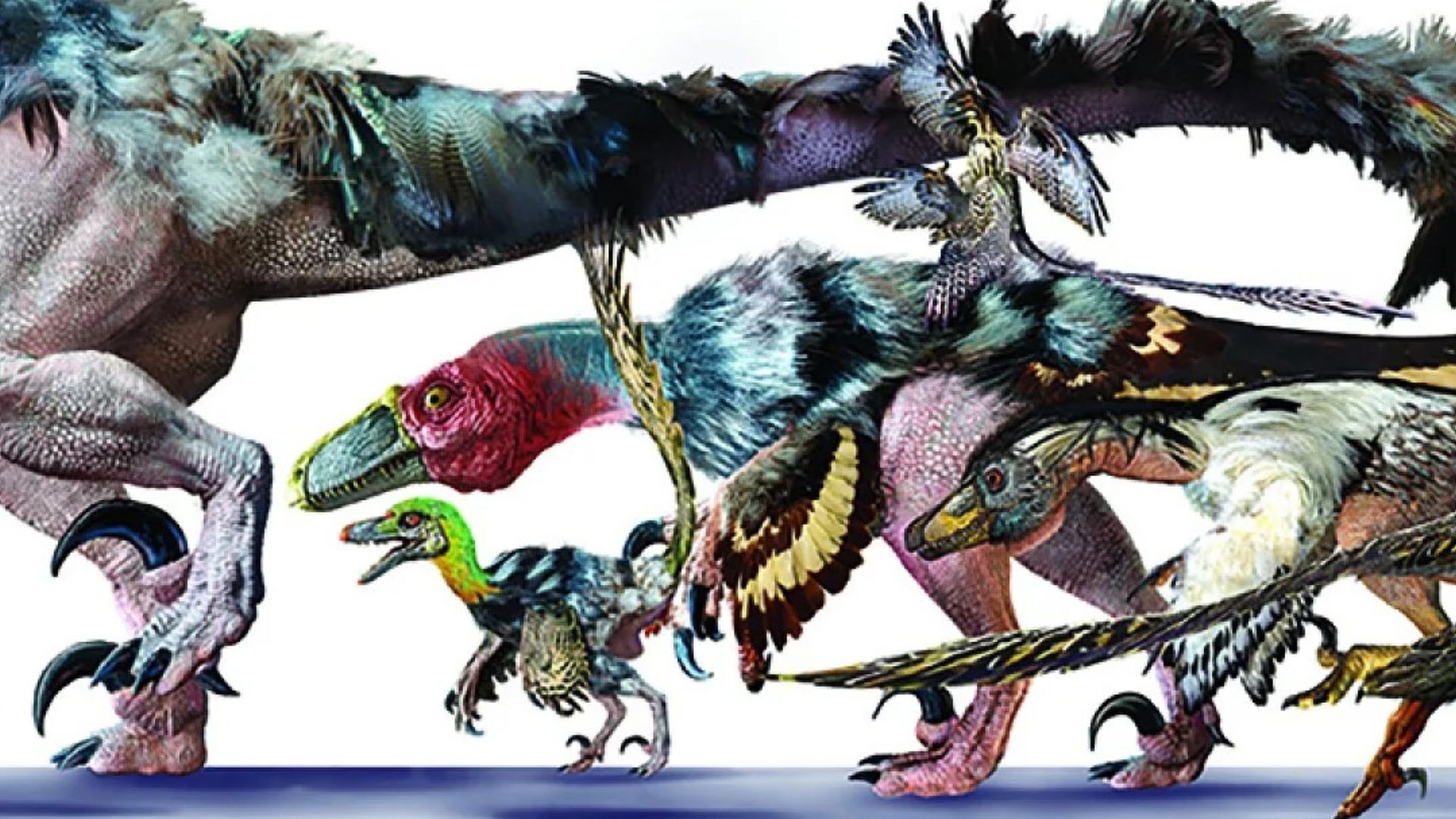
Researchers found that the dinosaur belonged to the dromaeosaurid family. This group includes well-known predators such as Velociraptor and Microraptor. Dromaeosaurids are among the closest known dinosaur relatives of modern birds.
What makes this species unusual is its combination of feather structures. It possessed large wing feathers on its forelimbs, extensive feathers on its feet, and very long fan-shaped tail feathers. Scientists say no previously discovered dinosaur has shown this exact mix of features.
READ ALSO: Swarm Aero Picks Honeywell’s TPE331 Engine For New Autonomous Defense Aircraft
The dinosaur carried around 16 tail feathers arranged in a fan-like display. Researchers compared the appearance to that of a peacock’s plumage. These feathers may have helped with balance, display, movement, or early forms of aerial control.
Feathered Dinosaur Sparks New Insight
The newly discovered species belongs to a broader group called pennaraptorans. These dinosaurs are closely related to birds and played an important role in the transition from ground-dwelling dinosaurs to flying animals. Studying them helps researchers trace the steps that led to the evolution of bird flight.
Scientists believe feathers first evolved for purposes other than flight. They may have provided insulation, display features, or protection before becoming useful for aerial movement. Over millions of years, feather structures became more specialized and eventually supported powered flight.
WATCH ALSO: Chinese company unveils new robot that has human-like appearance
The unusual anatomy of Changzhousaurus sinensis provides a new piece of that evolutionary puzzle. According to the research team led by Xu Xing of the Chinese Academy of Sciences, the fossil serves as an important reference point for studying the evolution of different feather arrangements. It also helps scientists better understand how modern birds emerged from their dinosaur ancestors.
The discovery highlights China’s continuing importance in dinosaur research and adds new evidence to one of evolution’s most fascinating stories. As more fossils are uncovered, scientists expect to gain an even clearer picture of how feathered dinosaurs gradually transformed into the birds seen around the world today.