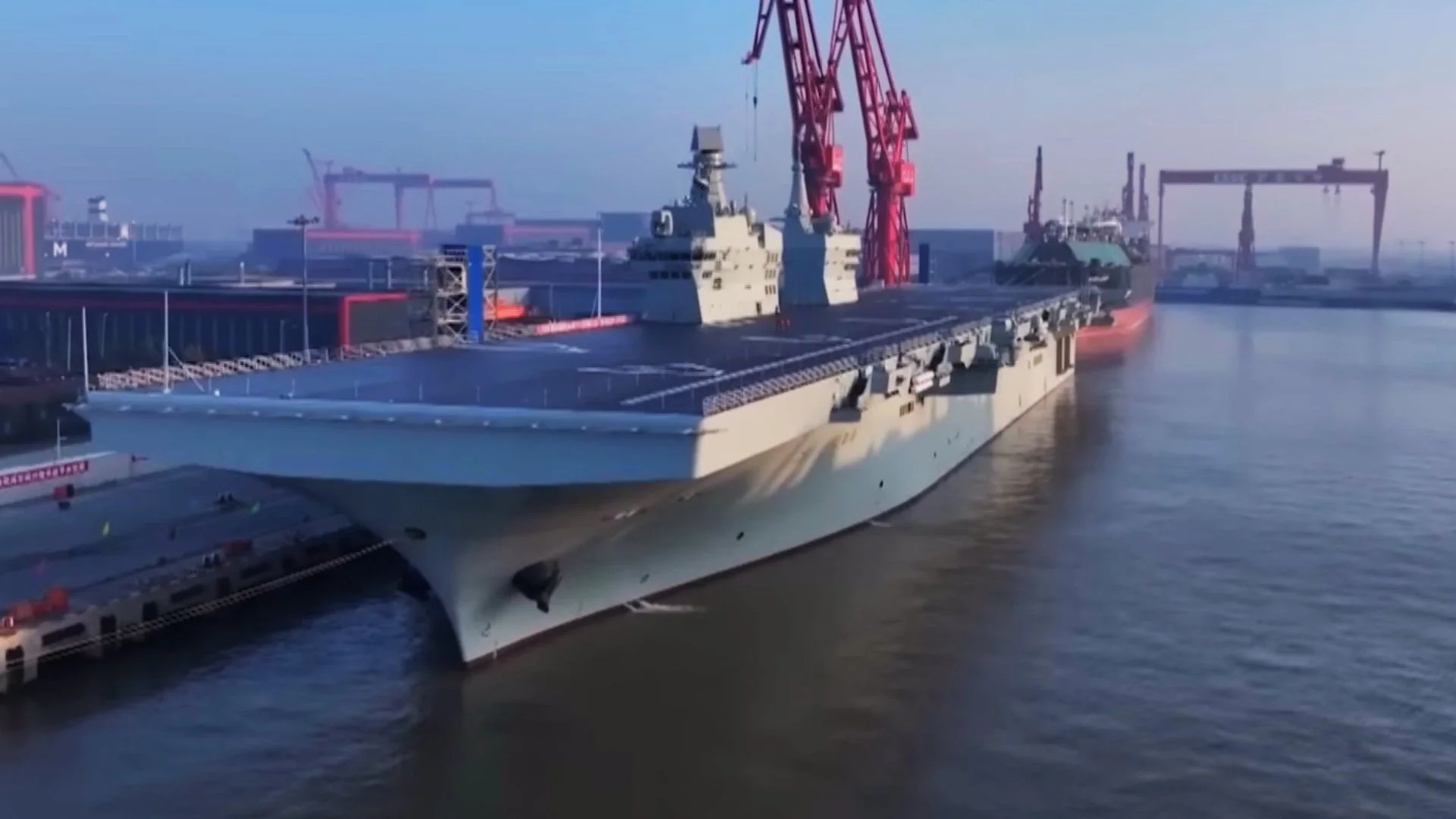
China has unveiled plans for a massive nuclear-powered floating island designed to transform global shipping and port operations.
The floating platform will serve as a container transfer terminal, an energy hub, and a charging station for ships. Powered by advanced molten-salt nuclear reactors, the project aims to support zero-emission maritime transport and accelerate the shipping industry’s shift to cleaner energy.
The project was unveiled by Jiangnan Shipyard, a subsidiary of the state-owned China State Shipbuilding Corporation.
The company introduced the concept during the Posidonia International Shipping Exhibition in Greece.
It described the project as a new model combining shipping, port services, energy production, and cargo transshipment within a single offshore facility. The company said the platform is intended to support the maritime sector’s transition toward carbon neutrality.
According to Jiangnan Shipyard, the floating island will function as a zero-emission logistics hub. It will help move cargo between long-distance shipping routes and regional transport networks. The platform is also expected to support the growing demand for cleaner maritime infrastructure.
Molten Salt Reactors Form Core of Project
At the center of the floating island will be an advanced molten salt reactor. Unlike traditional nuclear reactors, molten salt reactors use liquid salt as both fuel carrier and coolant. This design allows the reactor to operate at high temperatures while maintaining strong safety characteristics.
One of the key advantages of molten salt technology is its ability to store large amounts of thermal energy. The reactors also do not depend on water for cooling, making them suitable for offshore operations. If molten salt escapes from the system, it quickly cools and solidifies when exposed to normal environmental temperatures.
Jiangnan Shipyard highlighted these safety features in its presentation. The company said molten salt reactors avoid the risk of traditional core meltdowns. It also noted that the technology offers strong non-proliferation characteristics, an important consideration in nuclear energy development.
The floating island’s energy platform will combine nuclear power with renewable energy sources. Solar panels and wind turbines will be installed alongside the reactor. Together, these systems will provide electricity for terminal operations and vessel charging.
Green Fuels, Future Shipping
The platform will also include facilities for hydrogen production and green-fuel synthesis. Using on-site electricity, the hub will produce fuels such as ammonia. These fuels can be used by ships seeking alternatives to conventional fossil fuels.
READ ALSO: IKO’s New High-Thrust Linear Motor Stage Delivers Long Stroke Lengths in Constrained Spaces
The company believes combining nuclear power with green fuels will improve energy efficiency across maritime transport. It will also help reduce emissions from shipping activities. Electric feeder vessels operating around the terminal will be able to recharge directly from the platform.
The floating hub is designed to support cargo transfers between large ocean-going vessels and smaller regional ships. This approach could improve logistics efficiency while reducing congestion at traditional ports. It may also create new options for shipping routes that require offshore cargo handling.
A key feature of the design is its modular structure. Jiangnan Shipyard said the system can be replicated and deployed at major ports and shipping corridors worldwide. This flexibility could make the concept attractive for regions seeking cleaner maritime infrastructure.
The announcement builds on the company’s earlier work in nuclear-powered shipping. In 2025, Jiangnan Shipyard announced plans for a cargo vessel powered by a thorium-based molten-salt reactor. That ship was designed to carry up to 25,000 containers while operating with significantly lower emissions.
READ ALSO: NASA Successfully Acquires GPS Signals on Moon
China has also been advancing research into molten salt reactor technology. Scientists have been testing thorium-based systems as an alternative to conventional uranium reactors. In recent years, researchers from the Chinese Academy of Sciences successfully demonstrated the conversion of thorium into uranium fuel within a molten salt reactor.
Thorium is considered more abundant than uranium and is available in larger quantities in many parts of the world. Supporters of the technology believe it offers a promising path for future nuclear energy systems. Interest in thorium reactors has grown as countries seek reliable, low-carbon energy sources.
The floating island project reflects China’s broader effort to combine advanced nuclear technology with clean transportation solutions. The platform can reshape how cargo is transferred, powered, and transported across international shipping networks in the years ahead.