Researchers have identified a new method to improve hydrogen production by observing, in real time, how atomic motion rearranges atoms within tiny particles.
The study found that platinum and nickel atoms can separate and recombine under specific conditions, creating highly active structures that enhance the efficiency of water splitting.
The discovery provides a promising new pathway for developing advanced catalysts that support clean energy generation.
The research was carried out by scientists from the University of Nottingham, the University of Birmingham, Diamond Light Source, and Ulm University in Germany. Their findings, published in the journal Advanced Materials, focused on nanoscale particles made up of only a few dozen platinum and nickel atoms.
By closely monitoring these particles at the atomic level, the team uncovered unique behaviors that help explain their exceptional catalytic performance.
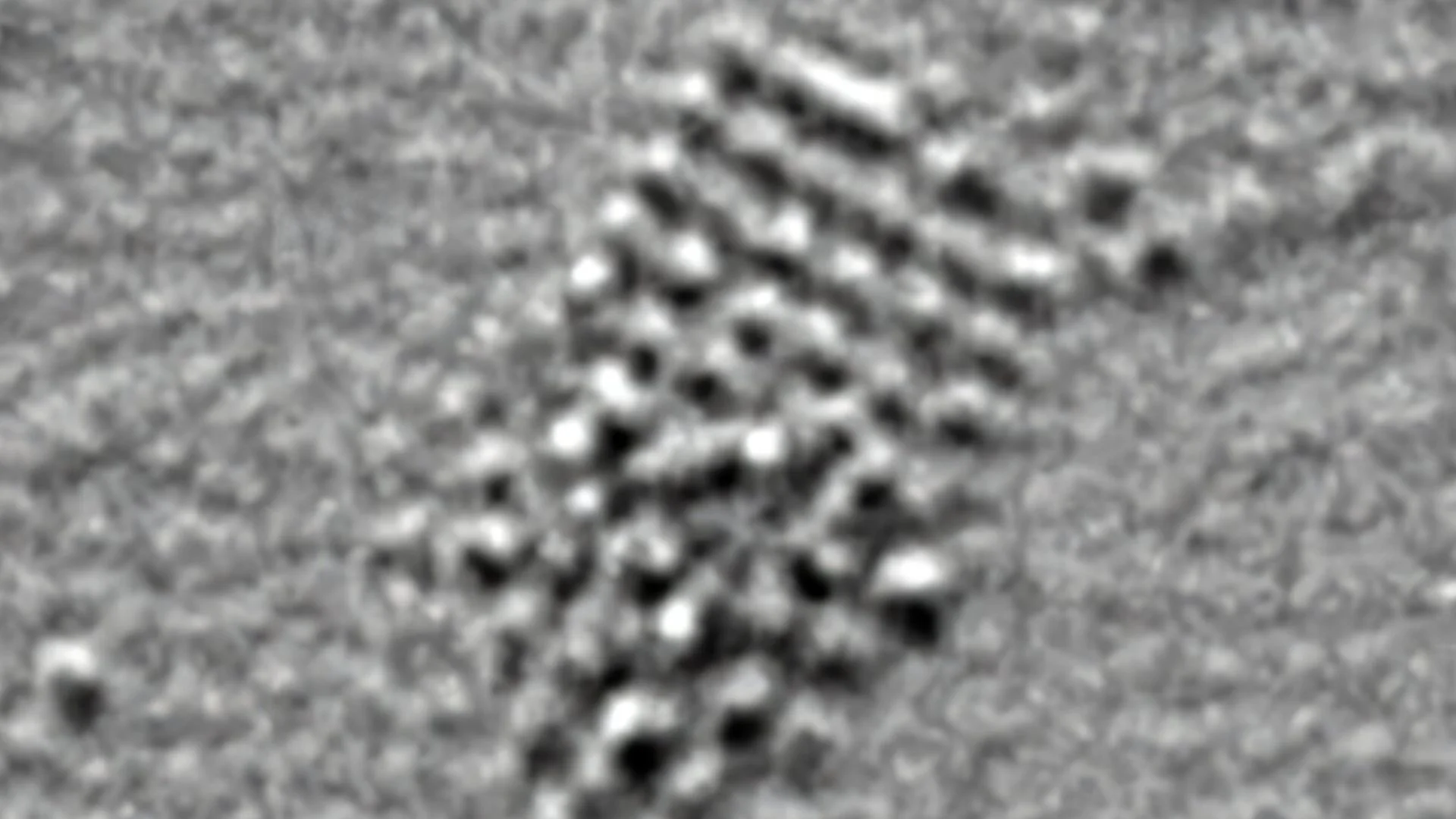
The scientists discovered that the atoms inside these particles do not remain fixed. Instead, they can separate, rearrange, and later recombine under controlled conditions. This unusual behavior was directly observed at the atomic scale using advanced electron microscopy.
READ ALSO: Driving Innovation: Engineering the Next Generation of Green Race Cars
Researchers found that the particles initially behaved like a standard alloy. In an alloy, different metals are mixed together uniformly. However, after only a few seconds of observation, the platinum and nickel atoms began to separate.
The finding surprised the research team because it appeared to contradict normal expectations about how mixed materials behave. In everyday examples, such as milk mixed into coffee, the components naturally spread out and do not separate again on their own. The observed atomic behavior exhibited a highly unusual process.
Atomic Motion Caught Live
To observe the nanoparticles, researchers used a powerful electron microscope. The electron beam allowed them to image individual atoms while also supplying energy to the material. This energy triggered atomic movement inside the nanoparticles.
As nickel atoms separated from platinum, they reacted with oxygen present in the surrounding environment. The nickel formed nickel oxide while platinum remained metallic. This produced a hybrid nanoparticle comprising a platinum-rich region and a nickel oxide region.
The two materials remained connected through a clearly defined atomic interface. Researchers described this structure as a particle with two distinct halves working together. The team was able to watch this transformation unfold in real time, a feat rarely achieved in materials science.
WATCH ALSO: India’s indigenous Zorawar light tank has fired an anti-tank guided missile
The experiments were performed using an advanced microscope developed through the SALVE project at Ulm University. Scientists used graphene as an ultra-thin support material for the nanoparticles. This setup enabled them to track the positions of individual atoms with exceptional precision.
Researchers also found that the process was reversible. By changing conditions, the separated materials could mix again and return to their original alloy form. The cycle could then be repeated multiple times without permanently damaging the particles.
Hydrogen Production Performance Reaches New Levels
The team investigated whether this atomic behavior could improve hydrogen production from water. Hydrogen generated through water splitting is considered an important clean fuel because it produces no carbon emissions when used. Efficient catalysts are critical for making this process more practical and cost-effective.
Tests showed that the same metal separation observed under the microscope also occurred during water-splitting reactions. Once separated, platinum and nickel oxide performed complementary tasks during the reaction. Each material contributed different strengths, improving overall efficiency.
The atomic interface between platinum and nickel oxide played a key role. It allowed the two materials to work together more effectively than either could alone. This interaction increased hydrogen production rates.
According to the researchers, the resulting catalyst ranks among the most effective materials reported for electrochemical hydrogen evolution. The study demonstrates how controlling atomic motion can directly improve catalyst performance. It also highlights the value of observing materials while they actively change during reactions.
The implications extend beyond hydrogen production. Similar adaptive catalyst designs could be applied to chemical manufacturing, energy conversion systems, and industrial processes that require high efficiency and lower environmental impact.
As demand for clean energy technologies continues to grow worldwide, the ability to engineer catalysts that dynamically reorganize themselves at the atomic level offers a new direction for materials science and sustainable energy development.