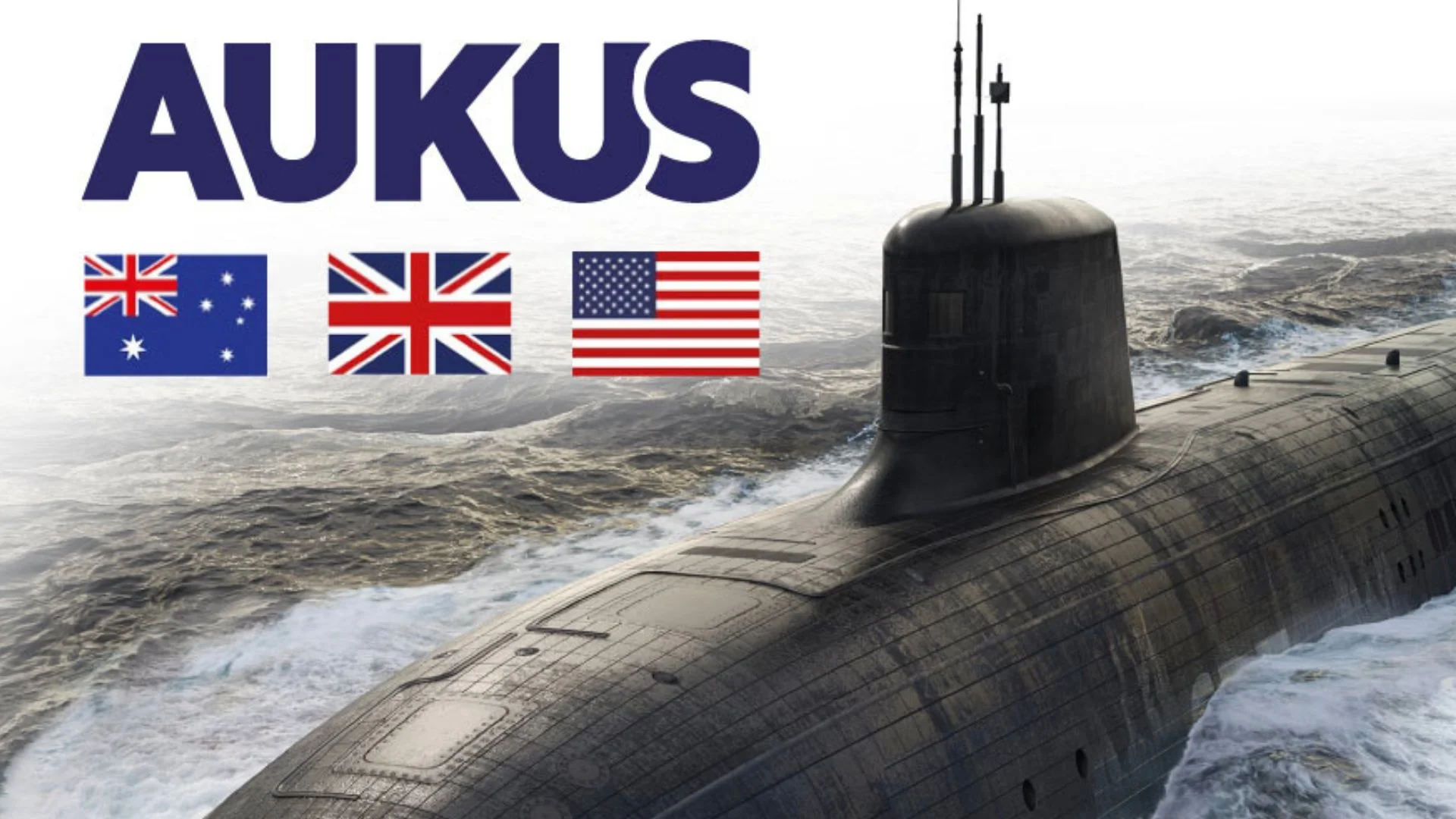
Australia’s multi-billion-dollar Aukus submarine agreement is facing fresh scrutiny after former minister Peter Garrett launched an independent public inquiry into the project.
The inquiry will examine the controversial defence pact that is expected to cost Australia around A$368 billion.
The review aims to examine the deal’s cost, security impact, environmental concerns, and long-term implications for Australia. The findings are expected to add to the national debate over one of the country’s largest defence investments.
Garrett announced the initiative through the Australian Peace and Security Forum, a not-for-profit organization. He said the scale and cost of the project justify a detailed public examination.
According to Garrett, Australians have had limited opportunities to debate the agreement through parliament and public consultation.
The inquiry will run for five months and hold public hearings across the country. A final report is scheduled for release in October. The review panel includes former Australian Defence Force chief Admiral Chris Barrie and former Western Australian premier Carmen Lawrence.
Another commissioner is Karen Lester, whose father suffered severe health impacts after British nuclear weapons tests in South Australia during the 1950s. Her involvement brings additional attention to concerns surrounding nuclear-related issues. The panel will explore questions related to the handling and storage of nuclear materials associated with the submarine program.
READ ALSO: Driving Innovation: Engineering the Next Generation of Green Race Cars
Why Aukus Deal Faces New Questions
The Aukus agreement was announced in September 2021 by Australia, the US, and the UK. The partnership focuses on defence cooperation and advanced military technologies. A key part of the deal involves providing Australia with nuclear-powered submarines.
Unlike nuclear-armed submarines, these vessels use nuclear reactors for propulsion. This allows them to travel farther and remain underwater for longer periods without surfacing. Supporters argue that these capabilities strengthen Australia’s defence posture in the Indo-Pacific region.
Critics, however, have raised concerns about the project’s enormous cost and long timeline. Some have questioned whether Australia will receive all the submarines promised under the agreement. Others are concerned about the management of nuclear waste and the effect on national decision-making independence.
The inquiry will assess whether the submarines improve Australia’s security and regional stability. It will also examine how the deal affects Australia’s sovereignty and strategic flexibility. These issues have become increasingly important as geopolitical tensions continue to shape the Indo-Pacific region.
Changes to Australia’s Submarine Plan
Earlier this week, the Australian government announced updates to the submarine acquisition plan. Under the revised arrangement, Australia will purchase three second-hand nuclear-powered submarines from the US. These vessels are intended to replace Australia’s aging Collins-class submarine fleet.
READ ALSO: Hanwha Aerospace signs partnership with GA-ASI for new UAS tech
The new approach replaces an earlier expectation that Australia would receive at least one newly built submarine under the agreement. Government officials say the adjustment is designed to ensure a smoother transition and maintain naval capabilities. The revised plan reflects the practical challenges involved in building and delivering advanced submarines.
Beginning in 2027, the Aukus partnership will also allow a limited number of American and British nuclear-powered submarines to operate from Perth in Western Australia. Supporters view this as a way to deepen military cooperation among the three nations. Critics argue that it raises questions about Australia’s strategic independence and regional role.
Regional Impact and Political Debate
The inquiry will also examine how the Aukus agreement affects Australia’s relationship with China. China remains Australia’s largest trading partner and an important economic partner. At the same time, strategic competition in the Indo-Pacific has increased in recent years.
Although the agreement does not explicitly identify China as its target, many analysts see it as part of broader efforts to balance China’s growing military presence in the region. Areas such as the South China Sea have become key points of tension. When Aukus was first announced, China described the arrangement as irresponsible and strongly opposed it.
WATCH ALSO: China sends 3 astronauts, 4 mice to space station for mammal study in orbit
The review has received support from independent federal MPs David Pocock and Andrew Wilkie. Former lawmakers, retired military officers, union leaders, and human rights advocates have also backed the initiative. Their support reflects continuing debate over the agreement across different sections of Australian society.
Prime Minister Anthony Albanese’s government has responded by saying it welcomes appropriate oversight and transparency. Officials maintain that the Aukus partnership remains central to Australia’s long-term defence strategy. However, its findings are expected to influence future discussions about defence spending, national security, and Australia’s role in the Indo-Pacific for years to come.