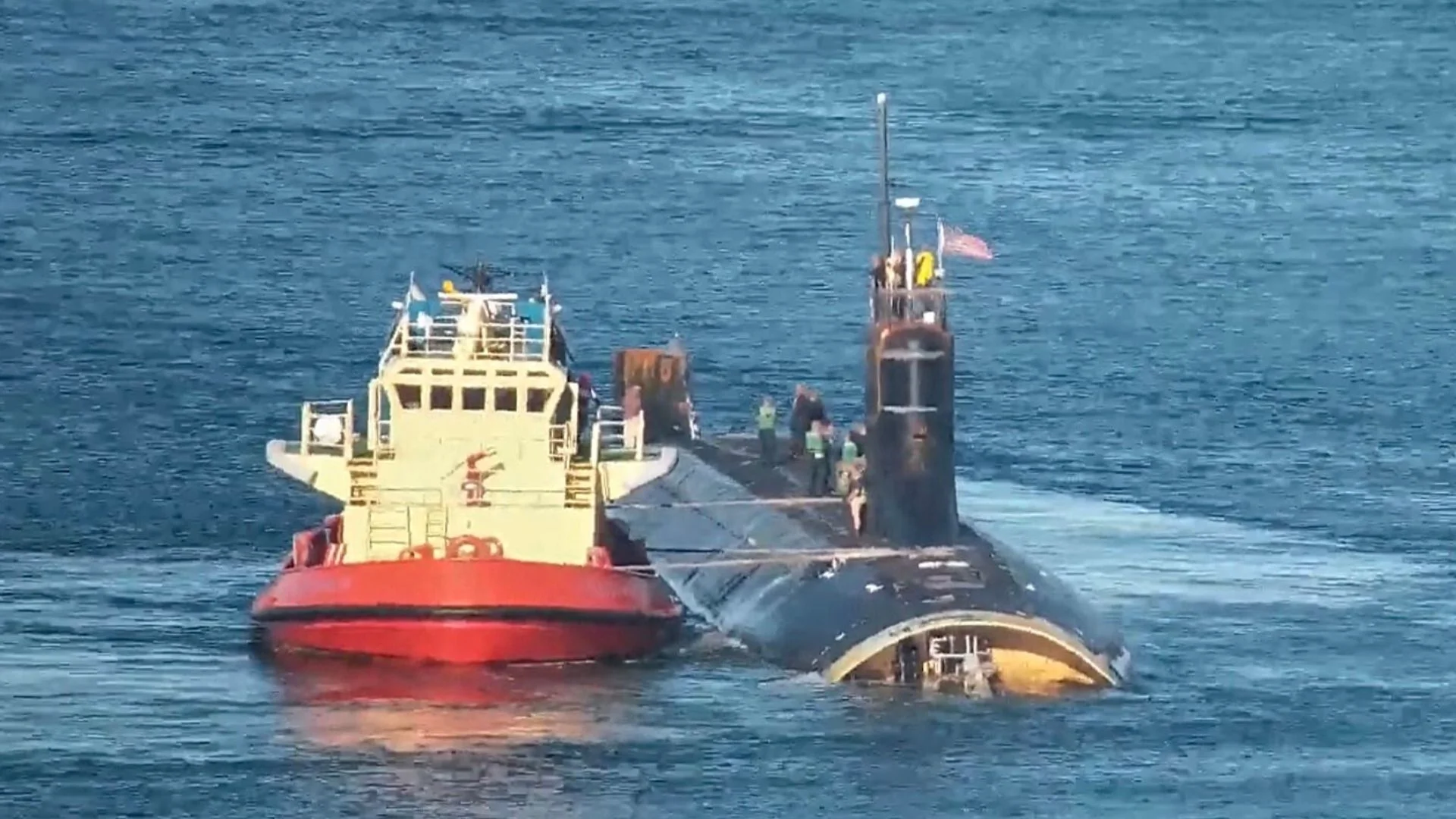
The USS Connecticut is nearing a return to active duty after spending more than four years undergoing repairs.
The submarine was severely damaged in October 2021 when it struck an underwater seamount in the South China Sea. The accident forced the vessel to make an emergency ascent, ending one of the most challenging deployments in its history.
The submarine is one of only three Seawolf-class attack submarines ever built. It was launched in 1997 at General Dynamics Electric Boat in Groton, Connecticut. The vessel entered service with the US Navy in December 1998.
USS Connecticut’s Long Road Back
The Navy originally planned to build 29 Seawolf-class submarines during the Cold War. These submarines were designed to counter advanced Soviet underwater threats. However, the collapse of the Soviet Union changed military priorities and led to major cuts in the program.
Only three Seawolf-class submarines were ultimately completed. They included USS Seawolf, USS Connecticut, and USS Jimmy Carter. The limited production run helped keep America’s submarine-building industry active during a difficult transition period.
Congress supported the construction of the final boats to preserve jobs and maintain critical shipbuilding skills. At the time, Electric Boat and other facilities faced significant workforce reductions. The submarine program served as a bridge until production of the Virginia-class submarines began.
READ ALSO: ABS Launches First Nuclear-Ready Notation to Prepare Ships for Future Nuclear Power
USS Connecticut remains one of the Navy’s most capable submarines. Military experts have long praised the Seawolf class for its speed, stealth, and underwater performance. The submarines can operate quietly while moving at higher speeds than many other attack submarines.
The 2021 South China Sea Accident
The most serious event in USS Connecticut’s service occurred in October 2021. The submarine struck an underwater mountain while operating in the South China Sea. The impact caused significant damage and injured 11 sailors.
One sailor suffered a fractured shoulder blade during the collision. Despite the severity of the impact, the submarine’s nuclear propulsion system remained intact. Navy investigators later said the force of the collision created a real risk of losing the vessel.
The crew faced multiple challenges after the accident. Problems emerged with systems used to force seawater out of ballast tanks during the emergency ascent. These systems are critical because they help submarines regain buoyancy and reach the surface.
Sailors quickly found an alternative solution using another onboard system. During the process, a trim pump became overloaded and overheated. The equipment reportedly began glowing red before catching fire.
Crew members successfully extinguished the fire and continued the emergency response. The submarine eventually reached the surface and began its journey to safety. The vessel later traveled to Guam before returning to the US.
READ ALSO: Apple Unveils M5 Chip: A Quantum Leap in AI Power for Mac Devices
Additional damage appeared during the transit home. The submarine’s bow dome detached at some point during the voyage. Inspections later discovered rocks inside the vessel’s ballast tanks, highlighting the force of the collision.
The accident had a lasting impact on the crew. According to Navy findings, dozens of sailors were recommended for mental health counseling after returning to port. Investigators described the incident as highly stressful for everyone on board.
A Navy investigation concluded that the collision was preventable. The report cited failures in navigation planning, watch team performance, and risk management. The commanding officer was later relieved of duty following the findings.
Repairs began after USS Connecticut arrived at Puget Sound Naval Shipyard in Washington state. The submarine entered dry dock in December 2021. Much of the repair timeline centered on building and installing a completely new bow dome.
The replacement process took more than three years. The custom-built structure had to meet strict operational and safety requirements. That lengthy effort contributed to the submarine’s extended absence from active service.
Retirement Plans
While USS Connecticut prepares to return, the Navy is already looking ahead. Current planning documents list the submarine for retirement in 2031. That timeline would give the vessel a service life of roughly 33 years.
Some lawmakers believe the retirement date could eventually change. They point to the Navy’s history of extending the service lives of other submarines when conditions allow. The years spent in repair could also factor into future decisions.
The submarine remains a valuable asset for the Navy. Its advanced design continues to offer capabilities that are difficult to match. Many experts still consider the Seawolf class among the most effective attack submarines ever built.
The discussion surrounding USS Connecticut comes amid growing focus on undersea warfare. Military planners increasingly view submarines as critical tools in maintaining strategic advantages. This is especially true in the Indo-Pacific region, where naval competition continues to intensify.
China’s rapid naval expansion has heightened interest in advanced submarine capabilities. Unlike surface ships, submarines can operate with a high degree of stealth. They also remain less vulnerable to many emerging missile threats.
WATCH ALSO: An unmanned boat has completed a long 1,100-nautical-mile voyage
The Navy is now developing a next-generation attack submarine, SSN(X). The future vessel is expected to incorporate advanced technologies and greater integration with unmanned systems. Officials say the design is being developed with long-term strategic competition in mind.
According to Navy planning documents, SSN(X) will be built to operate alongside autonomous systems and new payload technologies. The submarine is expected to benefit from improvements across the US defense industrial base. Officials also emphasize the importance of avoiding the production slowdowns experienced after the Cold War.
While specific design details remain limited, analysts expect SSN(X) to build on lessons learned from previous submarine classes. Many observers believe it could combine elements of the Seawolf class with newer technologies developed for Virginia-class submarines. Such an approach would support a greater range, stealth, sensing capabilities, and operational flexibility.
The Navy is also balancing several major shipbuilding priorities. These include the Columbia-class ballistic missile submarine program and broader fleet modernization efforts. Funding decisions will play a major role in determining the pace of future submarine development.
At the same time, defense companies are exploring new ways to support undersea operations. Autonomous surface vessels, underwater drones, and advanced sensing networks are becoming increasingly important. These systems can complement traditional submarines and extend surveillance capabilities across large areas.
Experts argue that future naval success will depend on combining crewed and uncrewed systems. Submarines such as USS Connecticut remain central to that vision. Their ability to operate undetected continues to provide a significant military advantage.
WATCH ALSO: United Launch Alliance launches launches third batch of Amazon’s Project Kuiper satellites
As USS Connecticut prepares to sail again, it represents both a remarkable recovery and a reminder of the importance of undersea power.
The submarine’s return restores a unique capability to the US Navy while broader plans for the next generation of vessels continue to take shape. Its final years of service will help bridge the gap between today’s fleet and the future of underwater warfare.