Tensions in the South China Sea escalated after China deployed electronic warfare tactics and military warnings against a Dutch naval ship near the disputed Paracel Islands.
Beijing accused the Dutch frigate HNLMS De Ruyter of entering restricted airspace during its Indo-Pacific deployment. The incident highlights growing friction between China and Western naval forces operating in one of the world’s most contested maritime regions.
China’s People’s Liberation Army Southern Theater Command said the Dutch frigate and its onboard helicopter entered airspace above the Paracel Islands on Wednesday. Chinese forces responded with what officials described as necessary measures to push the vessel away from the area. Beijing stated that the actions followed Chinese laws and military regulations.
Senior Captain Zhai Shichen, spokesperson for the PLA Southern Theater Command, confirmed the operation in an official statement. He said Chinese naval and air forces monitored the Dutch vessel throughout the encounter. He also accused the Netherlands of conducting provocative actions that threatened China’s sovereignty.
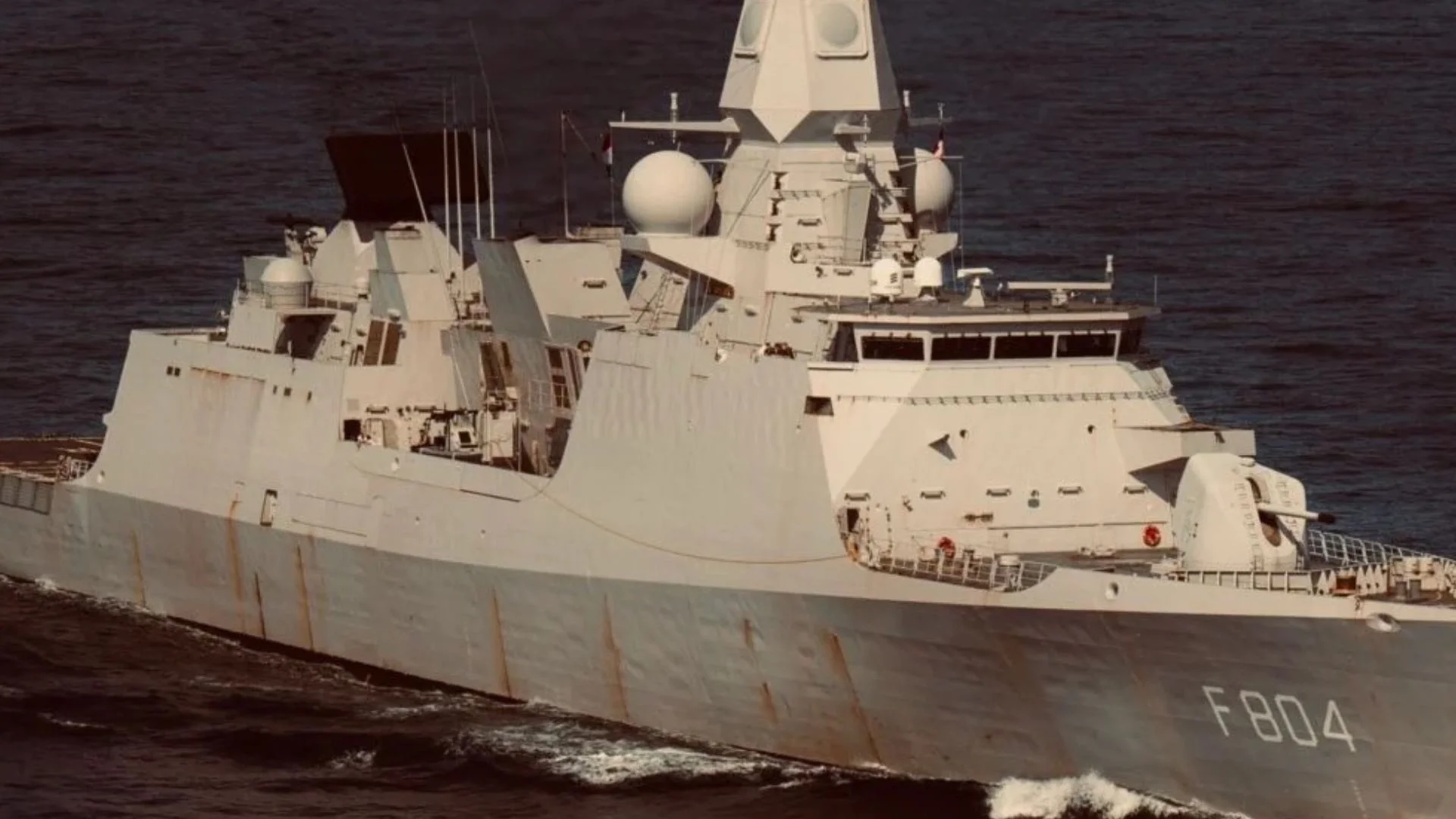
The Dutch frigate involved in the incident was the HNLMS De Ruyter, a De Zeven Provinciën-class air defense and command frigate. The vessel is currently part of the Netherlands’ Pacific Archer deployment across the Indo-Pacific region. The mission is focused on freedom of navigation operations and defense cooperation with allied nations.
READ ALSO: Z-Shaped Spin Wave Path Cuts Signal Loss 5,000 Times in New Magnonic Crystal Design
Electronic warfare played an important role during the encounter near the Paracel Islands. Electronic warfare includes systems that jam radar, disrupt communications, or interfere with military sensors without direct physical attacks. These technologies are widely used by modern militaries to weaken an opponent’s awareness and operational ability.
China has significantly expanded its electronic warfare network in the South China Sea during the last decade. Military installations on artificial islands now include radar stations, missile systems, airfields, and communication equipment. Analysts say these systems allow Beijing to monitor and control large parts of the region more effectively.
The Paracel Islands remain one of Asia’s most disputed maritime territories. China controls the islands after taking them from Vietnam during a military clash in the 1970s. Vietnam and Taiwan still claim sovereignty over the archipelago today.
The South China Sea is one of the world’s busiest shipping routes and carries trillions of dollars in trade each year. Several countries, including the Philippines, Vietnam, Malaysia, and Brunei, contest parts of the region claimed by China. Beijing uses its so-called 10-dash line claim to assert authority over most of the sea.
READ ALSO: Blue Origin Rocket Explosion at Cape Canaveral Puts NASA Moon Plans Under Pressure
Electronic Warfare Patrols Continue
Chinese maritime forces maintain a constant presence across the disputed waters. Coast Guard ships, naval vessels, and large fishing fleets regularly patrol areas claimed by Beijing. Other countries and Western powers view these operations as attempts to strengthen Chinese control over international waters.
Just one week before the incident, the Dutch frigate visited Manila for joint activities with the Philippine Navy. During that visit, the ship’s captain told local media that earlier interactions with Chinese forces had remained professional. He also said previous encounters did not involve direct territorial disputes.
The Netherlands has increased its security cooperation in the Indo-Pacific in recent years. Dutch naval deployments now regularly operate alongside the US, Japan, Australia, and regional partners. European countries are also showing greater interest in maintaining open sea lanes and regional stability.
China is also accelerating construction activities across the South China Sea. Satellite imagery reviewed by the Center for Strategic and International Studies shows major land reclamation work at Antelope Reef. Experts believe the project could create one of the largest artificial islands in the region.
Artificial islands give China an expanded military reach far from its mainland coast. These outposts can host aircraft, surveillance systems, missile batteries, and logistics facilities. They also help Chinese forces maintain longer patrols across disputed waters.
The latest confrontation involving the Dutch frigate reflects the growing competition between China and foreign naval forces in the Indo-Pacific. Western countries continue to conduct freedom-of-navigation missions to challenge Beijing’s territorial claims. China strongly opposes these operations and often responds with military warnings or close interceptions.
Military experts say electronic warfare incidents are becoming more common during naval encounters. Unlike direct military attacks, electronic interference creates pressure without immediate physical confrontation. This allows countries to send strong signals while avoiding open conflict.
The South China Sea remains one of the most sensitive flashpoints in global security. Increased military deployments from both China and foreign navies are raising the risk of future confrontations. The situation is expected to remain tense as more countries expand their presence in the Indo-Pacific region.