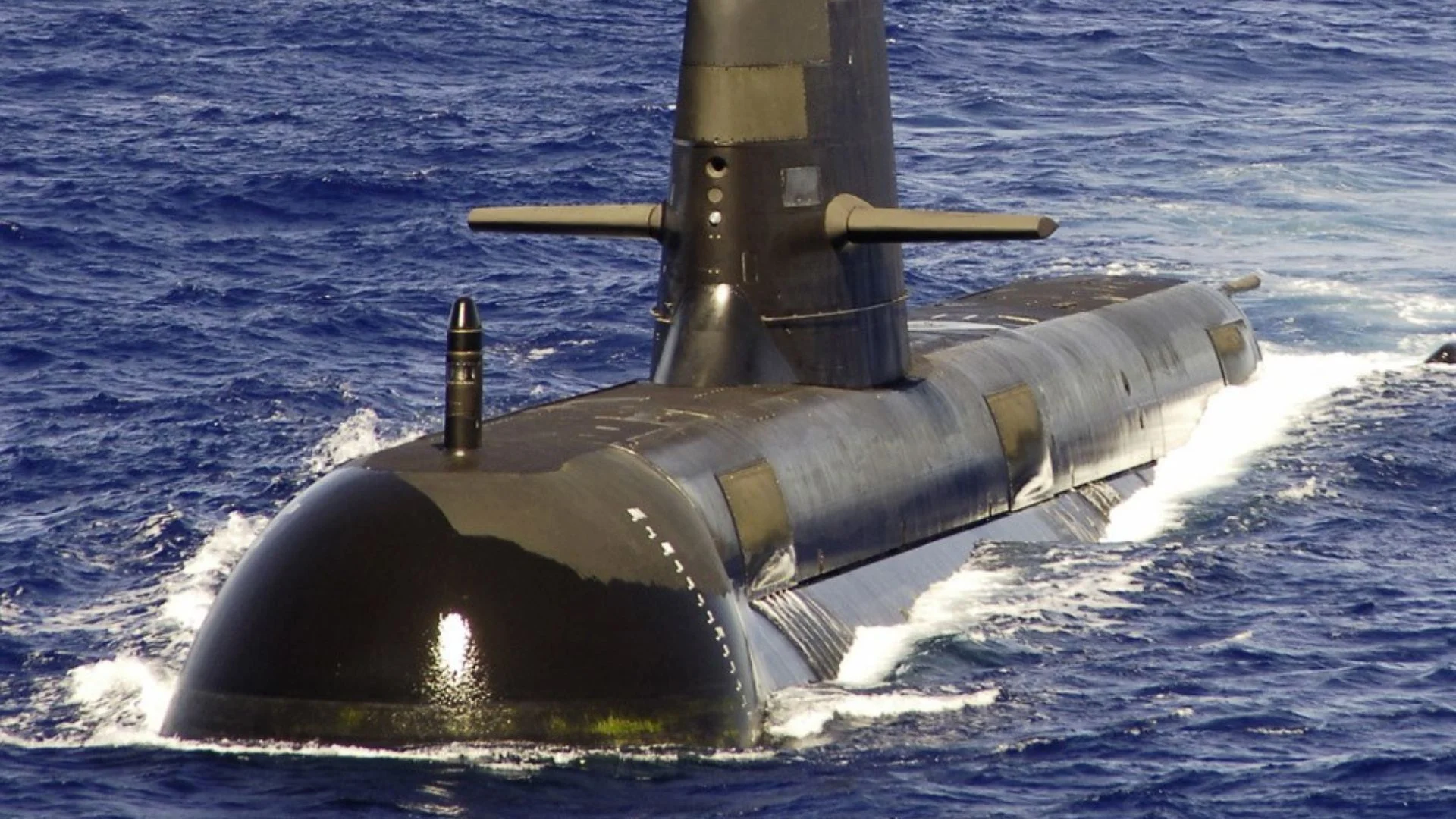
Australia has begun a major upgrade and life-extension project for its Collins-class submarine fleet.
The program is designed to keep the country’s existing submarines in service for decades beyond the original plan. Officials see the effort as critical for national security while Australia waits for future nuclear-powered submarines under the AUKUS partnership.
The submarine HMAS Farncomb is the first vessel selected for the upgrade process. Work is taking place at the government-owned ASC shipyard near Adelaide in South Australia. Engineers started preparations in late May as part of the first phase of the long-awaited program.
The Collins-class submarines entered service between 1996 and 2003. Australia has six boats in total, and they form the core of the country’s underwater defense capability. These submarines are powered by diesel-electric systems, which means they run on diesel engines and batteries instead of nuclear reactors.
Australia first proposed replacing the Collins fleet in 2009. Since then, several governments have changed direction multiple times on submarine planning. Earlier plans for French-designed submarines were cancelled in 2021 after Australia joined the AUKUS defense partnership with the US and the UK.
Collins Bridges AUKUS Gap
Under AUKUS, Australia plans to buy American Virginia-class nuclear submarines in the early 2030s. It also plans to build new SSN-AUKUS submarines with British support in the 2040s. Until those submarines arrive, the Collins-class boats are expected to remain Australia’s only operational submarine fleet.
The life-extension program now carries an estimated cost of A$11 billion, or nearly US$8 billion. The Australian government says the project will improve submarine reliability and extend operational life through to the late 2040s. Defense officials also say the work will improve fleet availability amid growing regional security challenges.
READ ALSO: Destinus Fast-Tracks RUTA Block 3 Missile With 2,000-km Range and 2027 Flight Tests
However, Australia’s National Audit Office has raised serious concerns about the program. Auditors said planning delays, rising costs, and capability risks have affected the project for years. The report stated that the Department of Defence is not well-positioned to prove the project will deliver full value for money.
Auditors also warned that delays forced Australia to scale back some original upgrade plans. Instead of replacing major systems such as engines and generators with new designs, the program will now focus mainly on refurbishment and maintenance. That means the submarines will stay operational, but their combat capability will not improve significantly.
Defense officials defended the project after the audit findings became public. They said the upgrades will reduce operational risks and improve reliability through what they described as a conditions-based sustainment approach. This method focuses on repairing or replacing systems based on their actual condition rather than fixed timelines.
The work on HMAS Farncomb will begin with a detailed engineering inspection. Engineers will examine the submarine closely to identify hidden problems such as corrosion, structural wear, or aging components. The findings from Farncomb will shape future upgrades for the remaining submarines in the fleet.
READ ALSO: CIA’s Lost Plutonium Device on Nanda Devi Still Haunts Uttarakhand After 60 Years
Australia plans to prioritize the youngest Collins-class submarines for future upgrades. Officials hope this approach will keep more submarines available for longer periods. Maintaining submarine availability has become increasingly important as military competition expands across the Indo-Pacific region.
The submarine issue also highlights broader concerns about Australia’s defense transition strategy. Some analysts fear delays in the AUKUS nuclear submarine timeline could leave Australia with very few operational submarines in the future. Despite those concerns, the government says it has no backup plan involving new conventional submarines.
International comparisons have also raised questions about costs. Japan, for example, is paying around US$760 million for each new Taigei-class submarine. Some defense observers argue that buying newer conventional submarines may have been cheaper than heavily extending the life of older Collins-class boats.
Rear Admiral Stephen Hughes, Head of Navy Capability, acknowledged the risks linked to the project last year. He said the schedule, workforce demands, and technical complexity create major challenges for the program. However, he also stated that Australia’s defense sector has strong experience in managing high-risk military projects.
WATCH ALSO: Drum-shaped antenna reflector on NASA-ISRO NISAR satellite deployed
The Australian National Audit Office remains cautious about the long-term outcome. Auditors said that even after ten years of planning, Defence still faces uncertainty in meeting the project’s goals. The report warned that maintaining submarine capability through 2048 will remain difficult.
The Collins-class upgrade program now stands at the center of Australia’s naval strategy. The success or failure of the project will directly affect the country’s underwater defense capability over the next two decades.