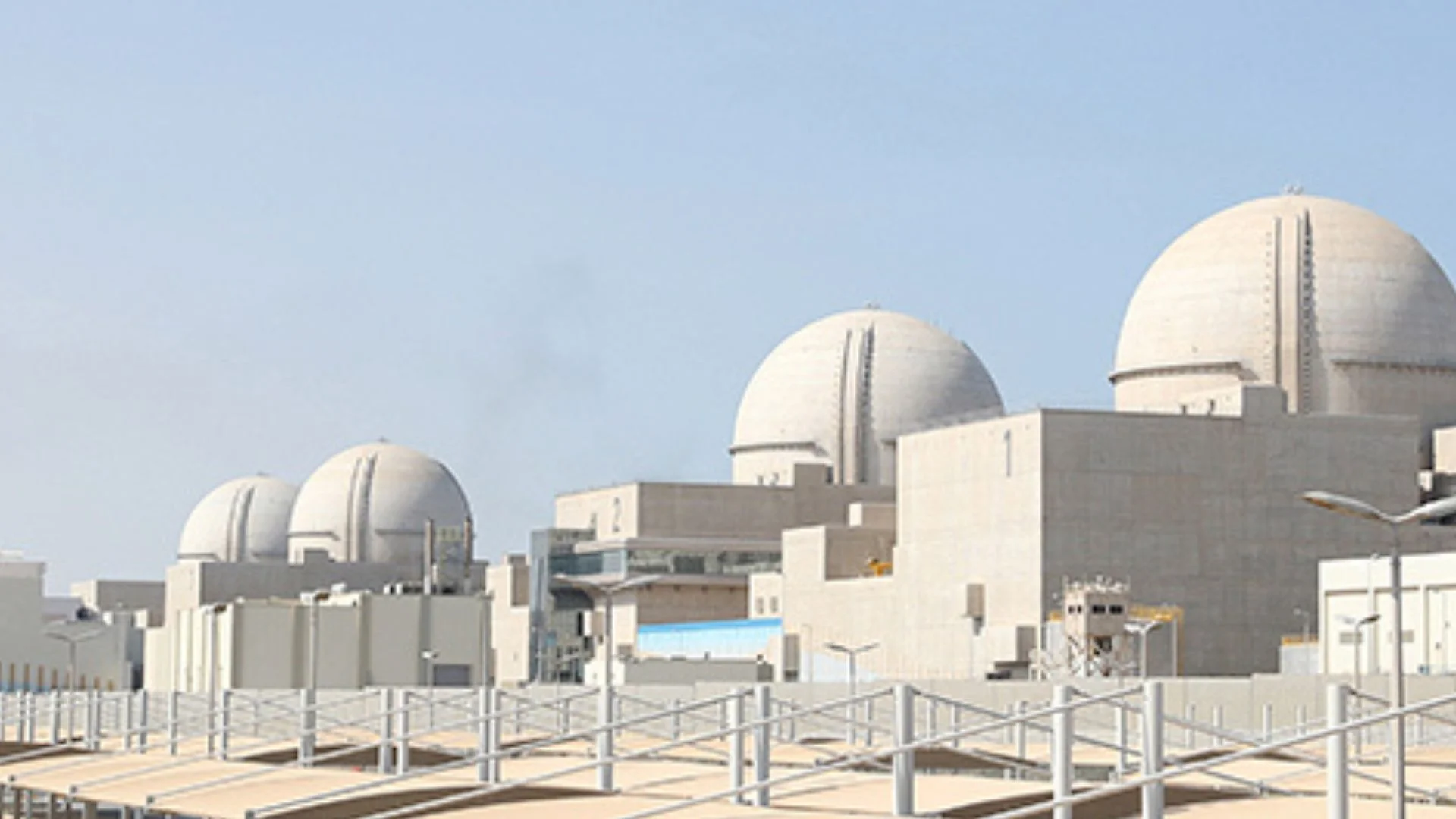
The United Arab Emirates confirmed that a drone strike caused a fire near the Barakah Nuclear Power Plant in Abu Dhabi.
Officials said three drones entered the country from the western border direction on Sunday. Air defense systems intercepted two drones, while the third drone reached an area near the facility.
The drone struck an electrical generator located outside the plant’s inner security perimeter. Emergency teams quickly controlled the fire and prevented further damage. Authorities said the nuclear plant continued normal operations without interruption.
No injuries were reported after the incident. Officials also stated that radiation levels remained normal at all times. The UAE stressed that the strike did not affect nuclear safety systems or reactor operations.
The Barakah Nuclear Power Plant is the first commercial nuclear energy facility in the Arab world. It plays a major role in supplying electricity across the UAE. The plant is considered strategically important because it helps reduce dependence on oil and gas for power generation.
Barakah Plant Escapes Damage
The UAE foreign ministry described the attack as a dangerous escalation in regional tensions. Officials called the targeting of peaceful nuclear facilities a violation of international law and humanitarian principles. The government added that it reserves the right to respond to threats against national security.
READ ALSO: Embry-Riddle Researchers Use World’s Brightest X-Rays to Test Ultrafast Aircraft Materials
The UAE defense ministry said it remains ready to counter attacks targeting the country’s infrastructure. Authorities have not officially identified the group or country responsible for launching the drone.
However, the UAE has previously accused Iran-backed forces of attacks against Gulf energy facilities.
The latest incident comes during continuing instability in the Middle East. Fighting intensified after military exchanges between Iran, Israel, and the US earlier this year.
Although a ceasefire agreement was announced in April, smaller attacks and military incidents have continued across the region.
Iran has repeatedly accused Gulf countries allied with the US of supporting military operations against Tehran. The UAE has denied participating in attacks against Iran. Tensions remain high as both sides continue to exchange accusations.
Global Concerns Over Nuclear Safety
The International Atomic Energy Agency said it was closely monitoring the situation. IAEA Director General Rafael Grossi expressed concern over military activity near nuclear facilities. He called for maximum restraint to prevent risks to nuclear safety and regional stability.
Nuclear power plants depend on multiple layers of safety systems to prevent accidents. Even attacks outside protected reactor zones can disrupt electricity systems and support operations. Security experts frequently draw parallels between such incidents and attacks on airports or oil facilities, given their impact on major national infrastructure.
WATCH ALSO: US firm’s new giant robot can help tackle wildfires
Saudi Arabia also reported security threats on the same day. The defense ministry announced that three drones entering Saudi airspace from Iraq were intercepted and destroyed. The development highlighted growing fears that regional tensions are spreading across Gulf nations.
The Strait of Hormuz remains another major concern for global markets and energy supplies. The shipping route handles a large share of the world’s oil exports each day. Continued instability in the Gulf could affect global energy prices, trade routes, and international security planning.
The UAE has invested in infrastructure protection and advanced air defense systems over the past few years. Sunday’s strike is expected to increase discussions about protecting nuclear facilities from drone warfare. Governments across the region are now facing renewed pressure to strengthen security around important energy sites.
The incident also shows how drones are becoming a major challenge in modern conflicts. Small unmanned aircraft are cheaper and harder to detect than traditional missiles or fighter jets.
With regional tensions continuing, Gulf countries are expected to expand surveillance systems and defense coordination to prevent future attacks.