China has started sea trials for the world’s largest methanol dual-fuel container ship, marking another major step in green shipping technology.
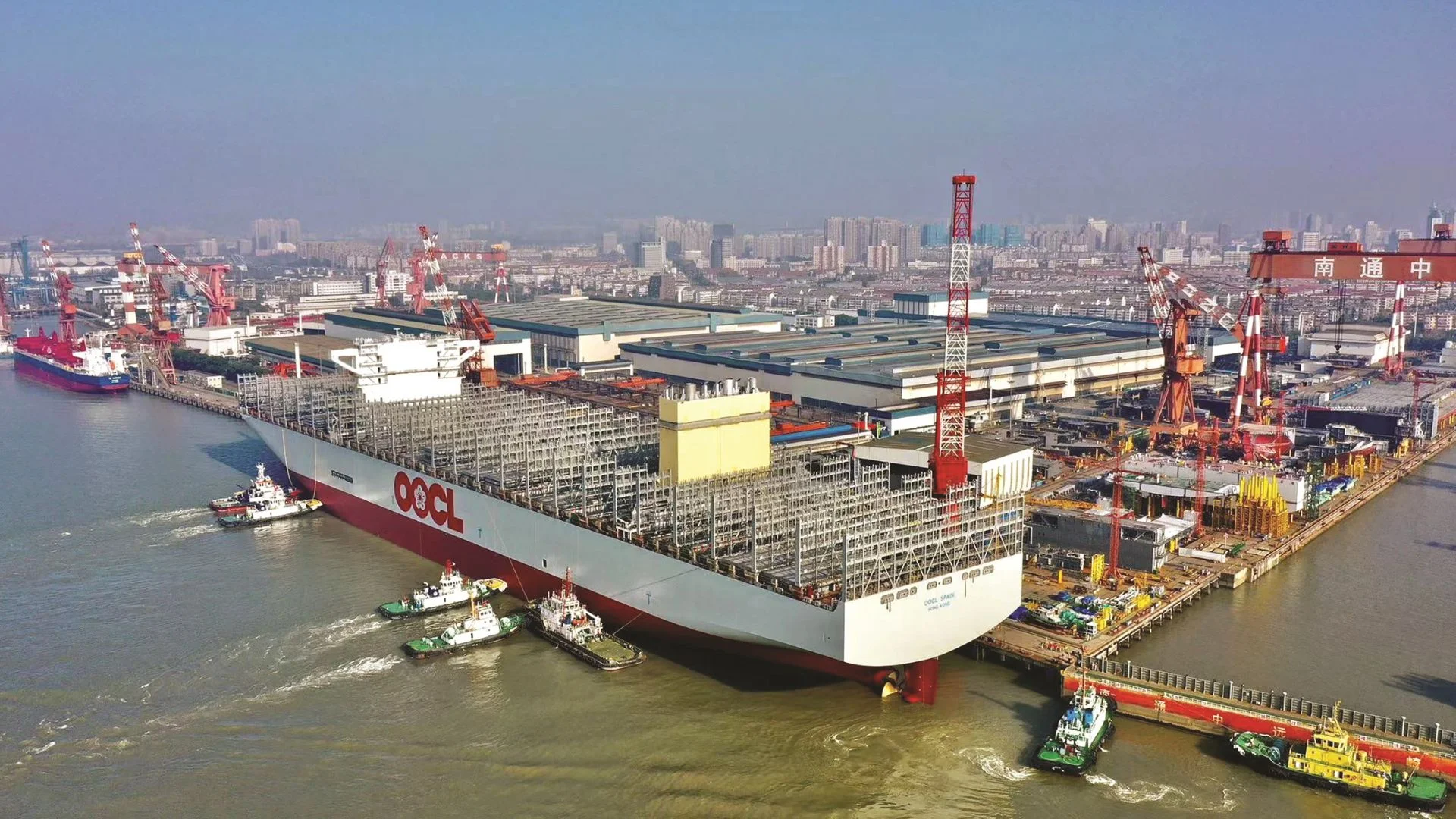
The massive vessel was built in Jiangsu Province and can carry more than 24,000 standard containers across international trade routes.
The project highlights China’s growing role in cleaner and more advanced shipbuilding as the global shipping industry pushes to cut emissions.
The vessel departed from Nantong in East China’s Jiangsu Province on Thursday. State media reported that the ship was built by Nantong COSCO KHI Ship Engineering Co.
The ship measures nearly 400 meters in length and more than 61 meters in width. Its deadweight tonnage reaches 225,000 tons, making it one of the largest cargo vessels in operation today.
The vessel was independently designed and built in China. Engineers equipped it with a methanol dual-fuel system that allows the ship to switch between green methanol and conventional marine fuel. This gives shipping operators more flexibility during long international voyages.
READ ALSO: Idaho and Argonne Labs Build Griffin Software to Test Advanced Nuclear Reactors
Company representative Zhang Haidong said the ship features the world’s largest methanol dual-fuel main engine, matched with auxiliary engines and boiler systems.
He explained that the integrated design improves fuel efficiency while supporting cleaner operations. The technology also helps shipping companies meet tightening environmental regulations.
Methanol is gaining attention in global shipping because it burns more cleanly than traditional bunker fuel. Green methanol is produced using renewable energy or low-carbon industrial processes. Compared with conventional fuel, it produces far lower emissions during operation.
According to the company, the ship can reduce carbon dioxide emissions by around 150,000 tons each year when running on green methanol. Sulfur oxide emissions are almost completely eliminated during operation. Nitrogen oxide emissions are also significantly reduced compared with standard marine fuels.
Green Shipping Demand Reshapes Global Shipbuilding
The launch comes as the global shipping industry faces growing pressure to lower greenhouse gas emissions.
The International Maritime Organization has set targets for net-zero shipping emissions around 2050. Many countries and regions are also introducing stricter environmental rules for international cargo fleets.
The European Union fully implemented new shipping decarbonization rules this year. These measures push shipping companies to adopt cleaner fuel technologies and lower-emission vessels. As a result, demand for green ships has increased rapidly worldwide.
China has become a major supplier of these next-generation vessels. Official figures from China’s Ministry of Industry and Information Technology showed strong growth in the country’s shipbuilding sector during the first quarter of the year. Shipbuilding completion reached 15.68 million deadweight tons, rising 46 percent from the same period last year.
WATCH ALSO: South Korean company showcases its multi-purpose unmanned ground vehicle for military use
Green ship orders represented more than 80 percent of China’s newly secured international shipbuilding contracts during the quarter.
These orders included vessels powered by liquefied natural gas, methanol, liquefied petroleum gas, ethane, and electric systems. Chinese shipyards are now competing heavily in the fast-growing clean shipping market.
Green ships are designed to reduce pollution and improve fuel efficiency. Many use alternative fuels or advanced propulsion systems to lower emissions. Others include intelligent energy management technologies that improve operational performance during long-distance transport.
Industry analysts say Chinese shipbuilders are expanding rapidly in both green and intelligent manufacturing.
Wang Peng from the Beijing Academy of Social Sciences said the trend reflects the shipping industry’s wider move toward decarbonization. He noted that international demand for cleaner cargo transport continues to rise.
China Strengthens Position in Clean Maritime Tech
Experts believe China’s growing focus on green vessels also supports its wider industrial transformation plans. The country is investing heavily in advanced manufacturing, clean energy systems, and smart industrial technologies. Shipbuilding has become one of the sectors that has benefited most from these policies.
Professor Wang Zhe from Beijing Normal University said alternative fuels such as methanol, LNG, ammonia, and electricity are becoming central to modern shipping strategies.
He explained that Chinese shipbuilders are helping global shipping companies comply with stricter environmental rules. At the same time, they are gaining a stronger position in the international maritime market.
READ ALSO: Smaller Than Bacteria: Is Nano QR Tech The Future of Data Storage?
The rapid expansion of green ship production is also supporting other industries in China. Demand is rising for clean-energy propulsion systems, advanced materials, and marine engineering technologies. This broader supply chain growth strengthens China’s competitiveness in global industrial manufacturing.
After completing sea trials, the container ship will enter international service routes. Its deployment reflects how major shipping companies are moving toward lower-emission fleets while maintaining large cargo capacity. The project also signals that green fuel technologies are becoming a key part of the future of global maritime trade.