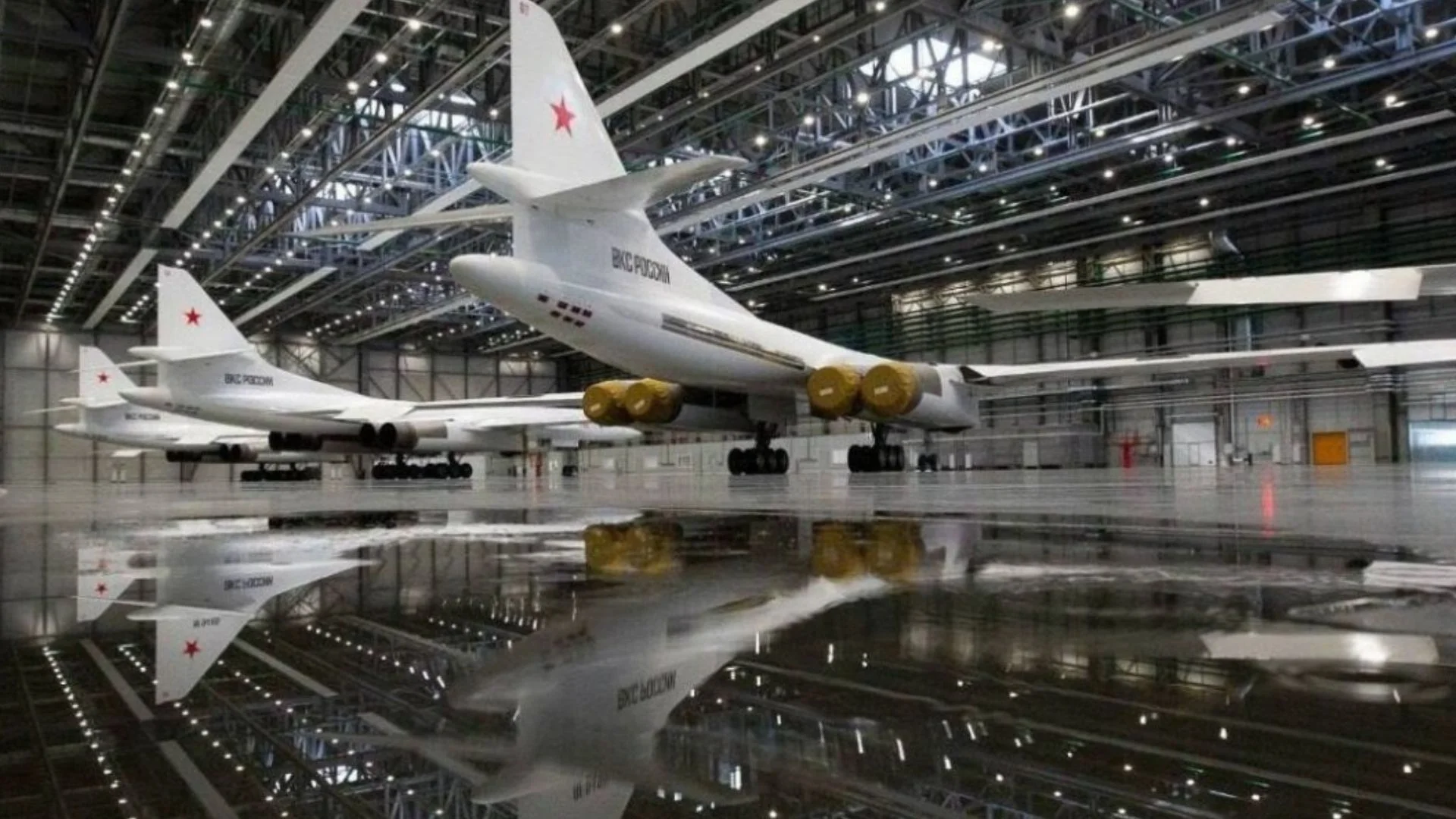
Russia has released images of an upgraded Tu-160M strategic bomber following a lengthy modernization process at its Kazan facility.
The aircraft, identified as ‘Piotr Deynekin,’ has drawn attention because it represents both progress and pressure in Russia’s long-range aviation program.
At the same time, independent analysis suggests that only a part of Russia’s strategic bomber fleet is fully active in operations.
The development highlights Moscow’s ongoing efforts to modernize its nuclear-capable bomber force. It also raises questions about how many aircraft are actually mission-ready.
READ ALSO: Pakistan’s Fatah-3 Missile Reveals Supersonic Strike Power Inspired by China’s HD-1
These contrasting signals have placed renewed focus on Russia’s strategic aviation strength.
Tu-160M Upgrade Emerges at Kazan Facility
The upgraded aircraft belongs to the Tupolev Tu-160 heavy strategic bomber fleet. It was reportedly seen after a long modernization cycle at the Kazan Aircraft Production Association plant. The upgrade process reportedly took around 5 years to complete.
The Tu-160M program focuses on updating older Soviet-era airframes with modern systems. These upgrades include improved avionics, communications, navigation tools, and upgraded NK-32 engines. The airframe design remains unchanged, keeping the bomber’s original swing-wing structure.
The aircraft can carry up to 12 long-range cruise missiles, including Kh-55 and Kh-101/102 types. These weapons can be used for both nuclear and conventional missions. This gives the bomber intercontinental strike capability.
Russia has also promoted a newer variant called the Tu-160M2. Officials describe it as newly built rather than upgraded, but technical differences have not been clearly detailed. This has led to ongoing debate among analysts.
Fleet Readiness and Operational Estimates
The Tu-160 fleet is officially listed as consisting of 18 aircraft in active service. However, independent OSINT analysis suggests that only about seven are regularly used in operational missions. The rest are believed to be undergoing maintenance, upgrades, or training duties.
This would place the operational readiness rate at around 40 percent. The estimate is based on observed deployments and maintenance activity. If accurate, it shows a gap between official figures and real-world availability.
The aircraft are mainly based at Engels-2 Air Base near Saratov and another facility in eastern Russia. These locations support long-range strike operations and training. Dispersal also helps reduce the risk of potential attacks.
WATCH ALSO: Apple launches iPhone 17 lineup with contoured edges, and thinner borders
Since 2022, Engels-2 has reportedly faced repeated drone strikes. This has pushed Russia to adjust basing strategies for its strategic aviation fleet. Analysts say this may have increased pressure on logistics and readiness.
Production Pressure and Strategic Aviation Strain
Modernization and production work for the Tu-160M program appears to be under heavy load. Open-source estimates suggest that seven to nine aircraft may be present at the Kazan facility at any time. This includes both upgrades and newly assembled units.
Satellite images from 2026 reportedly showed multiple bombers inside newly built production halls. Others were seen parked outdoors awaiting further work. This suggests a slow and complex production pipeline.
Russia restarted plans for serial production of the Tu-160 nearly a decade ago. However, output has remained slower than initially expected. The process has been affected by technical and industrial challenges.
Additional reports indicate that a few Tu-160M aircraft were seen near Moscow airfields earlier this year. This has led to speculation about expanded or protected basing options. It also reflects efforts to safeguard strategic assets.
Financial pressure on parts of Russia’s aviation industry has also been reported. One major plant involved in strategic aviation work reportedly recorded a significant loss in 2025. This shift will add further strain on modernization timelines.
READ ALSO: Turkey Unveils Kuzgun Kamikaze Drone Built for 1,000 Km Deep-Strike and Air-Defense Saturation
The appearance of the upgraded Tu-160M highlights Russia’s ongoing attempt to modernize its strategic bomber fleet while sustaining active operations.
At the same time, independent estimates suggest limited readiness and production bottlenecks. These factors show a fleet under simultaneous upgrade, maintenance, and operational pressure.
Future developments will depend on how quickly Russia can expand production and improve fleet availability. The balance between modernization goals and operational demand will shape the future of its strategic aviation capability.